
Dr Peter J. Aspinall: Remembering TMM’s co-founder three years on
Dr Peter J. Aspinall was a prolific, generous and influential social scientist whose work shaped how mixed-race identities are recognised and recorded, in Britain and beyond. Three years after his death in early 2023, the journal Genealogy has published a special commemorative issue put together by his colleagues, including The Mixed Museum's Director, Dr Chamion Caballero, with whom he co-founded the museum. We reflect on Peter’s legacy – and the enduring impact of the scholar who helped lay the foundations for the work The Mixed Museum continues today.
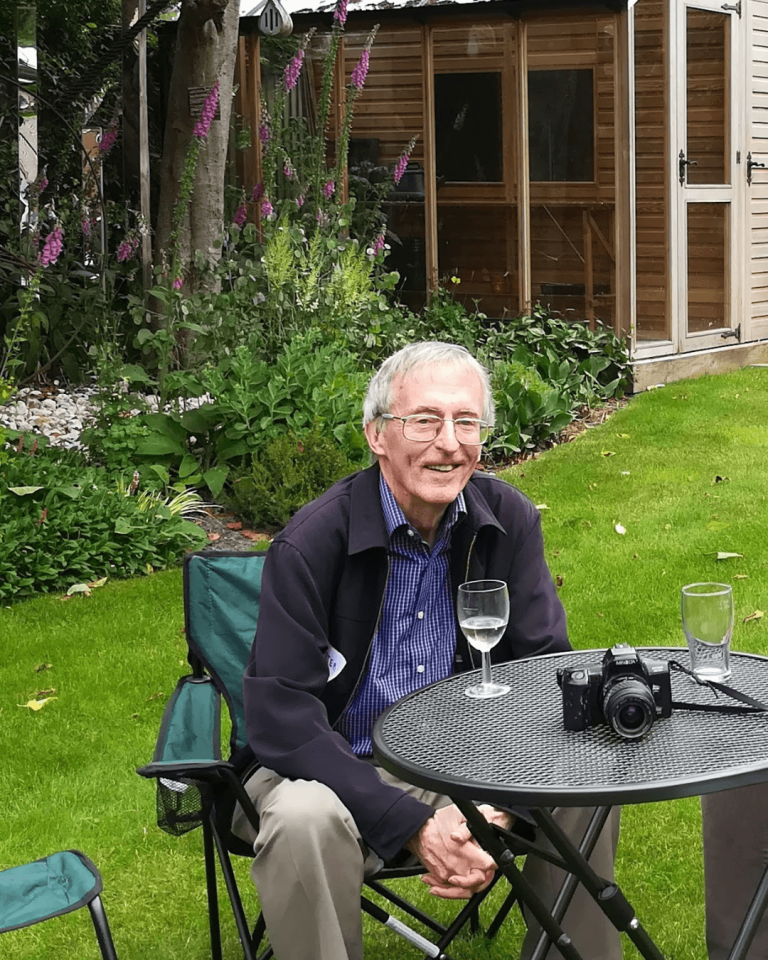
Special issue of Genealogy remembers the academic Dr Peter J. Aspinall
“Peter’s knowledge was vast, his reach extraordinary. His expertise was sought at the highest levels. But more than anything, Peter was the authority on official data relating to ethnicity and mixedness. So many people – academics, journalists, policymakers – relied on him. ‘Nobody interprets Census data like Peter,’ they would say.”
This is how Dr Chamion Caballero, Director of The Mixed Museum, describes the work of her mentor, collaborator and friend Dr Peter J. Aspinall, the prolific social scientist who died in early 2023, in her article 'Remembering Peter Aspinall'.
Her reflections piece has been published as part of a special commemorative issue of the journal Genealogy: ‘Seeing Ethnicity Otherwise: From History, Classification and Terminology to Identities, Health and Mixedness in the Work of Peter J. Aspinall’. The collection of articles edited by Chamion, Professor Zarine Rocha and Professor Brenda Yeoh Saw Ai was put together “as a way to honour Peter’s contribution across disciplines, and his commitment to his editorial work at Genealogy”.
Advising on the ‘mixed’ National Census category –and co-founding The Mixed Museum
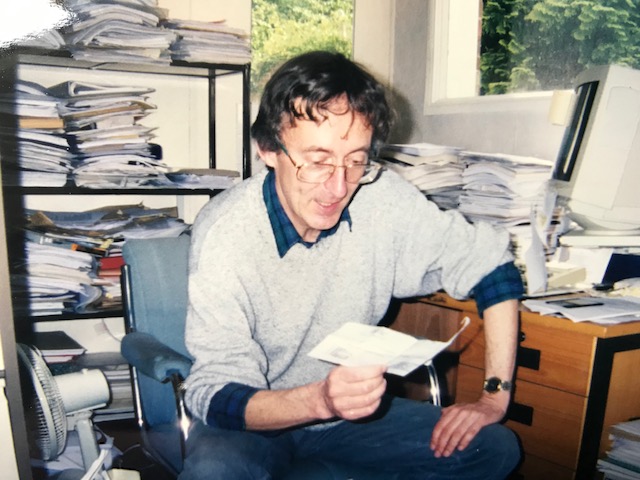
Chamion and Peter first met in the early 2000s, when Chamion, then a PhD student at the University of Bristol, contacted Peter, a Research Fellow at the University of Kent, to ask if he would be willing to be interviewed as part of her research into the newly-added ‘mixed’ ethnic group category in the 2001 UK Census. Peter, then a Research Fellow at the University of Kent, welcomed her into his office – surrounded by towering piles of books and papers – and spent hours answering her questions.
As Chamion recalls: “This generosity of time and wisdom was characteristic of Peter. He gave freely of his expertise, particularly to students and early-career scholars. No query was too small, no request too insignificant.”
Peter had played an advisory role in the introduction of the ‘mixed’ category in the 2001 Census, helping shape how mixed identities were officially recognised for the first time in the UK. This shared interest would lead the pair to explore together what that recognition meant – socially, politically and historically.
In 2007, they obtained British Academy funding to investigate how mixedness had been understood in Britain in the early twentieth century. That research later formed the foundations for the BBC2 series Mixed Britannia, fronted by George Alagiah, on which Peter and Chamion acted as consultants.
Determined that the knowledge they had gathered should have longevity and be available to the public, they collaborated with Bradley Lincoln of the social enteprise Mix-d: to launch The Mix-d Museum, an interactive digital Timeline that shared many of their research findings. By 2019, when the project became The Mixed Museum – an independent heritage organisation – Peter had retired and was experiencing health problems, but continued to be an essential team member.
“An incredible intellect, a generous soul, a kind man”
Peter’s academic interests were broad. Having started his career in urban and regional planning, he worked across public health, ethnicity terminology and classifications and mixed ethnic identities. He wrote over 200 papers and publications and his research been cited thousands of times.
In the introduction to the special issue, Chamion and co-authors Zarine Rocha of the University of Auckland and Brenda Yeoh of the National University of Singapore write: “His work on census classifications and identity terminology was groundbreaking, with his detailed analysis of changes in the UK (and his practical role in guiding these changes) providing key lessons applicable all over the world.”
Alongside Chamion’s personal reflections paper, the journal issue includes an article co-authored by Professor Lucy Bland and Chamion – Investigating the Investigators – examining the people behind the ‘moral panic’ that targeted mixed race families living in Britain’s multiracial port communities between the world wars. The research behind the article, which was funded by the British Academy, interrogated earlier narratives that posed mixed relationships and families in Britain as a social problem. Instead, it focuses on tracing the correspondence and motivations of the officials and establishment figures who actively constructed mixed families as an issue. The paper builds on the authors’ collaborative research project with Peter, and reflects his long-standing commitment to interrogating how race, power and policy intersect. It is dedicated to him “as one of his last scholarly endeavours”.
The special Issue also includes papers by many of Peter’s longstanding collaborative colleagues, across disciplines and continents, including Professor Miri Song from the University of Kent, with whom Peter co-authored Mixed Race Identities (2013), and Zarine Rocha, his co-editor on The Palgrave International Handbook of Mixed Racial and Ethnic Classification (2020).
As well as being remembered for his scholarship, the issue also recognises Peter for being a dedicated mentor and collaborative colleague. He served on the editorial boards of Genealogy and the Journal of Critical Mixed Race Studies, among others, and regularly reviewed articles, proposals and books. He generously offered his time to the many students, researchers, journalists and producers who contacted him from all over the world.
His extraordinary impact is summed up by this, again taken from Chamion’s tribute to him in the edition:
When I shared news of his death in January 2023 at The Mixed Museum, the response was overwhelming. Messages arrived from across the world, from academics, colleagues, students, and others, each offering their own memories but always echoing the same sentiments: an incredible intellect, a generous soul, a kind man.
Caballero (2025), 'Remembering Peter Aspinall'
Three years after his death, Peter’s approach continues to guide our work at TMM. His commitment to careful research, collaboration and making mixed histories visible remains central to our mission. We are grateful for the foundations he helped build and for the legacy he leaves behind.
Learn more
Read Chamion’s reflections piece in Genealogy, 'Remembering Peter Aspinall'
Learn about one of the last projects Peter was working on, and read the Genealogy article written by Lucy and Chamion, 'Investigating the Investigators: Moral Panic, Mixed-Race Families and Their Vilification in Interwar Britain'
Explore the range of articles in the Genealogy Special Issue 'Seeing Ethnicity Otherwise: From History, Classification and Terminology to Identities, Health and Mixedness in the Work of Peter J. Aspinall'