
What’s going on with the timeline? Help us rebuild the heart of The Mixed Museum
The Mixed Museum began with a simple problem: important research about Britain’s mixed-race histories existed, but it was difficult for the public to access. Our answer was The Timeline, a digital collection that brought together stories, documents and images showing the history of racial mixing in twentieth-century Britain. It rapidly became one of the most read areas of our site, visited by people from around the world.
But as our work has evolved, The Timeline has found itself in an unusual position: it exists in two forms, on two different systems, each with different strengths – and different problems. With more people finding the new Timeline through search engines every day, we want to explain what’s happening behind the scenes: why there are two Timelines, why some pages look unfinished. And how you can help us rebuild the new Timeline into the resource it deserves to be.

The story behind our longest standing exhibition – and why it needs your support
The Timeline’s origins lie in the British Academy-funded project led from 2007 to 2008 by Dr Chamion Caballero and Dr Peter Aspinall. Their research not only informed the BBC series Mixed Britannia and their book Mixed Race Britain in the Twentieth Century, but revealed the need for a digital public history resource that could keep expanding beyond the life of a single project.
In 2012, with a small grant from the Arts and Humanities Research Council, Chamion and Peter worked with Bradley Lincoln to create a prototype digital resource (read the full story on our About page). That early project - the Mix-d: Timeline - eventually evolved into The Mixed Museum, which was incorporated in 2019. Copied over to TMM’s new website The Timeline became our central collection, a living record of Britain’s long, diverse, complex multiracial history.
Two timelines, one problem
The original Timeline – the one many of you know from our homepage — was built in 2012 in static HTML. It served its purpose beautifully for years, but the technology slowly boxed us in. We couldn’t update it ourselves, we couldn’t expand entries, we couldn’t add new discoveries. Even simple edits required a developer.
As a result, while people regularly wrote to us asking for updates or new stories, we simply couldn’t make them. The Timeline became frozen in time.
To keep it alive, we began moving the material to our new site. The new Timeline, which hasn’t officially launched, is editable, accessible, and better connected to the rest of the museum. Increasingly, Google is sending visitors to this new but unfinished Timeline instead of the old one. While we’re delighted people are finding it, we’re also concerned because the design, layout and content aren’t yet what we want them to be. We’re also concerned about the confusion having two versions of the same thing may cause to visitors.

A good example is our This Is England page. Every time actor Stephen Graham appears in the press, we see a surge of visitors to that page. People arrive hoping to learn more about his background, his significance, and Liverpool’s long Black and mixed-race histories. But the entry, migrated from the old site, is too brief. We have rich material in our archives that could transform it into a fuller exploration, but we simply don’t have the capacity to build that content without proper support.
And Stephen Graham/Liverpool is just one example. Our archives hold many stories ready to be shaped into Timeline pages (some of which we’ve shared in outline on our Ko-fi page) but without dedicated time, they remain unpublished.
We want to add: The Devi sisters
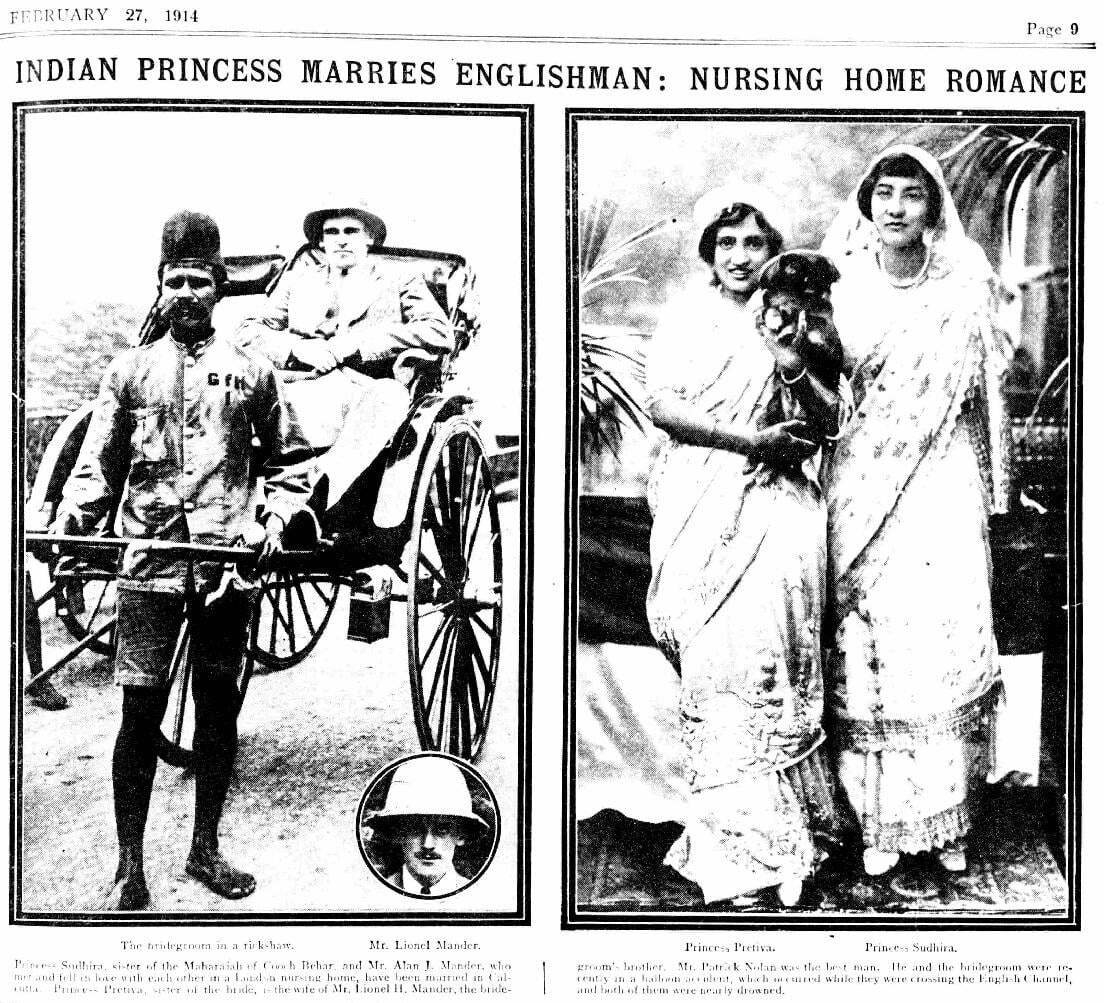
In 2022 Chamion was awarded a grant by the Women's History Network to research the lives of Sudhira and Pratibha Devi, two Indian sisters and princesses who both married the Mander brothers - two white Englishmen - in 1912 and 1914.
Their story offers fascinating insights into the ways race, class and wealth interacted in the early twentieth century. We would love to include a dedicated entry on the sisters and their husbands in The Timeline.
What’s holding development of The Timeline back?
One of our challenges is that most heritage funding organisations prefer to support brand-new projects rather than strengthening existing ones, even when those existing collections are heavily used by the public. As a result, The Timeline is currently sustained through a patchwork of limited staff time, volunteer effort, and occasional small donations from supporters.
The irony is that the work-in-progress Timeline can finally be updated, expanded and improved — something we could never do before — but we do not yet have the resources to do this work at the scale the public is asking for.
We want to add: Patricia and Ayana Devi Angardi
A happenstance glance at a list of authors at the end of a book led us to learning about the life and work of Patricia Angadi. A writer and artist, Angardi (née Patricia Fell-Clarke) married the Indian writer Ayana Devi Angadi in 1943 at Kensington Registry Office in London. The pair are credited with introducing The Beatles to musician Ravi Shankar. We would love to include a full entry on the couple, along with John Lennon and Yoko Ono.
Aims for the new Timeline
Our aim is to rebuild The Timeline into the resource it should be: clearer to navigate, richer in content, visually engaging, and able to grow as new research and community stories emerge. We also want to add pre-20th century accounts. We want some of the later hurriedly written entries to be given the depth they deserve. We want to add the many local histories, personal archives and community stories that are currently sitting offline or have been offered to us. Most of all, we want The Timeline to feel alive again: responsive, expansive, and rooted in history that has been overlooked for too long.
We want to add: Seretse and Ruth Khama
In 1948, Seretse Khama, heir to the Bamangwato leadership in the Bechuanaland Protectorate, married Ruth Williams, a London secretary he met while studying in England. The marriage caused a political storm, not least from apartheid-supporting officials in South Africa. In 1949, the country made interracial marriage illegal and put heavy pressure on Britain to intervene by stopping Khama from assuming his role as chief and pushing the couple into exile.
As a result, the British government blocked Khama from taking up his chieftaincy and, in 1951, exiled him from Bechuanaland. Despite this, the Khamas remained hugely popular at home. When they were finally allowed back in 1956, Khama would lead the movement that brought independence in 1966 and go on to become Botswana’s first president.
The couple's story was famously told in the 2016 film A United Kingdom. We’d love to include a full entry on the Khama family in the Timeline.

How can I help?
If The Timeline has been useful to you — in your studies, your creative work, your teaching, your family history searches, or simply in satisfying your curiosity — you can help shape its next chapter.
Donations, however modest, directly support the work of redesigning, updating and expanding The Timeline. They help ensure that the museum can preserve and share a history that has too often been hidden, fragmented or inaccessible.
If you’d like a glimpse of what’s waiting in the wings, check out Chamion and Peter’s book, Mixed Race Britain in the Twentieth Century, which highlights the amount of history still to add. Our Ko-fi page shows some of the photographs we hope to add when we have the capacity, and you can also donate there too.
We know there are many demands on people’s pockets and we completely understand that donating might not be possible for you. Sharing our work also helps, as does leaving likes and comments on our social media platforms, and signing up for our newsletter. If you can, we hope you might join us in whatever small way in continuing to ensure that access to our shared histories is available to everybody.
Learn more
Donate to help us update The Timeline (no contribution is too small)
Read more about how The Mixed Museum came about here
Visit the new Timeline and compare it with the old Timeline
Sign up to our newsletter for latest posts!
Enjoyed this article?
Sign up to The Mixed Museum’s newsletter to stay updated when new blog posts like this go live. We send highlights from the museum's collection, links to new articles, and other interesting updates direct to your email inbox once a month.
