

Episode 1
When we picture the railway age, we tend to think in terms of industry: soot, steam, innovation. The golden age of British engineering.
But the story of the railways is also the story of empire. Much of the wealth that flowed into Britain during the railway boom came from imperial trade — from global systems that moved sugar, cotton, tea, and, not long before, enslaved people. Some of the engineers who designed Britain’s railways also worked abroad in the Indian subcontinent and across Africa, exporting the same railway technologies across the empire, reshaping how people, goods, and power moved.
And while slavery could not legally be enforced in Britain by the time the first commercial train ran in 1825, it remained central to many British colonial economies. So when we look at these railways, we’re not just seeing industry, we’re seeing what empire built, including patterns of migration.
Because of empire, people from across the globe came to Britain to trade, to work, to study: sometimes forced, sometimes voluntarily. Even before the railways began to appear, Black, Asian, mixed race and other minoritised people had been part of Britain’s population for centuries. They lived in cities, market towns, villages. They worked. They married. They travelled around. And even though there was prejudice and racism, racially minoritised people still found work in British industries throughout the 19th and early 20th centuries. The maritime world, for example, was hugely racially diverse: ships and docks were often very multiracial spaces.
So it makes sense that the railways were multiracial spaces too. But racially minoritised people are often absent from popular imaginings of the railways: think of the Railway Children, train scenes from Alfred Hitchcock films and Agatha Christie adaptations, images of smartly dressed white Victorian and Edwardian passengers at stations and on steam trains – and, of course, Brief Encounter.
Even in official railway records – accident logs, staff lists, employment books – they are not immediately visible because race or ethnicity was not recorded in the same way it is now. This means that we have had to read between the lines and get creative in our thinking to find minoritised workers: in court reports, biographies, passing mentions in newspaper accounts. Because unless their race or ethnicity was commented on somewhere, you’d never know.
That’s how we found the following stories.
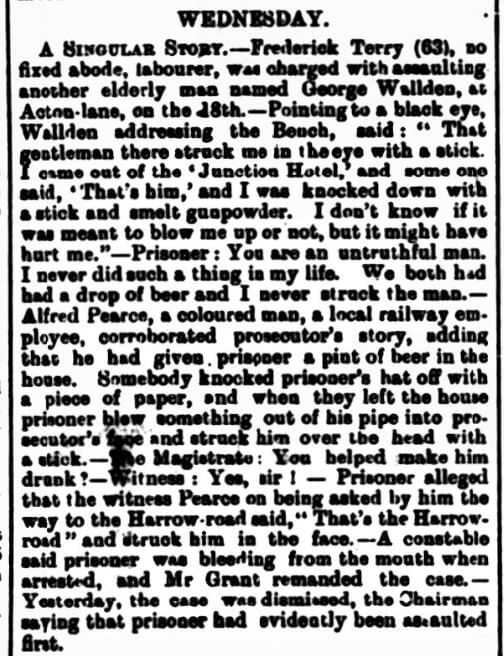
In September 1900, a man named Alfred Pearce is mentioned in a local London newspaper, The Willesden Chronicle, under the unassuming headline: 'Wednesday'.
The article he features in isn’t a story about the railways. In fact, it isn’t even really a story about him. Pearce is mentioned because he was a witness to a quarrel between two older men — Frederick Terry and George Walden — that ended in violence. The article mentions in passing: ‘Alfred Pearce, a coloured man, a local railway employee, corroborated the prosecutor’s story, adding that he had given the prisoner a pint of beer in the house.’
This mention of Alfred Pearce is so brief but so intriguing. It reveals that Pearce worked on the railways, demonstrating that there were Black rail employees during the Victorian era. But it also suggests that he was socialising with the two men in the pub before their quarrel, indicating he was integrated into local everyday life.
And without the phrase ‘a coloured man’ in the article, we would have passed him over as another railway worker. There is nothing in his name – Alfred Pearce – to suggest a different ethnic background to the other men in the article: Frederick Terry and George Walden.
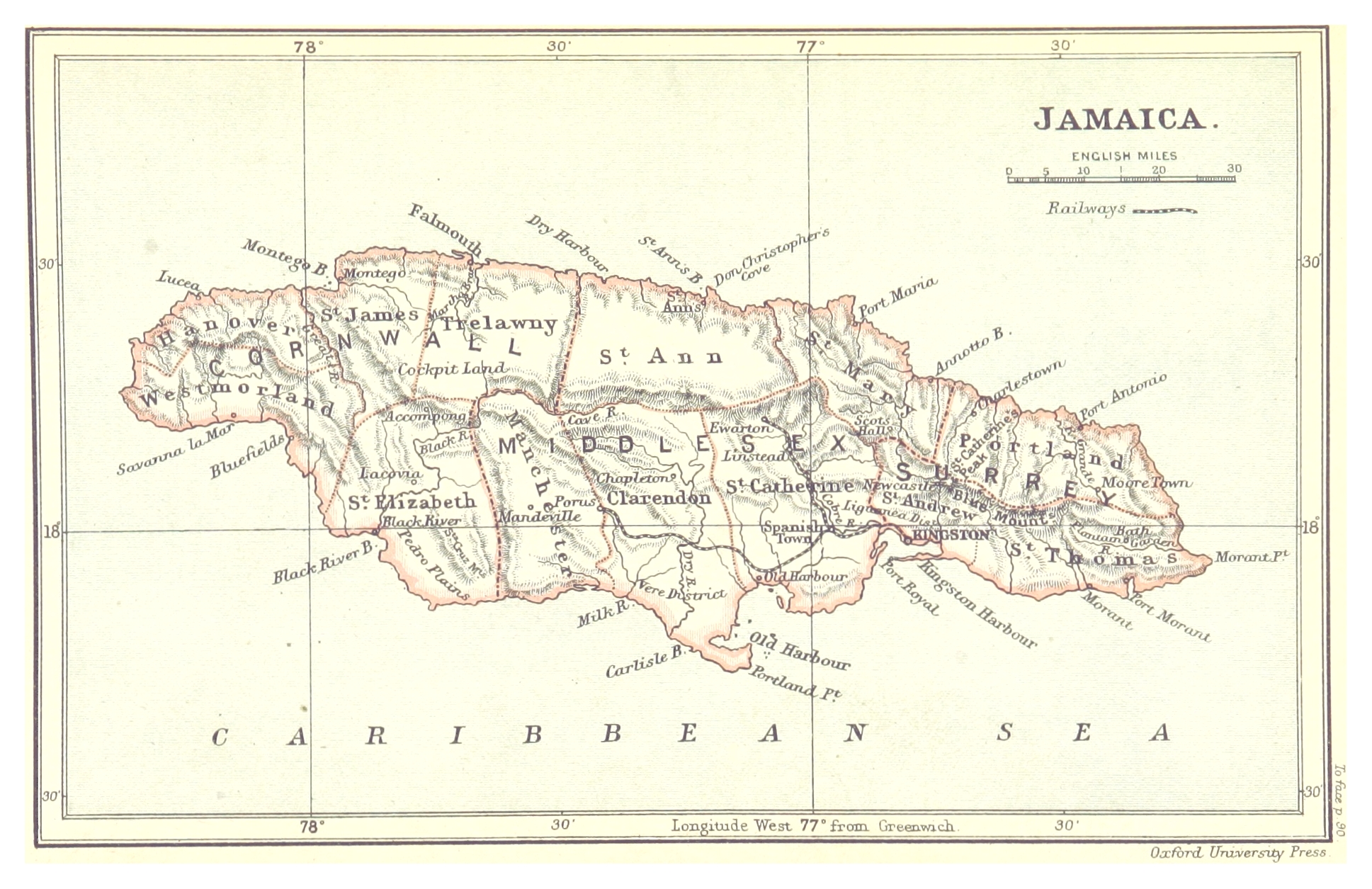
An article published in 1920 under the headline 'Varied Career of Coloured Man' gives an account of a Jamaican man named George Samuel Bailey who seems to have lived several lives in one. According to the article, Bailey, who had worked previously as a sailor and a teacher, travelled through Mexico and America before arriving in Britain, where he worked as a miner in Pontypridd, South Wales, between 1915 and 1917.
After leaving Pontypridd, he moved to London and tried to join the army, then offered his services to Scotland Yard as a detective, but was turned away. So what did he do next? He became a railway porter. We only know any of this because he later appeared in court, charged with unlawfully wearing a military uniform, which is why he ended up in the newspaper.
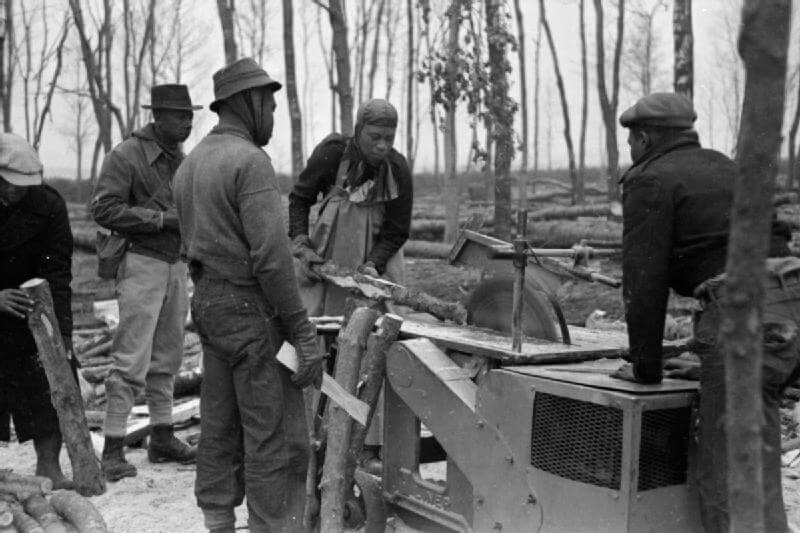
Several articles reported on the case of Reuben Ricketts, described as a ‘coloured railway employee’, who was remanded in custody in Edinburgh in June 1944 after being charged with assault.
Some articles seem to suggest he was from Belize, then known as British Honduras. If that was the case, he may have been one of the almost 900 forestry workers from Belize who came to Scotland at the end of 1941 to maintain timber supplies as part of the war effort, a gruelling job. He likely stayed on to work for the railways.
While the stories of minoritised railway workers are difficult to identify, passengers from different racial backgrounds are much more present in the archives because they are often attached to events covered by the press that happen to have taken place on trains or at train stations.
Before we began researching for this project, the best-documented piece of Black or Asian history connected to the British railways that the museum was aware of was a journey made by the Queen of Awadh, which we mention in our exhibition By The Cut of Their Cloth.
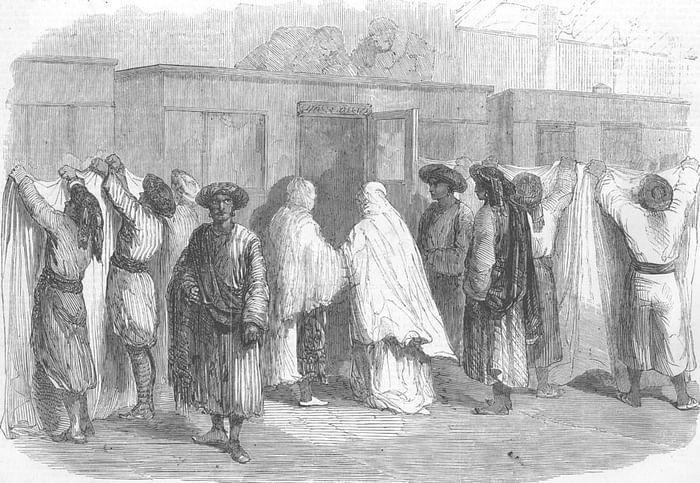
In 1856, the British annexed the Kingdom of Awadh in northern India. The King of Awadh decided to travel to England to plead with Queen Victoria for the return of his kingdom, but became too ill to travel. So his mother, Queen Malika, broke 50 years of purdah to travel in his place.
Queen Malika sailed to Southampton with members of her family and a large retinue of attendants. From there, a special train was laid on to take her to London. But the queen’s state of purdah meant that she could not be seen in public by men outside her household, presenting a major issue when it came to boarding the train.
Her retinue’s request to have the station closed to the public was denied, so, to shield her from view, her servants formed a human screen along the platform, holding up long calico sheets so that Queen Malika could walk unseen through the crowd that had gathered and onto the train.
After refusing to see her for almost a year, Queen Victoria finally met Queen Malika in July 1857, but the visit came to nothing. On her return home, Malika took ill and died in Paris, where she is buried at Père Lachaise cemetery.
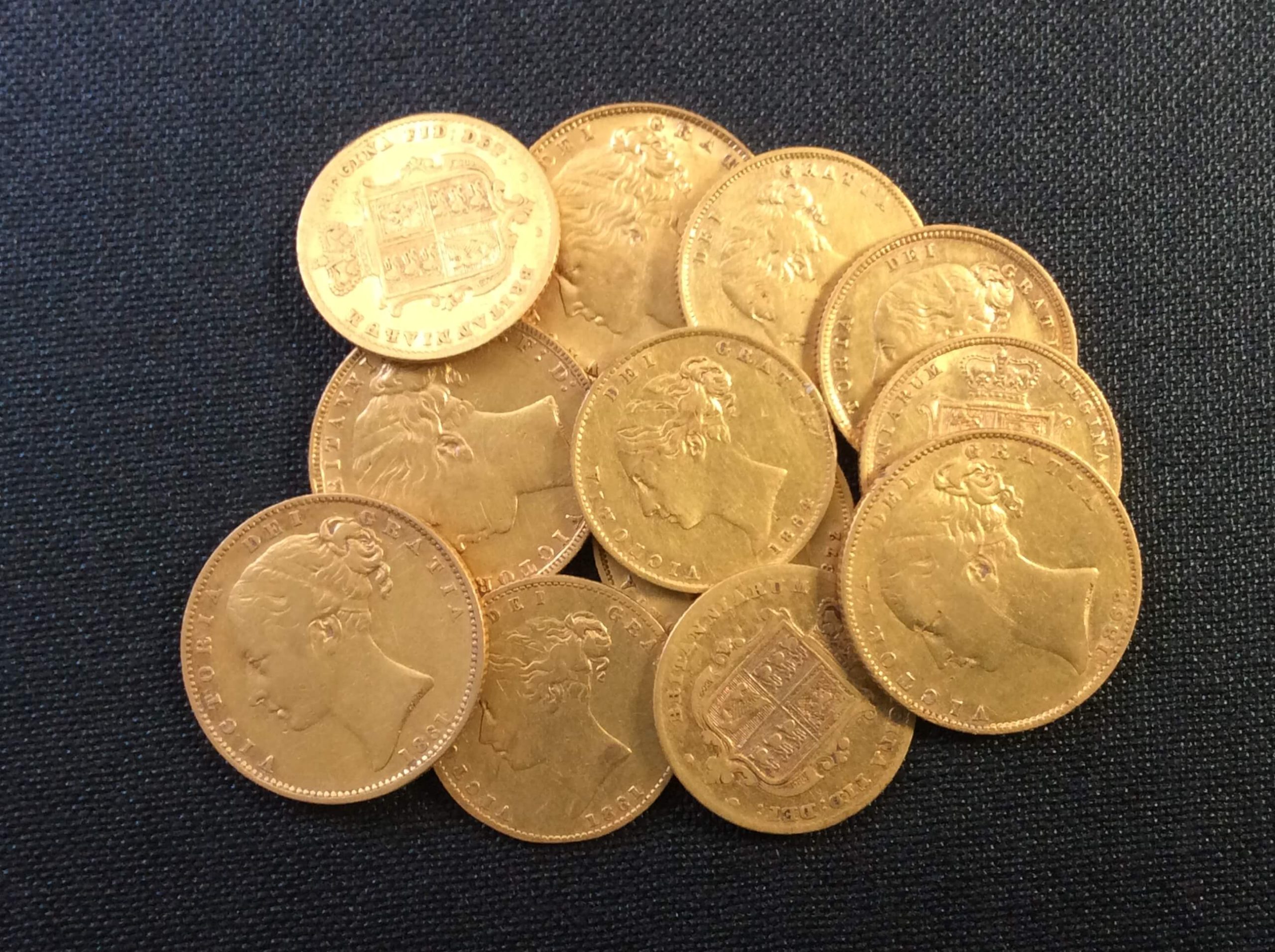
In March 1879, Thomas Bailey – a young footman from Antigua described by The Surrey Advertiser as a man of colour – appeared in the paper after being robbed by three men while travelling by train from Waterloo to Southampton. Their initial ruse to tempt Bailey into a card game for money failed, so, as Bailey stepped off the train at Surbiton to obtain refreshments, one of them grabbed his purse out of his hand and ran off. The other two held Bailey back in the carriage before themselves running off. The purse contained 20 sovereigns, approximately £1,300 in today’s money. Thanks to quick reporting by Bailey and then fast action by the police, the men were arrested and jailed for theft.
The robbery did not appear to be racially motivated. However, Bailey had to deal with the attitudes of the court and press, who openly marvelled at his ‘excellent English’ and intelligence. ‘I’m from Antigua, West Indies,’ said Bailey at one point. ‘Not a Zulu!’ said one of the counsel, to laughter.
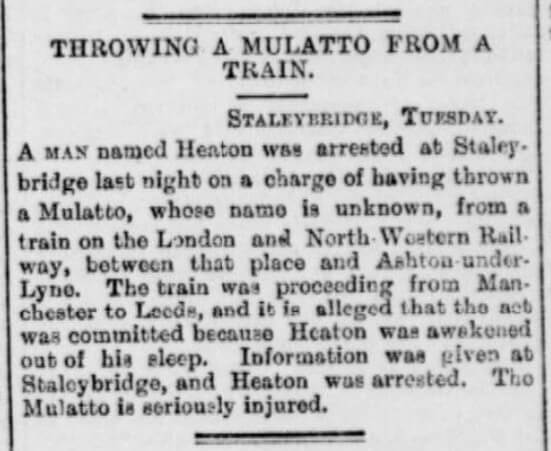
A shocking incident on a train received such extensive coverage in the newspapers that we were able to dramatise it in our audio series. Known as The Simmonite Case, it was widely reported under the lurid headline ‘Mulatto thrown from a train’.
The year was 1888. At 9pm on a September evening, Joseph Simmonite, a Huddersfield man, was boarding a third class carriage on a North Western Railway train from Liverpool to Leeds with his wife. Simmonite was described in press reports as a ‘mulatto’ – a term now considered offensive but then a common term for people born to one Black and one white parent.
Also in the carriage was Simmonite’s friend, Mr Bestwick and one more passenger: Nathan Heaton, a stoker and former policeman from Huddersfield, who was asleep when they boarded. When Heaton woke up, clearly drunk, and tried to put his feet up near the window and near Bestwick’s head, a confrontation began. In his inebriated state, Heaton broke the window. Bestwick and Mrs Simmonite remonstrated with him, and Heaton responded by swearing and shouting at them, then lunging at Simmonite and his wife.
There was no train corridor and no way to alert the guard to what was happening, other than by pulling the train communication cord. Bestwick pulled it, but it failed and the three passengers found themselves stuck in the carriage with a beligerant Heaton. At Ashton-Under-Lyne, Bestwick jumped out to summon assistance, but found himself on the wrong side of the platform to alert the guard – moments later, the train pulled out without him.
Further enraged by Simmonite’s attempt to throw his friend Bestwick his hat, Heaton turned the full force of his rage on him, saying: “You little black (bastard), I will do you your job.” Simmonite opened the door and shimmied onto the foot rail of the speeding train, trying to attract the attention of the people in the next compartment. But trying to make his way along the footboard, Simmonite received a violent blow – either from Heaton or the swing of a carriage door. He was thrown from the moving train, landing on the tracks. Bruised and bleeding, he managed to crawl up the embankment and to a nearby house where he received help.
When the train finally stopped, Heaton attempted to run away but was caught by the railway police and charged, initially with assault. But because it was unclear whether Heaton deliberately pushed Simmonite from the train or whether the door came open and knocked him off, the court only found Nathan Heaton guilty of using obnoxious language and damaging property. He was fined a total of £5 and 2 shillings, around £420 in today’s money – a small sum for the pain and stress inflicted.

Listen to an extract from the dramatised Simmonite case. Click the arrow to play.
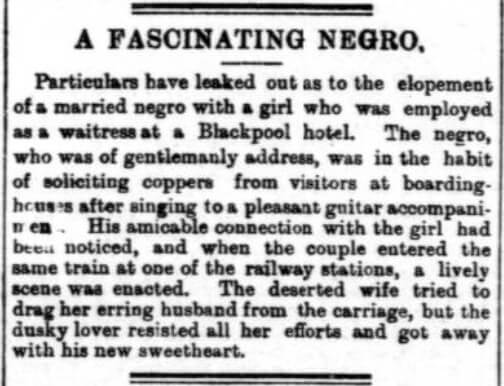
An article from October 1893, which appeared in various versions across several local newspapers, often under the headline 'A Fascinating Negro', gave the following account:
‘Particulars have leaked out as to the elopement of a married negro with a girl who was employed as a waitress at a Blackpool hotel. When the couple entered the same train at one of the railway stations, a lively scene was enacted. The deserted wife tried to drag her erring husband from the carriage, but the dusky lover resisted all her efforts, and got away with his new sweetheart.’

Samuel Coleridge-Taylor, a renowned London-born composer who became world famous during his lifetime, was a frequent train traveller. The son of a Black Sierra Leonean father and a white English mother, Coleridge-Taylor travelled the length and breadth of Britain in the late 19th and early 20th century as a conductor and adjudicator.
In a story featured in a biography of his life, written in 1915 by his friend W. C. Berwick Sayers, Coleridge-Taylor remembers an interaction on a train:
‘During the Russo-Japanese War, Coleridge-Taylor was travelling through the hopfields of Kent in a railway carriage alone with a clergyman. The latter watched him with considerable interest and that hesitancy of manner which sometimes betrays a desire for conversation. At last, he screwed up courage.
‘The hops are very beautiful here,’ he remarked.
‘They are,’ agreed Coleridge-Taylor, ‘the soil seems perfectly adapted to them.’
‘And,’ inquired the clergyman after a pause, ‘do you grow hops in this fashion in Japan?’’
As we note in the audio series, even Coleridge-Taylor couldn’t escape the ‘Where are you from?’ question.
Samuel Coleridge-Taylor’s rail travels are the subject of our audio project, Tracks of a Trailblazer. Visit the interactive map or listen to the podcast series on Spotify, Apple Podcasts or search for it on any podcast platform.
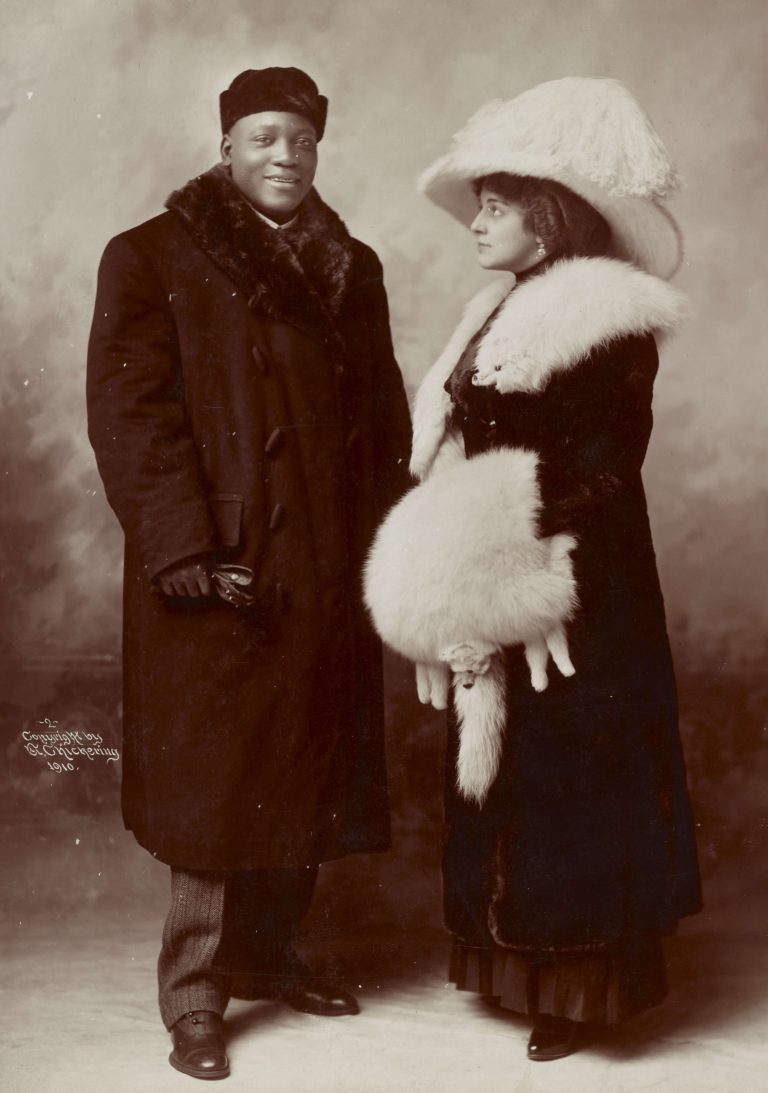
We discovered a shocking report in the Nottinghamshire Journal about the experiences of a couple in 1913.
‘A coloured man named John Malta, accompanied by his white wife, had been to the Spalding market vending medicines, and had returned to the railway station when one of a gang of labourers exclaimed, 'What a shame for a beautiful white lady to be married to a black man.' The negro’s wife was approached by one of the labourers and asked, 'Are you on exhibition with this black man?' The negro remonstrated with the man, and was at once attacked by the labourers, who shouted, 'Kill all Johnsons.' They threw him to the ground, and kicked and pummelled him until he was bruised all over and had one rib broken. His wife, who went to his assistance, was also knocked down and kicked by the labourers, the majority of whom were Irishmen over for the harvest. Six of them were arrested, and the two alleged ringleaders, on Tuesday, were fined 50s. and 30s., or a month’s imprisonment.’
A violent attack. The shout to 'kill all Johnsons' may have been a reference to the famous Black American boxer Jack Johnson and his white wife Etta Duryea. Other newspaper reports on the incident recount that the pair had to be locked into the station’s parcels office to keep them safe until the police came.
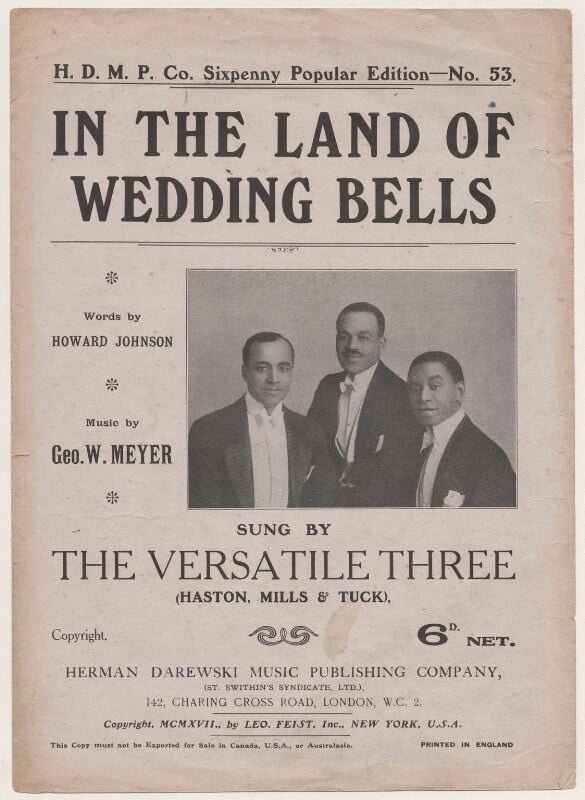
The Paddington Times reported the way the Black American singer Gus Haston retaliated against a man called Hollings – who is implied to be white American – who tried to stop him and his two Black friends getting into their carriage on the train from Taplow to London. Hollings held the carriage door closed, apparently telling Haston he 'didn’t care to ride with a Black man, and if you were in a white man’s country you’d know what we’d do to you' and said that 'he would as soon be in a train with skunks as ride with a Black man'.
When they reached Paddington, Haston followed Hollings off the train, caught him by the collar and said, 'Now, young man, you apologise to me or you will box my ears or I’ll box yours. We are man to man now, let’s settle it.' Hollings replied, 'Call yourself a man?” and Haston testified, “With that, I proceeded to box his ears.'
Hear all of these stories and more in Echoes of the Line Episode 1: Born of empire (1856-1945). Listen on Spotify, Apple Podcasts or wherever you get your podcasts.
 Episode 1
Listen to Echoes of the Line: Born of Empire: 1856-1945 on Spotify, Apple Podcasts or search your podcast platform.
Episode 2
Listen to Echoes of the Line: On the Tracks: 1945-2026 on Spotify, Apple Podcasts or search your podcast platform.
Episode 3
Listen to Echoes of the Line: Love and Travel: 1945-2026 on Spotify, Apple Podcasts or search your podcast platform.
Episode 1
Listen to Echoes of the Line: Born of Empire: 1856-1945 on Spotify, Apple Podcasts or search your podcast platform.
Episode 2
Listen to Echoes of the Line: On the Tracks: 1945-2026 on Spotify, Apple Podcasts or search your podcast platform.
Episode 3
Listen to Echoes of the Line: Love and Travel: 1945-2026 on Spotify, Apple Podcasts or search your podcast platform.