

Episode 2
 Episode 2
Listen to Echoes of the Line: On the Tracks: 1945-2026 on Spotify, Apple Podcasts or search your podcast platform.
Episode 2
Listen to Echoes of the Line: On the Tracks: 1945-2026 on Spotify, Apple Podcasts or search your podcast platform.In the first episode of our audio series, we explored the fragments of multiracial railway history that survive in newspapers and archives from the 19th and early 20th centuries, usually told by outsiders.
But as we move into the post-war period, the archive begins to change. Alongside official records and press accounts, we have been able to draw on stories shared directly by the people who lived them – and their descendants.
In Episode 2, we hear about those who made their careers on the railways from the 1940s until the present day. Some of the stories we share were already known to the museum. Some are from people who approached us to help them archive their family histories. And some emerged from our research for this series. All of them have something important to say about the connections between Britain’s multiracial history, migration and the railways.
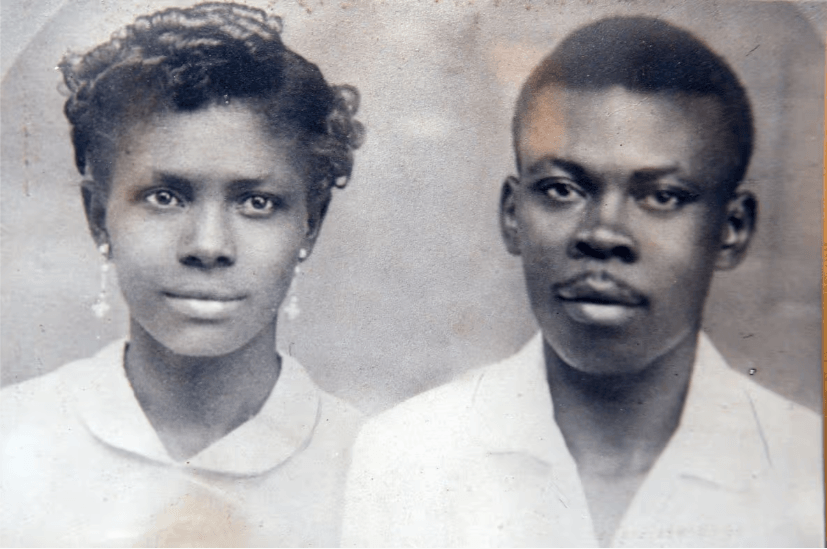

Listen to an extract from an interview Percival gave in 2020, that is included in Echoes of the Line. Click on the arrow below to play.
Like many Caribbean people of their generation, Percival and Hermine Hanniford responded to calls from the British government to help rebuild Britain after the destruction of World War Two. They left Jamaica to travel to South Wales, where, in 1962, Percival became a guard with British Railways (later British Rail). But Percival didn’t enjoy the guard job and quickly switched to the role of shunter, responsible for “preparing trains from one part of the country to the other and all over Europe”, which he loved.
We were helped to fill in the details of Percival’s life by Celia Enyioko-Hanniford, who is married to one of Percival and Hermine’s grandsons. She directed us to interviews he gave in 2020 and 2024, clips of which we were given permission to use in the episode.
In the interviews, Percival had only positive memories of his time on the railways. “We used to get up and get to work even before the shift started,” he said. “You’d sit in the cabin and joke about like schoolkids. And in the winter, you could get up on the engine and you'd be warm. The (steam) engine was always warm and nice. And you see the driver, always with his shovel: “Come up aboard, come on boyo!”
“You know, up to today, we still correspond together every day. A friend for life. We lived together as a family. There was no bickering. All the fellas I met with, we get on just fine. You know, some people start and they don't like it, but I did 32 years and tried to work to the ability I could in everything I do. That's what carried me through.”
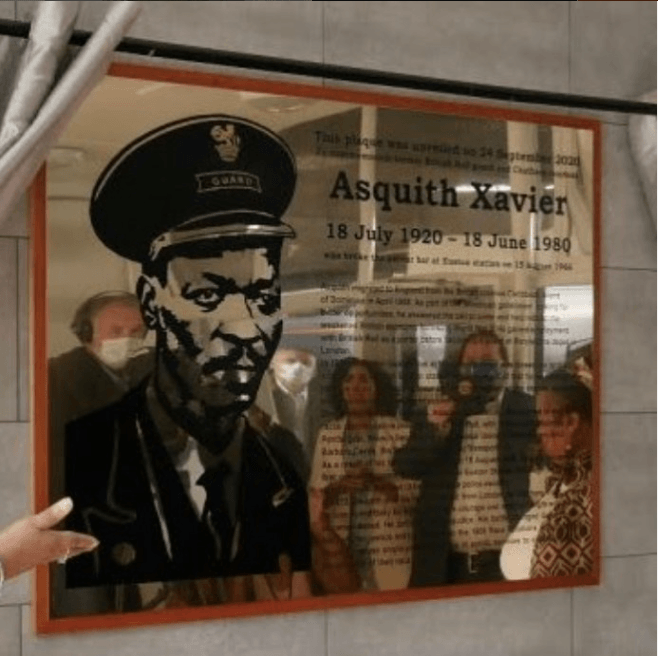
Listen to an extract of Camealia telling how she found out about her grandfather's achievements. Click the arrow below to play.
Born in 1920 in Dominica, Asquith Xavier moved to Britain with his wife and four of their children in 1958. He began work with British Railways as a cleaner and porter in 1959 and was quickly promoted to the position of guard.
In 1966, he was still working as a guard at Marylebone station in central London. But when he applied for a promotion and transfer to work at Euston station, where guards were paid an extra £10 per week, his application was rejected. A letter from a staff committee at Euston explained it was because he was Black. In the 1950s, unions and management had informally agreed to ban people who weren’t white from public-facing jobs at Euston.
Asquith refused to accept this restriction. The Race Relations Act 1965 had outlawed racial discrimination in public places, but did not cover workplaces. Undeterred, Asquith demanded change. He galvanised colleagues to support him and gained the notice of two MPs, who wrote to the Secretary of State for Transport, Barbara Castle, to ask her to instruct British Railways to end the racist policy.
On 15 July 1966, British Railways announced that the colour bars at London stations had been abandoned. Asquith started work on 15 August 1966.
In Episode 2 of Echoes of the Line, Asquith’s granddaughter Camealia Xavier-Chihota explains that her grandfather and the rest of the family paid a heavy price for his victory. He received hate mail and death threats and, in 1972, felt he had to move his family out of London – to Chatham in Kent. She believes the stress was in part to blame for his early death in 1980 aged just 59, leaving behind his wife and, by then, six children.
In the podcast, Camealia explains movingly that it wasn’t a story that was passed down in the family, for obvious reasons. She didn’t find out about what her grandfather had achieved until she was in her early 20s and was asked by a family member to buy a special edition of The Voice newspaper, which featured his story.
“In making that stand against such a massive institution in 1966, he really was putting his neck on the line,” she says. “He wasn't popular amongst peers. He wasn't popular amongst his colleagues. Even the family probably just wanted him to keep his head down. But that wasn't his makeup. He didn't take no for an answer.
“I'm in awe of his achievements and the stand that he made against racial discrimination, not only on his behalf, but on behalf of his generation, the Windrush generation, and migrants on the whole.
“It was only in 1966 that this happened, that very year that football came home.. Well this was a massive triumph and step in the right direction for racial equality. And it sometimes seems like it's kept as a bit of a secret…that…there was this level of discrimination because it's not something that Britain should be proud of. But it is history. You can't brush it under the carpet. I'd like to think that my granddad helped make modern-day history.”
Find out more about Asquith’s story at www.asquithxavier.co.uk
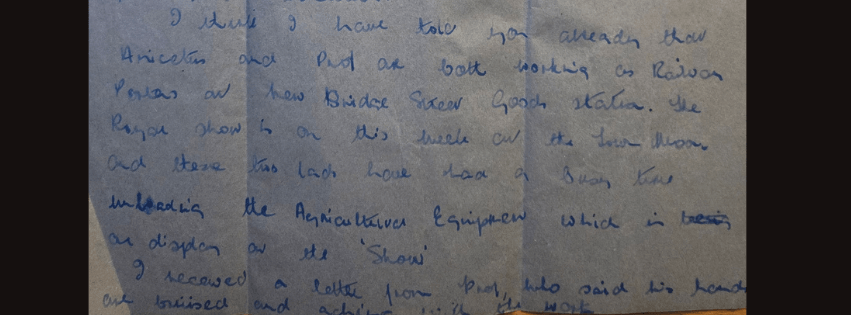
Listen to an extract introducing Louise and her reading of her mother's letter. Click the arrow to play.
The Mixed Museum is often contacted by people who would like us to hold their family stories in our archive. One such person was Louise, who approached the museum with a collection of letters written by her mother to her father, before she was born.
Louise’s parents were a mixed couple. Her mother was white, from England, and her father was Black, from Nigeria. The pair met in the UK in the 1950s at the hospital where they both worked – she as a midwife, he training in dentistry. At the time the letters were written, Louise’s mother was living in Newcastle. Her father was in Nigeria, where he had returned to take up a job as a dentist and prepare for his wife and baby son to join him.
In Newcastle, the couple were part of a wider West African community, and a section of one letter written by Louise’s mother in June 1956 – read in Episode 2 by Louise – offers a fascinating glimpse into friends of theirs who worked on the railways:
‘I think I have told you already that Anicetus and Prof are both working as Railway Porters at New Bridge Street Goods Station. The Royal Show is on this week at the Town Moor and these two lads have had a busy time unloading the agricultural equipment which is on display at the Show. I received a letter from Prof, who said his hands are bruised and aching with the work.’
This is only a brief mention, but it reminds us that people from Africa and the Caribbean were part of railway life in early post-war Britain, even if those histories often remain hidden from view.
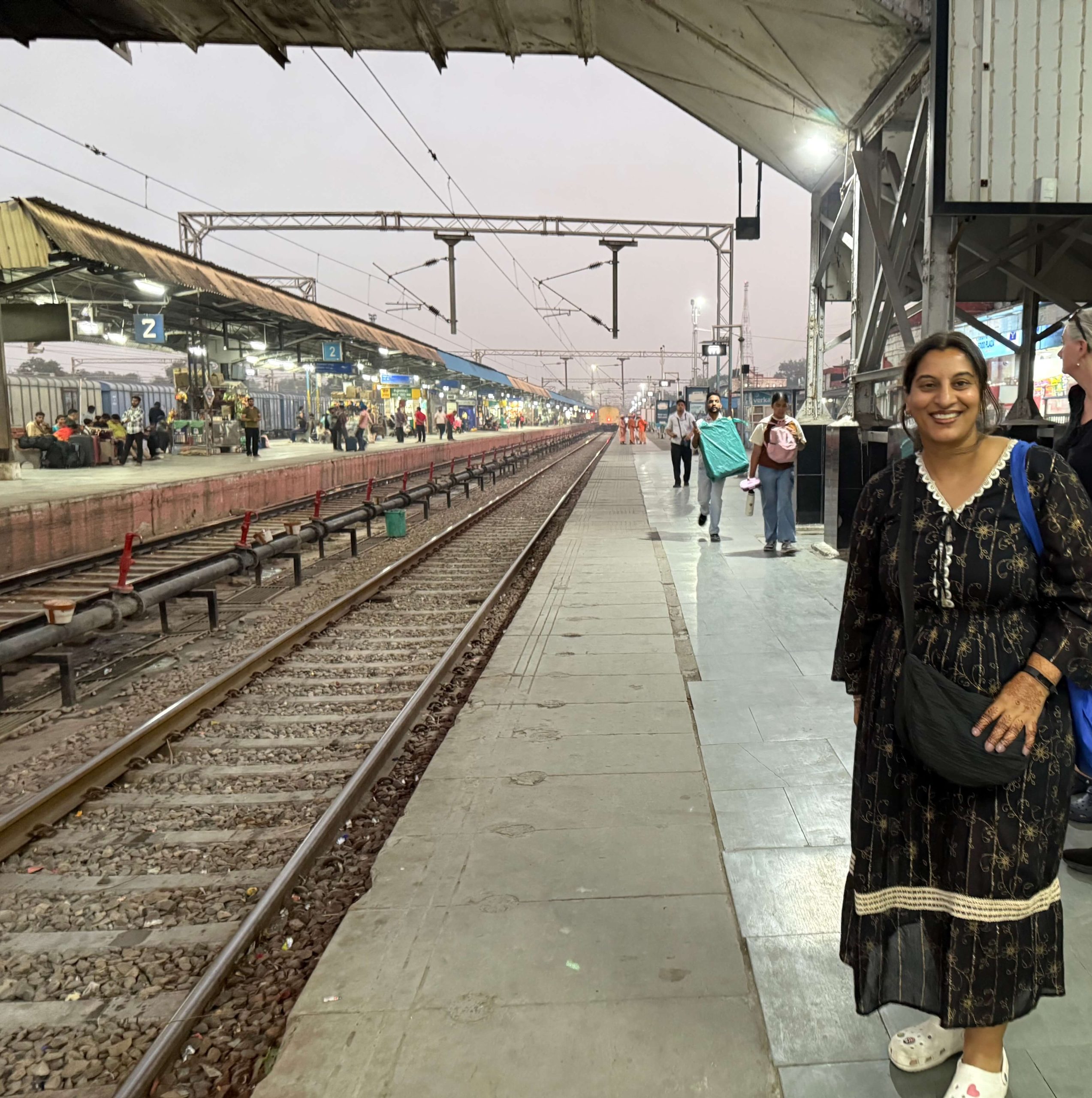
Hear an extract of Rajinder talking about Railway 200, her trip to India and the importance of the railway in her life - and more widely. Click on the arrow below to play.
Rajinder Pryor says she “fell in” to the railways by chance, having left a career in retail in search of a more family-friendly role. Having joined Network Rail in 2005, she is now Head of Business Partnering for the Southern Region, supporting “with all things IT and telecoms”. She is also a board trustee for Women in Rail and leads the cross-industry mentoring programme.
In Episode 2, Rajinder speaks about the changes she’s seen in the rail industry. “When I joined 20 years ago, I was very much in the minority, both as a woman and a woman with an Indian heritage. There were very few South Asian female role models in senior positions, specifically in the fields that I was working in. And so I had to create my own path and navigate on my own.
“It is changing. It takes time, but it definitely is changing. There definitely are more South Asian women and other women from other minority backgrounds in the railway now.”
Rajinder grew up in London. Her parents are both Sikh, from the Punjab region in the north of India. “They both came to England back in the 60s for a better life,” she says. “They came from rural farming families…. So I can imagine it was more than a little shocking for them to come to England. Dad was a machine operator and mum was a stay-at-home mum, but she worked as a machinist sewing clothes.”
In 2025, Rajinder marked both her 20 years with Network Rail and the 200th anniversary of Britain’s railways with a trip to India. There, she visited her mother’s village for the first time in 36 years and nearby Jalandhar City Junction railway station, which she describes as "the King's Cross equivalent".
"I also travelled around India, but I made a point to spend some time and visit the Toy Train in Shimla," she adds. “That was a really historical trip for me. It connected me back to the railway that I love and all that the railway has given me.
“I think one of the reasons why I've become even more passionate about the railway is because I understand the deep history of the railways and the connection between Britain and India. We have a dark history in connection to the railway, but at the same time, there's a lot we can learn from that.
"You know, how do we build on that relationship from the past? We can't change the past, but we can certainly unite and move forward.”
Hear all of these stories and more in Echoes of the Line Episode 2: On the tracks (1945-2026). Listen on Spotify, Apple Podcasts or wherever you get your podcasts.
Episode 1
Listen to Echoes of the Line: Born of Empire: 1856-1945 on Spotify, Apple Podcasts or search your podcast platform.
Episode 2
Listen to Echoes of the Line: On the Tracks: 1945-2026 on Spotify, Apple Podcasts or search your podcast platform.
Episode 3
Listen to Echoes of the Line: Love and Travel: 1945-2026 on Spotify, Apple Podcasts or search your podcast platform.