

Episode 3
 Episode 3
Listen to Echoes of the Line: Love and Travel: 1945-2026 on Spotify, Apple Podcasts or search your podcast platform.
Episode 3
Listen to Echoes of the Line: Love and Travel: 1945-2026 on Spotify, Apple Podcasts or search your podcast platform.For many families in the post-war period, trains were woven into everyday life, connecting relatives and communities across Britain. For those whose lives had been shaped by migration and movement, these journeys often carried ideas of home, belonging and family connection.
In Episode 3, we turn our attention from working on the railways to travelling on them: for fun, for business, for love. We hear family stories of travelling on the railways from 1945 up until the present day, shared directly by those who lived them.
These are everyday tales of childhood trips to the seaside, lost hats and breakfast in the smart dining car. Of taking the train to Chinatowns for hard-to-find ingredients and to Indian sweet shops for treats. And, of course, of travelling by rail for love. The episode ends with an exploration of the railways as a space for creativity.
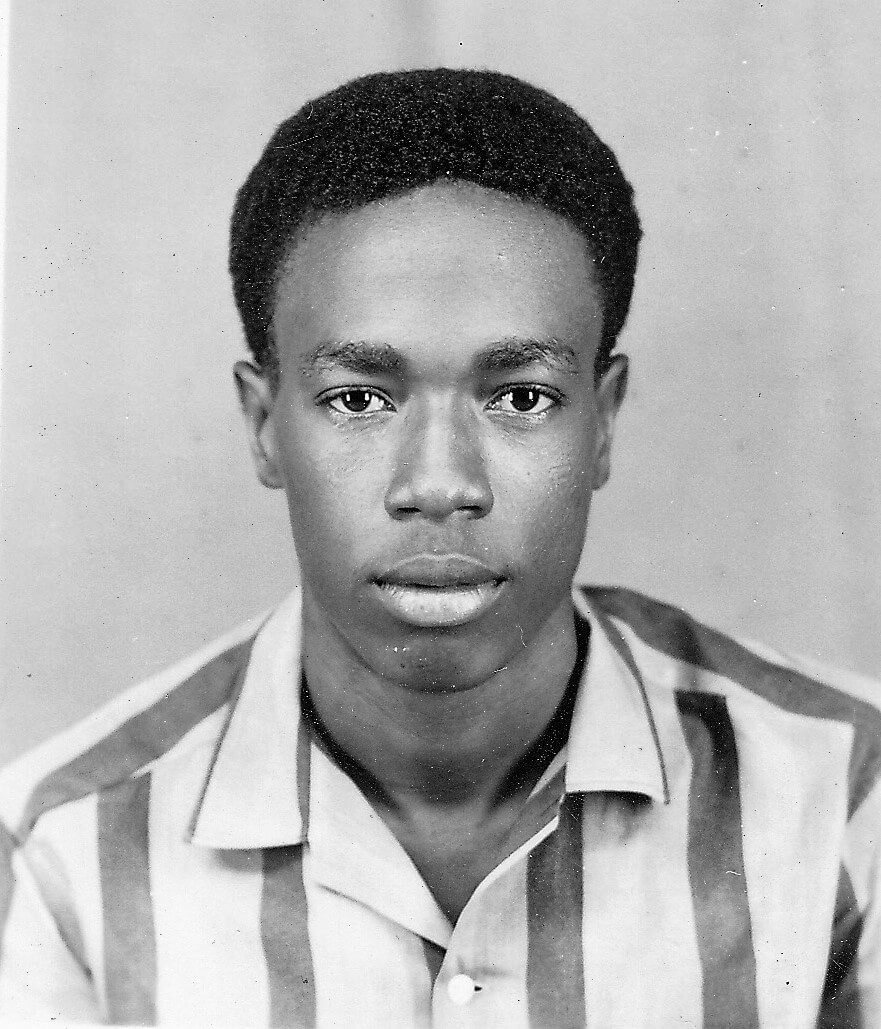

Listen to an extract from Episode 3 of Greg remembering a train journey he took to Cambridge for a job interview – and the reception he received once there. Click on the arrow to play the clip.
Greg Caballero arrived at Gatwick Airport from Trinidad in 1968. He remembers the exact date and time: 13 December at 7pm. He also remembers the train journeys he had to make: first from Gatwick to King’s Cross, and then from King’s Cross to Newcastle, where he was to visit his sister.
In the compartment on the train to Newcastle were four people: an elderly man and woman and two young Scottish women, who were fascinated to hear all about his island of origin. “We got on, talking and talking about Trinidad, and how hot it is,” he remembers. “And there was a bottle of rum, and I said to them, 'Have you ever had rum?' And she said, 'No. Rum – what is it?' We unscrew the bottle, and with a cap, you know, we started taking shots. It was nice. It was great.”
He remembers the journey being so long that he asked the women to wake him up at Newcastle if he fell asleep. “The train stopped and started and stopped, and there was fog, and there was more stopping. And at one point I thought, ‘Are we moving?’. It was slowly working its way to Newcastle and Scotland. It was one of the longest journeys that I ever had on a train.”
That late-night train to Newcastle was one of three significant rail journeys that Greg shared. The second was when he was sent a return train ticket from Newcastle to Cambridge by Pye Telecom to attend an interview for a job with the company, which he’d previously worked for back in Trinidad. He got the job but, walking around town, realised it was not a place he wanted to settle.
“I knocked on the first door with vacancies: 'Oh, I'm sorry, my husband just forgot to take the thing down. We are full up.' Okay. Another one, same story. Three, four, five. Now it’s six o'clock in the evening and I'm thinking, ‘There's a park up there, am I going to have to end up on the bench?’ The last one I tried, I knocked on the door. She came out. I said, 'Have you got a room for the night?' She said, 'Yeah.' I said, 'Thank God for that.' And she said to me, 'I know what you've been through, those bastards.' And so I thought, ‘Wow, I couldn't get a place to even stay overnight. What would I do to get a place to live if I’m working here?’”
After an unwelcoming reception at a local pub – “I walked in, the whole room stopped and all the faces turned to me” – Greg declined the job and, having returned to Newcastle, decided to move to London.
“Now my money was running out, and a ticket back to London from Newcastle was quite a bit, so (my friend) said, 'No worries.' He says he works on the railways, and he had given me this privileged ticket, which was less than what I was having to pay. So, I got his ticket, got my bags.
“On the train, the inspector came in. 'Tickets, please.' (And he says), 'Can I see your pass?' Wow, no pass. I didn't want to get my friend in trouble, you know. I said, 'Oh, hell, I forgot it. I left it behind.' He said, 'Well, you'll have to pay the full fare, and when you get your pass, take it back to the headquarters or wherever it was, and they will refund you your money.'
“Well, that depleted my pocket. I had hardly anything left. And so, anyway, I got into London, you know, and I had enough money to put my luggage in King's Cross left luggage – I think it was a shilling or something, and I'm now looking for somewhere to stay. It go to this bed and breakfast place, and the only room the guy had was 50 pence for the night.
“Downstairs were like 20 guys in this dormitory, 20 beds, 50 pence a night. Oh my god, and I slept there, and the guys were puking and farting and coughing, and it was a hell hole, but I didn't have any money, so I had to do it.”
Luckily for Greg, he found a job after just two days of searching and was able to get paid upfront for new lodgings. But his train journeys weren’t over: he’d formed an attachment with Joan, a woman he’d met up in Newcastle, “and I would go back to Newcastle every so often and she would come up and spend time with me, and eventually we got together, and she came down, and eventually we got married.
“And we were together for 47 years from 1968 until she died in 2015.”
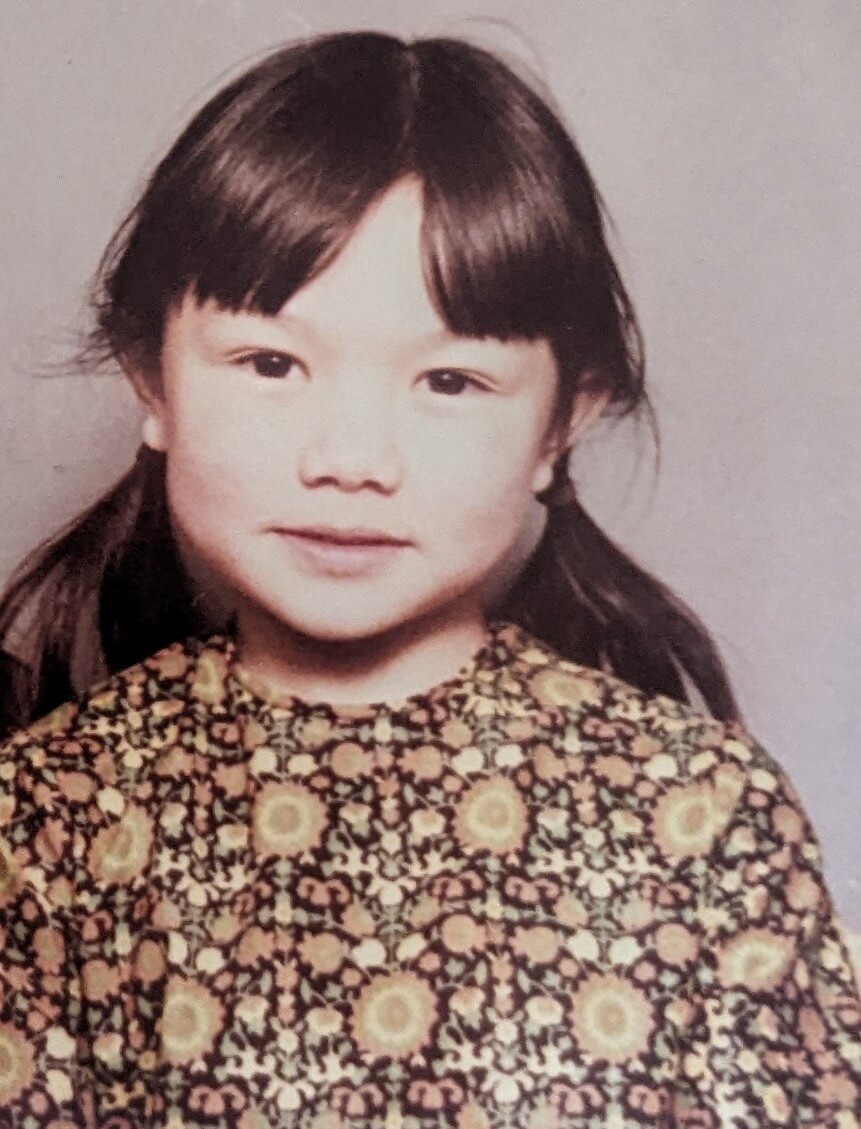
Listen to an extract from Episode 3 of Jemima discussing the importance of the railway in connecting Chinese families like hers to each other and their wider communities in the postwar period. Click on the arrow to play the clip.
Jemima is a PhD history student at the University of Manchester. She’s currently living in Liverpool, where she is researching the history of the Chinese people in the city from the 1950s until the turn of the century, inspired by her own Chinese heritage.
Jemima’s great-grandfather was from Hong Kong. He moved to Liverpool in the 1940s and married her great-grandmother, a widow. Together they brought up five mixed-race children – three of their own and two from her great-grandmother’s previous marriage to another man from Hong Kong. One of those children was Jemima’s grandma.
Jemima's grandfather came over from Hong Kong in the 1950s and worked at her family’s restaurant, which is where he met her grandmother. The couple had three daughters, including Jemima’s mother, who went on to marry Jemima’s Irish father. As she puts it, “There's a lot of Irish and Chinese in my family from Liverpool, and from outside of Liverpool.”
As part of her research, Jemima has spoken extensively with her mother and grandmother about what it was like growing up in Liverpool in the post-war period. Although Chinatowns remained important hubs for community and commerce, it was common for Chinese families to disperse and set up businesses such as restaurants and takeaways in different areas “to avoid too much competition”, she explains.
As a result, her mother remembers regular train journeys to visit family members in other cities – including one to visit her aunt. “My mum would've been quite a young child in the '60s. One of the memories that my mum has of using the trains in the '70s would have been when she got the train to visit her auntie and cousins in Thornaby near Middlesbrough.
“My mum's auntie came over from Hong Kong and set up a takeaway in Thornaby, and my mum remembers – well, there's a picture that we can't find, but I remember seeing a picture of them on a train and they got the train from Liverpool across to Newcastle and then down to Middlesbrough. They made that journey quite a few times. To see family. In that picture that we saw, they were about seven or eight. It was quite (a) long (journey). I think even now it's over three hours.”
Jemima’s mother remembers another train journey when she was aged three or four, when her mother and grandmother took her from Liverpool to the seaside at New Brighton.
“She remembers there was a fairground,” says Jemima. “The trains themselves were steam trains. And rather than having one long train, they were split into compartments. Passengers would sit opposite each other. She would've been a little girl in a little skirt. She remembers sitting on the train seats and having really itchy legs. So you can imagine the backs of her knees being quite scratchy from the seats as a little girl, and the steam as well from the steam trains.”
There were also frequent journeys to visit other family members in Liverpool and Newcastle, to attend weddings, parties and Chinese New Year events. They would visit Chinatowns in other cities to buy hard-to-find ingredients and other items, particularly as the importance of Liverpool’s Chinatown began to wane later in the 20th century.
“When I've been asking my mum and my nana about the train journeys, it's obviously things that they might not see as historically significant,” says Jemima. “But it is really important to capture their everyday experiences.”

Listen to an extract from Episode 3, in which SuAndi remembers the first class dining car she and her father used to frequent during her childhood train journeys from Manchester to London. Click on the arrow to play the clip.
Almost everyone we spoke to for this episode had childhood memories of train travel. For SuAndi – writer, arts practitioner and the Royal Society of Literature’s Honorary Fellow and Benson Medalist – those memories were particularly vivid.
SuAndi grew up in post-war Manchester in a mixed Black Nigerian and white Liverpool-Irish family. She remembers three train journeys vividly.
The first was taking the train as a young girl with her mother. As usual, her mother had dressed her smartly – most likely, she remembers, in a tailor-made dress, coat with a fur collar and hat “which I detested”. The hat was held together with a hat pin.
“On this particular occasion, Mum had been chatting to other people in the carriage and I'd gone out into the corridor. I'd gone along to the door, pulled down the window, and stuck my head out to look as the train travelled along the track. I then thought to myself, what would happen if I took the pin out? I took the pin out, and of course what happened was my hat blew away. It was green, of a fur-like texture. Nervously, I went back to the carriage and opened the door.”
Her mother said nothing in front of the other passengers. But, SuAndi remembers, “She looked at me with a look so red with anger that I sat down quietly and said nothing for the rest of the journey."
Her second rail memory is of travelling on the train to Richmond, Surrey, with her father to visit a “very posh family” he had worked for as a young boy in Nigeria. It was her father’s habit to always have breakfast on the train.
“I'm a little girl, I'm probably six, seven, eight years of age, I'm under 11 anyway,” she says. “I think even then I was aware of the staff's expression of surprise as we entered the dining carriage. The linen tablecloths, the serviettes. And Dad would be there in his Dunhill hat, his overcoat, and his suit. He always wore a suit. And the staff? Well, I think they were nice. I think they were polite. I don't remember any kind of nastiness towards us being the only two Black people in the dining car.”
The final childhood memory SuAndi shares is a more painful one, of travelling with her Auntie Josie to visit her brother when he was incarcerated in a borstal as a young person. “I think it upset my mother too much to go, so my Auntie Josie would take me,” she explains.
“It's not that I remember the train journeys: I remember Crewe station. I grew up believing that Crewe station stood in isolation; there was no town or people or buildings around it. We often used to get to the station late at night and we'd go into the carriages in the dark and we'd sleep there, at least my Auntie Josie would sleep, until daylight and the train would move. It took me many years before I realised Crewe was actually a place in itself and not just an empty station with carriages and engines in it.”
SuAndi is the subject and curator of our digital resource, SussedBlackWoman, which is designed with students and teachers of her monodrama The Story of M in mind.
Listen to an extract from Episode 3 where Rajinder tells how she used to be terrified of the freight train – or the 'monster' as she called it – that used to thunder along the tracks at the end of her childhood garden. Click on the arrow to play the clip.
Rajinder Pryor, who also features in Episode 2, has worked for Network Rail for 20 years. But she hasn’t always had such a positive view of the railways. As a child growing up in Finsbury Park, north London, in the 1970s, the garden of her family home backed onto the railway line.
“I was an anxious child at the best of times,” she remembers. “And I remember (playing in the garden and) hearing the freight trains. And I used to run in saying, 'The monster's come, the monster's come.' I still can recall the loud screeching noise. Sometimes it really continued as a long train passed. I really did believe that it was some kind of dragon or monster that was making that horrendous noise.”
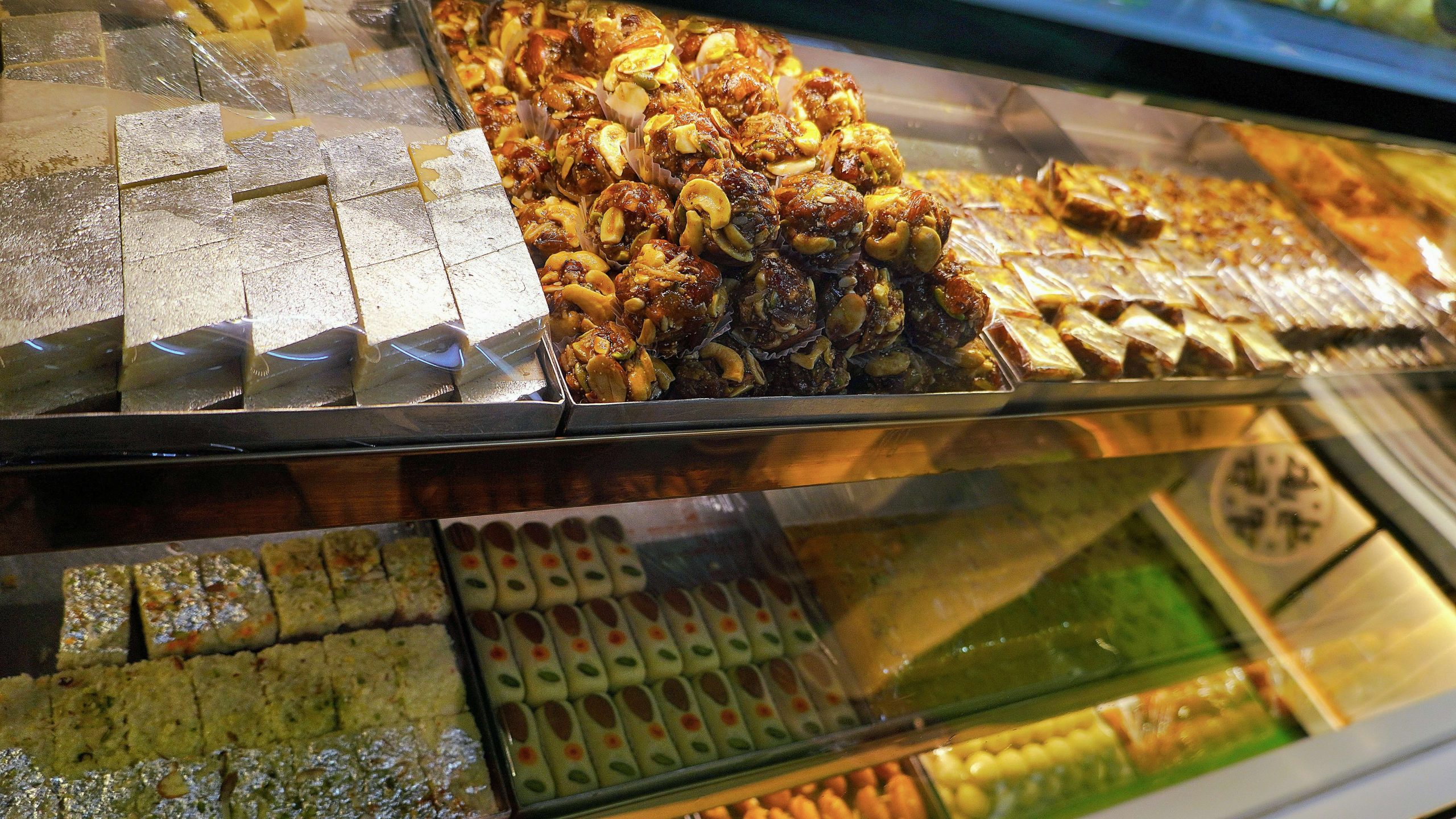
Her first train journey was more joyful. “One of my earliest memories is of King's Cross Station,” she remembers. “I must have been around 10 or 11 or 12. I was going to one of the very first Indian sweet stores, which was called Ambala in Drummond Street. And I can see King's Cross at the time: it was dark, it was dingy, it had a reputation for being rough and shoddy, and there was derelict land around it.
“I recall leaving the station and walking to Drummond Street, and I remember seeing all these South Asian shops. It was probably a rare experience because we didn't live in an Indian or a South Asian kind of community to experience this. So to me, it was, it was like, oh my goodness, this is, this is what India must be like. Going to Ambala was a real treat. We usually went to Ambala when it was a big festival. It was either Diwali or Vaisakhi.
“And I recall the smells, the colours. And then there were the queues because we weren't the only ones that had travelled by train to come to this shop – it was one of the earliest shops that had opened in the area and so people did travel from quite a distance. So I'm smiling as I speak because they really evoke strong memories of my childhood, which much of the time was quite difficult, but, you know, those were really pleasant memories.”
The history of Britain's railways does not end at Britain's shores. As part of Rocket: All Aboard, a project marking 200 years since the opening of the Liverpool and Manchester Railway, writer and performer SuAndi contributed the voiceover to a new animated film exploring the line. The film reminds us that while railways transformed movement and trade across the world, they also underpinned systems of extraction and imperial control across the British Empire. These wider histories also form part of many families' own stories, as artist Michelle Olivier reflects below.
In this extract from Episode 3, Michelle recalls what it meant to see an Anglo-Indian family, with a father who was a train driver, in the television series Call the Midwife which is set in Britain in the post-war period. Click on the arrow to play the clip.
Michelle Olivier is a former psychotherapist who is now a full-time artist. She describes her work as falling into two categories – “ballast” and “baggage”. ‘Baggage’ is about the weight of history and the sense of wanting to represent what hasn’t been represented, including “what I would have liked to have seen when I was a kid – that being mixed isn’t anything new, it’s not exotic”. ‘Ballast’ is work that counteracts the loss and trauma; that makes her feel happy. “I find joy in doing colourful work about the natural world, or just the visual pleasure of a colour, something as abstract as that. I find that very sustaining.”
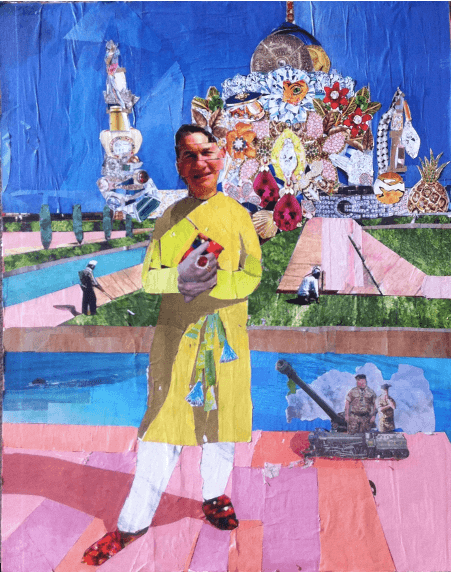
In 2017, she made the artwork It’s always, but what about the railways?. The piece features the former politician turned writer and broadcaster Michael Portillo.
“I am quite irritated by the Great India Railway Journeys programme that he makes,” she explains. “He holds a book called a Bradshaw, which is the guide to the colonies, and it was written in 1913. And that says quite a lot, doesn't it? That people who were colonised are meant to feel grateful at this great benign gift of the railways, when really it was about moving troops around and extracting resources.
“So I went to town on a very colourful collage that shows an image that might be the Taj Mahal covered in jewels and some troops with tanks, and Michael there with his book tucked under his arm. Michael Portillo's wearing very brightly coloured South Asian-themed clothes. And looks like he's loving it."
Michelle is from an Anglo-Indian background: a mixed community that developed over several centuries, primarily through marriages and relationships between Indian women and European men – particularly British and Portuguese – who lived and worked in India during the colonial period. Her parents moved to London in the late 1950s, following Indian independence.
“In my community, Anglo-Indian men worked on the railways, and so if somebody was called a railwayman during the Raj period, it probably meant the same thing as Anglo-Indian,” she says. “A lot of my relatives lived in what were called railway colonies at important junctions for the convenience of that whole system.
"I think there's so much misinformation about what went on during colonialism. People understand that colonialism was a kind of very generous sharing of British culture or European culture with people who were colonised, rather than exploitation and impoverishment.
“So, the phrase, 'But what about the railways?' (is) something that can be said back to us when we say, 'It was exploitative. It was dreadful', as if we're meant to be grateful for being colonised and exploited.”
In the 1930s, Michelle’s father and uncle worked at Howrah, a mainline station in Kolkata, on the Bengal Nagpur line. “So when men in my family and acquaintances arrived in the UK in the '50s and '60s and even '70s, one thing many of them gravitated to was working for London Transport, either on the Tube or on the mainline railways.”
Despite their deep connection to Britain, Michelle describes Anglo-Indians as “invisible” in historical discourse in the UK. So when she was watching an episode of the British series Call the Midwife and saw a South Asian family being introduced with European names, she felt an immediate sense of recognition.
“I was thinking, ‘Ooh, maybe’. Then I thought, ‘No’,” she remembers. “And then the guy's a train driver, and I thought, ‘What?’ And then the woman's asked how she felt arriving in England, and she says, 'Well, we're Christians, so we thought we'd find it easier, but it hasn't been. We're called Anglo-Indians.' And I just screamed. My husband came running to see (if) everything was all right, and I was just pointing at the TV like a goldfish.
“They weren't heroes, they weren't baddies – just (to have) something really normal about being mixed race was very powerful.”
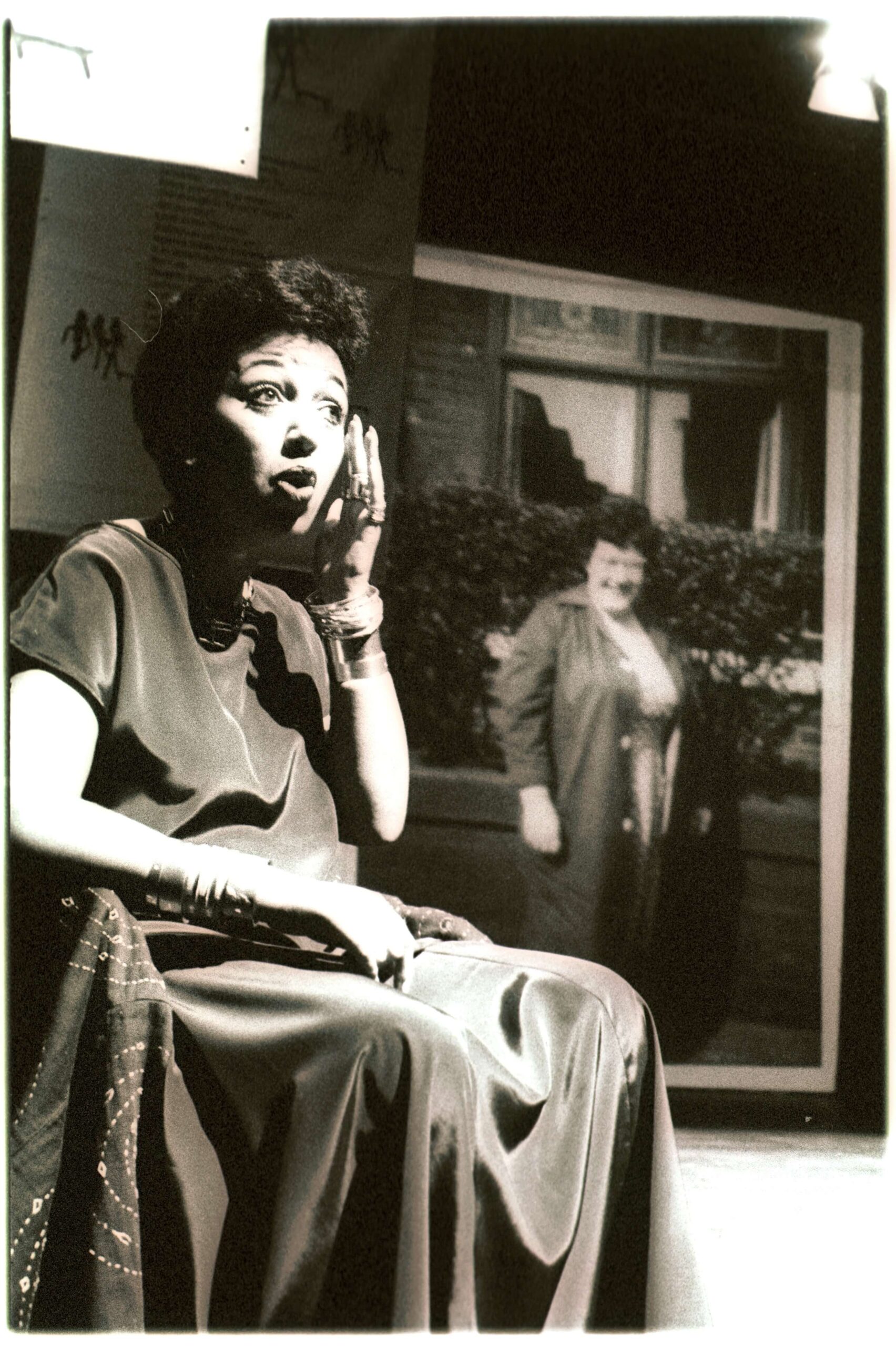
In this extract from Episode 3, SuAndi recalls writing her monodrama The Story of M – now on the EdExcel A Level curriculum – on a British Rail train. Click on the arrow to play the clip.
It was an experience as an adult that SuAndi describes as “my most important rail journey”. On 2 May 1995, she was returning home to Manchester after performing her show This Is All I’ve Got to Say at the ICA in London when Lois Keidan, then the ICA's Co-Director, rang to give her a critique.
“I didn't agree with all of it, but what I held on to was a closing comment about the final poem, which was a dedication to white women who'd had relationships with Black men, become mothers etcetera and how they'd been ostracised not just by society but in some cases by their families.
“I was perhaps 30, 40 minutes into the journey when I started to write. I was sat at one of those tables, you know with people opposite. I can't remember who was sat there, but the seats were occupied. And I wonder now what they thought, as the more I wrote, the more I cried. And my nose was running, I remember that. I kept wiping my hand across my nose like a little child who can't find a handkerchief. By the time we got into Manchester, I'd more or less completed the script of what was to become The Story of M, which is now part of the A-level curriculum for schools in England.
"Thank you, Lois, and thank you British Rail for giving me that space to write."
Hear all of these stories and more in Echoes of the Line Episode 3: Love and travel (1945-2026). Listen on Spotify, Apple Podcasts or wherever you get your podcasts.
Episode 1
Listen to Echoes of the Line: Born of Empire: 1856-1945 on Spotify, Apple Podcasts or search your podcast platform.
Episode 2
Listen to Echoes of the Line: On the Tracks: 1945-2026 on Spotify, Apple Podcasts or search your podcast platform.
Episode 3
Listen to Echoes of the Line: Love and Travel: 1945-2026 on Spotify, Apple Podcasts or search your podcast platform.