GUEST POST: “Enter, Tragic Mulatta” – Amy Townsend-Lowcock on challenging historical stereotypes of mixed race women
It was after a fellowship in Venice in 2024 that multimedia artist Amy Townsend-Lowcock began looking into her own mixed family history, tracing her Jamaican roots back to a Scottish slave trader in the 1700s. That led to a project bringing together other mixed race women in Manchester to challenge the stereotype of mixed race women – the ‘tragic mulatta’ – that was popularised during the abolitionist movement.
In this guest post for TMM, she explores the historical roots of the project, reflects on the complex emotions that can be unearthed by genealogical research – and describes what it was like to come together with other women in “pride, resistance and joy”.
The beginnings of the Enter, Tragic Mulatta project
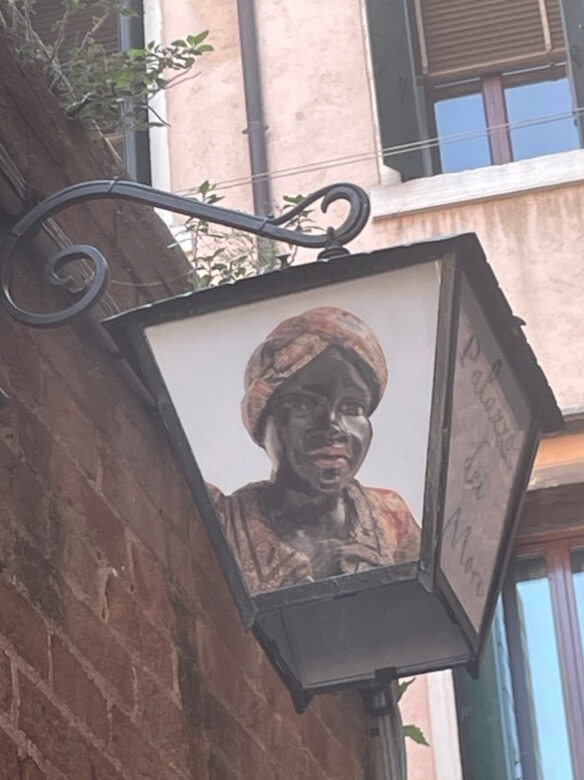
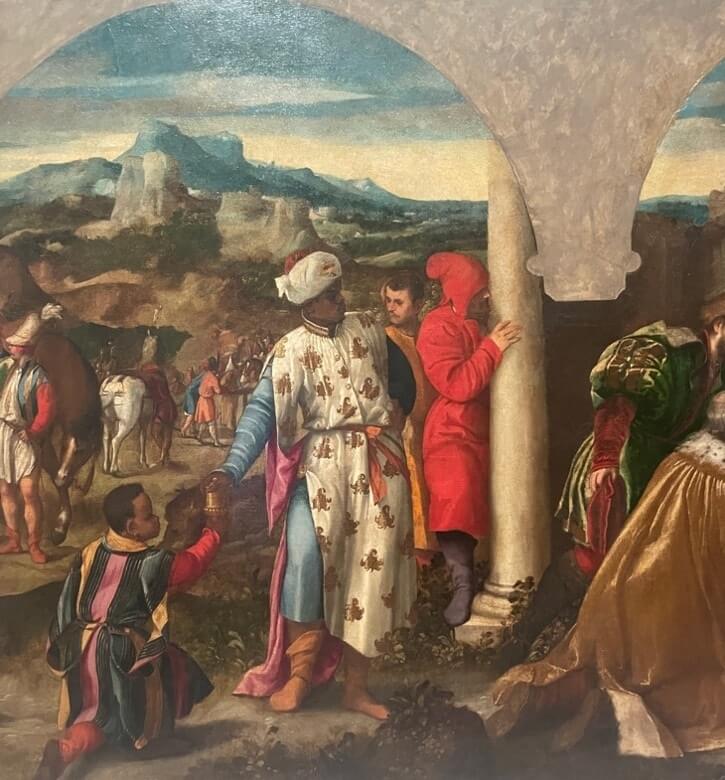
The seeds of Enter, Tragic Mulatta were sown in 2024, when I was at the Venice Biennale on a month-long creative research fellowship for the British Council. I was investigating how people of colour were depicted in Venetian art, taking inspiration from Venice’s grand galleries as well as public art around the city. Along my adventures, I discovered a striking painting in the Gallerie dell’Accademia that featured a dark-skinned ‘Moorish King’ and his servant. I was drawn to the king’s confident stance, and his glimmering wealth contrasted so starkly with the racist caricatures I had come across so far in the city. As a multimedia artist and researcher, I am interested in how art reflects and defines a society’s ideas about race. In this busy Venetian gallery, my desire to explore how dominant social narratives around race are upheld by artistic texts was reinvigorated.
Enter Tragic Mulatta, therefore, started as a solo research project. It began with me tracing my own family history and comparing the lives of my ancestors to stereotyped stock characters from literature. I discovered my Jamaican ancestors were a mixture of enslaved people and slave owners. Many were mixed race, and many had been both enslaved and slave owning at some point in their lives. I found the ‘tragic mulatto’ myth – a literary stereotype first created in the abolitionist era to capture the horrors of the affects of slavery on mixed race women – to be an interesting point of comparison. Several of my mixed heritage ancestors were slave owners at the time the ‘tragic mulatta’ stock character was invented, as well as being formerly enslaved themselves. As one of the most prominent records of attitudes towards mixed heritage people at this time, the tragic mulatta’s story erases such nuances in how power was distributed along racial lines across North America. I was keen to challenge this oversimplified portrait of mixed heritage people’s experiences by highlighting the little-known histories of mixed race slave owners, which can be found in my family tree.
With the help of the UCL Legacies of British Slavery database and The National Archives, I traced my Jamaican roots back to a Scottish slave trader in the 1700s and displayed my discoveries in a small pop-up exhibition, 890 Names, at Lowry, the national arts space in Manchester, UK.
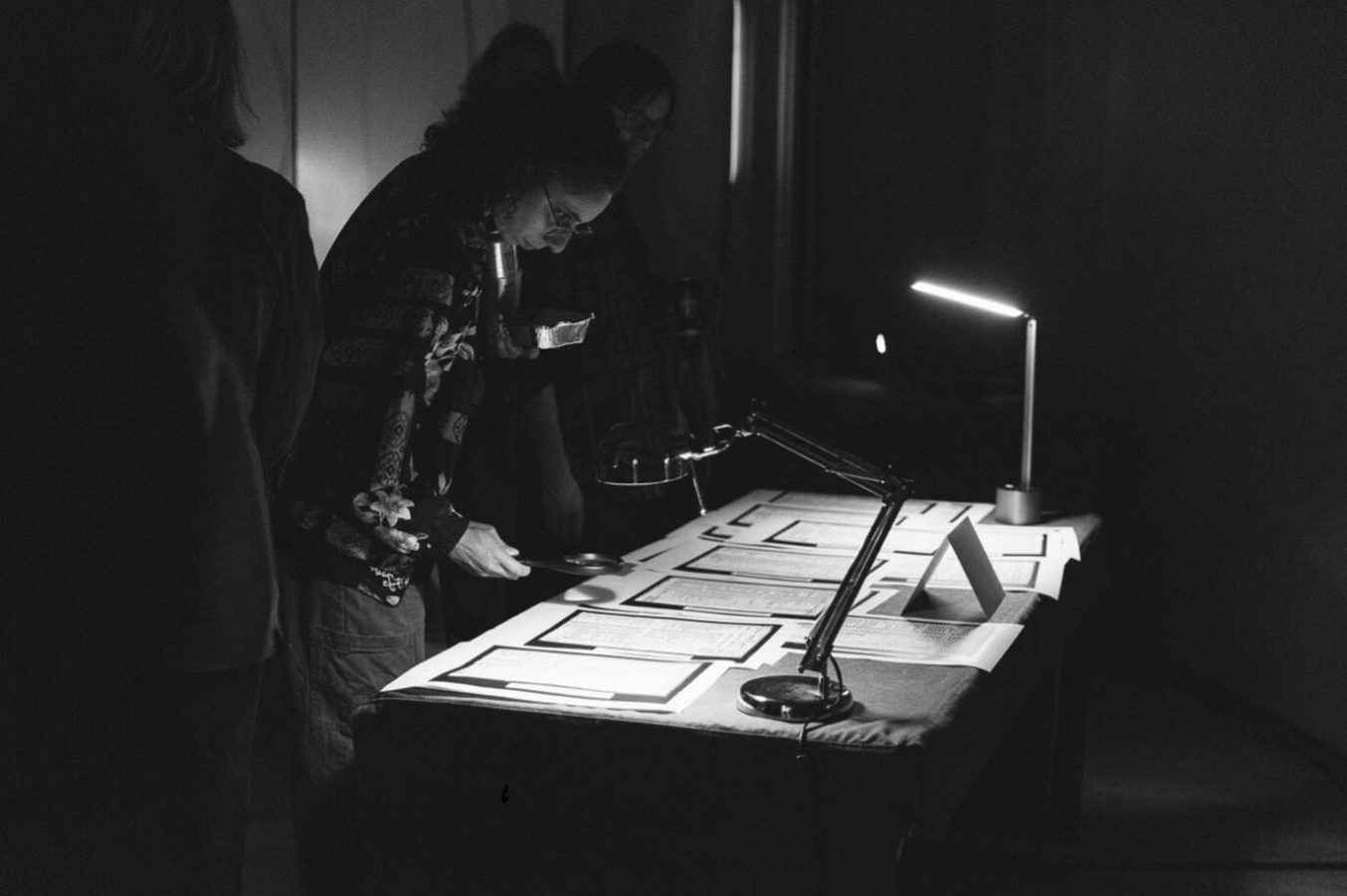
On the night of the exhibition, I discovered that I was not alone in my confusing feelings towards my heritage: several mixed heritage visitors shared their family stories with me, and in those conversations, we created a small space to talk about the intergenerational shame and trauma that can come from genealogical research. After these conversations, I was sure that I wanted to push my research further. So I began designing a project that would provide a platform for more mixed heritage people to share their stories and challenge the stereotypes about mixed heritage people that are perpetuated by the tragic mulatta myth.
Who is the ‘tragic mulatta’?
The ‘tragic mulatta’ is a mixed-heritage stock character that literary scholars locate in early nineteenth-century antislavery and sentimental fiction. In the United States, these figures appeared in works such as Lydia Maria Child’s The Quadroons (1842), where the legal and social paradoxes of mixed heritage under slavery – particularly the idea that ‘one drop’ of ‘black blood’ made a person Black – were used to expose the injustices of enslavement.
In most of the texts in which she appears, the tragic mulatta has white and Black heritage. Critically, her mixed ancestry is written as the driving force behind her tragic downfall. In earlier texts written during the abolitionist movement, the tragic mulatta was depicted sympathetically. She was beautiful, kind, loyal, and often refined or educated. In many stories, she was depicted as white in appearance and living in a white world, with the sudden discovery of her ‘Black blood’ – including in some cases by herself – leading to her downfall. In keeping with abolitionist beliefs, authors emphasised that the system of transatlantic slavery was responsible for securing her physical and psychological demise, and her story often ended in being sold into slavery, abandoned, or dying violently.
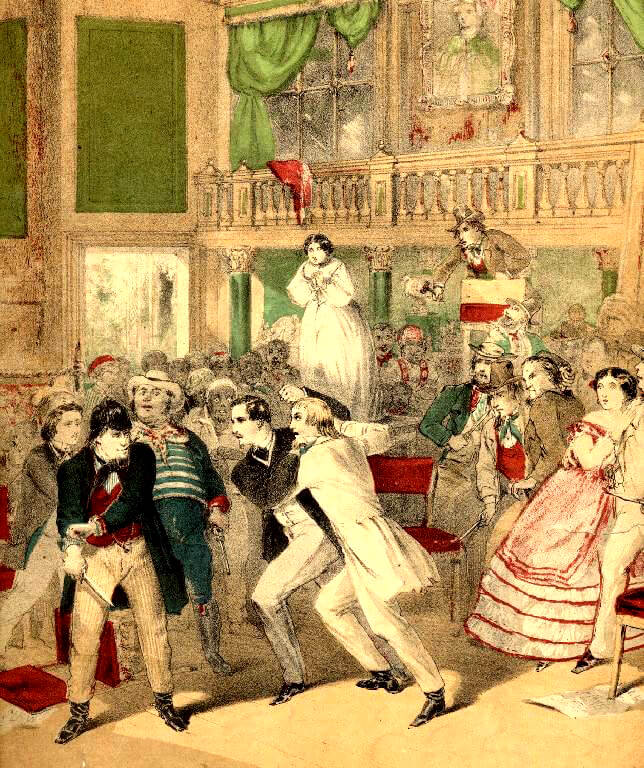
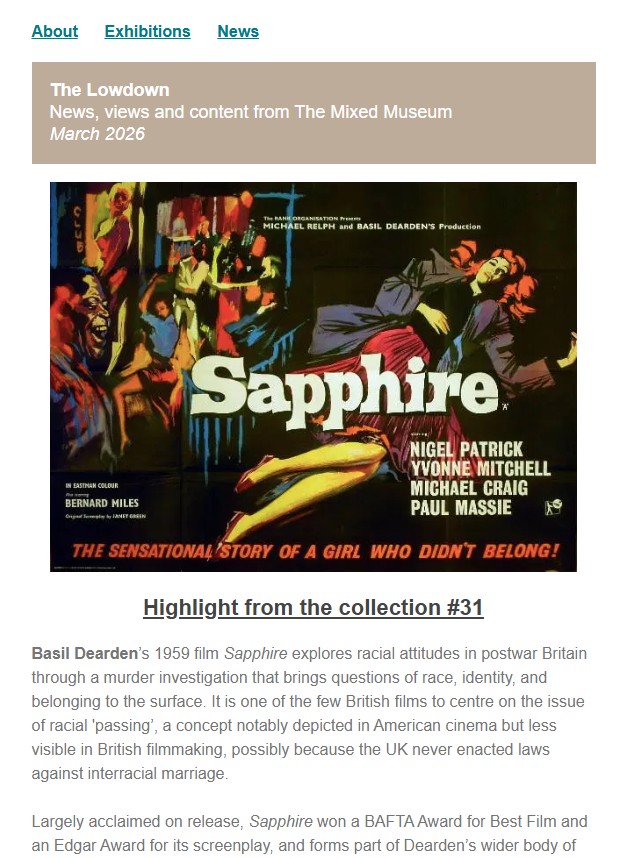
From the late nineteenth century onwards, linked with the rise of Jim Crow segregation and the social science concept of the racially mixed ‘marginal man’, the tragic mulatta was increasingly portrayed through narratives of racial ‘passing’. Rather than serving solely as a sentimental victim of slavery, she was often depicted as caught between racial categories, and in some cases her desire to pass as white was framed as morally ambiguous or socially disruptive, particularly when overlapping with the Black woman ‘Jezebel’ stereotype. These portrayals reflected broader cultural anxieties about racial boundaries, loyalty, and belonging, as demonstrated in the screen adaptations (1934 and 1959) of the American novel Imitation of Life (1933) and Walter Moseley’s novel Devil in a Blue Dress (1990), adapted for the screen in 1995. The character of the tragic mulatta also found its way to British novels and dramas, such as the film Sapphire (1959), whose plot is driven by the trope.
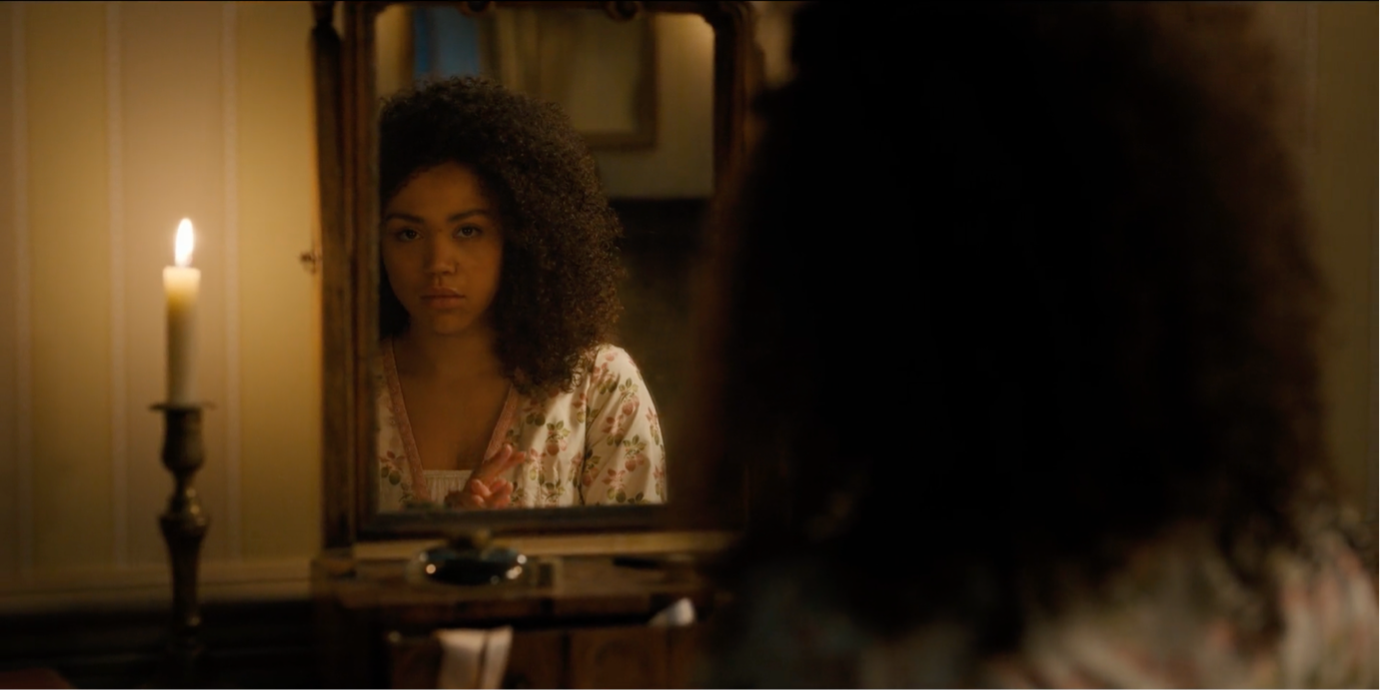
Although it is less common to see the tragic mulatta as a clearly defined stock character today, elements of the trope still occasionally appear in contemporary stories concerned with racial ambiguity and identity conflict. For example, some scholars and commentators have read the character of Marina Thompson in Netflix’s Bridgerton through this lens.
Enter, Tragic Mulatta comes to life
In September 2025, I put a call-out on social media for Manchester-based mixed heritage women and non-binary people to take part in a creative storytelling project about the tragic mulatta myth. A few weeks later, we were up and away. Nine participants joined us for six creative writing workshops at Lowry in Manchester. The bond was almost instant, with a natural warmth and an atmosphere of shared understanding filling the space from the first few minutes of workshop one. We wrote about hair, families, relationships, imposter syndrome, memories of belonging, and moments of feeling at sea. Most of us had never been in a room with so many mixed people of white and Black ancestry before, and the excitement was palpable.
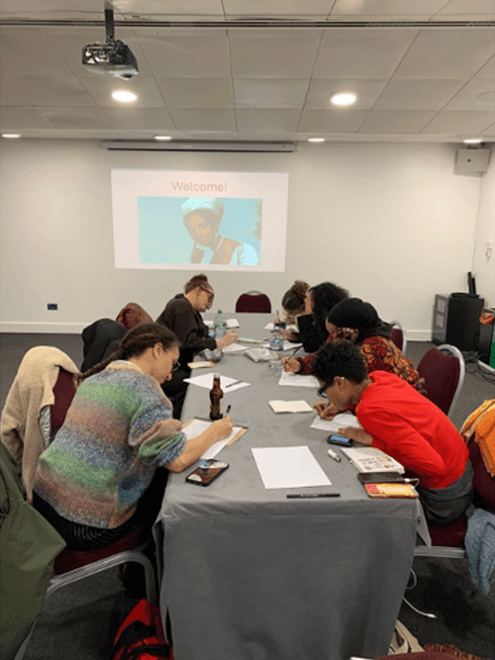
The Enter, Tragic Mulatta workshops included a mixture of individual writing exercises and performance activities. Over the course of six workshops, we explored the myths that have been pasted onto our brown bodies and learnt more about the history of mixed race representation in the media. Our collective aim was to challenge the ‘tragic mulatta’ myth through our writing and present a diverse array of counternarratives to the stock character’s tragic story. Everyone’s writing style was different, and a few of the participants had never written poetry or performed their writing before. You couldn’t tell. Although the group included a mixture of ages, and participants had grown up in different parts of the UK, our stories were tied together by having faced similar questions about who we are and how we walk through the world.
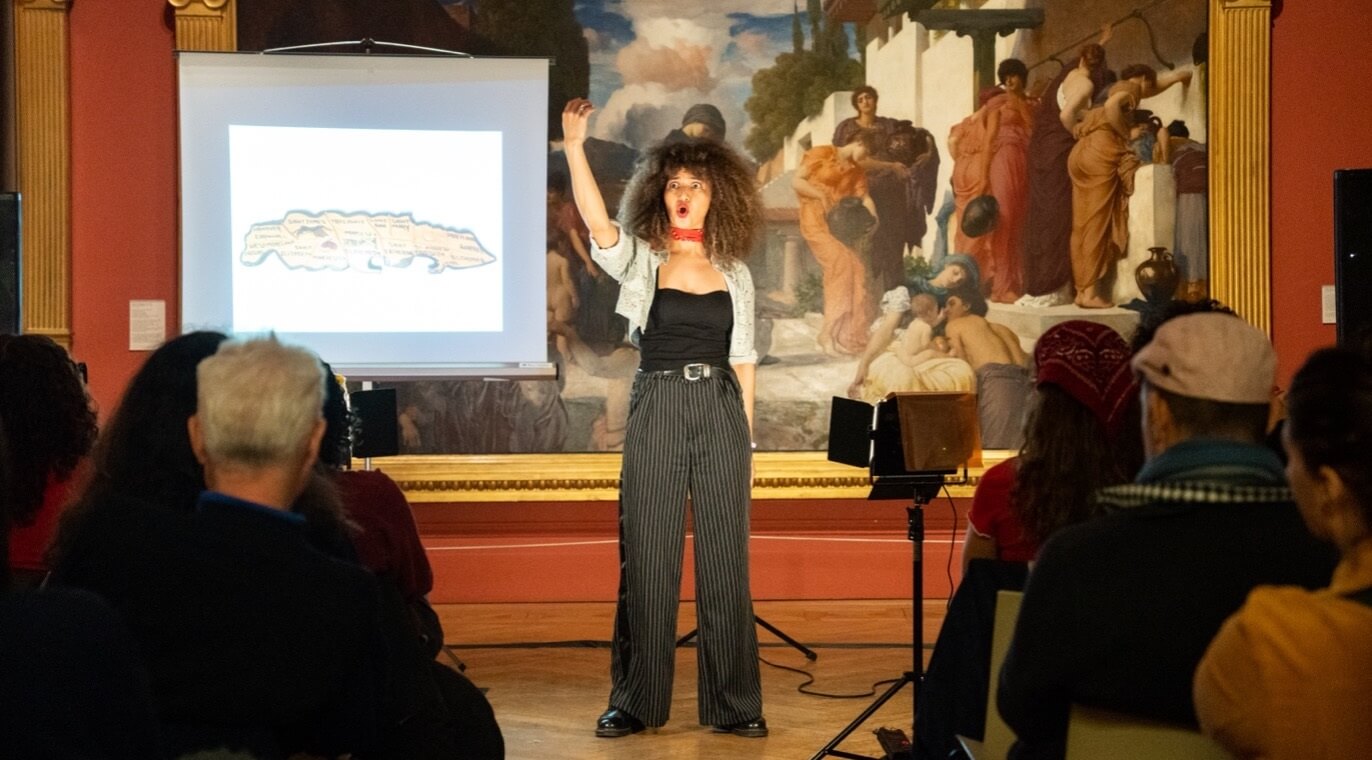
Only a few weeks after meeting for the first time, we had created a performance to share with a public audience. On 26 November 2025, the group took to the stage in the historic red Victorian Galleries at Manchester Art Gallery. Performers shared their pieces alongside a photo of an object that they felt represented their heritage, speaking back to the art and archive on display in the room. It was an evening of pride, resistance and joy. We closed the show with a group poem, celebrating the journey we had been on together.
Enter Tragic Mulatta online exhibition
My final aim for the project was to create and exhibit an alternative archive of mixed heritage experiences – one free from the restrictions of the ‘tragic mulatta’ story arc. This is now live and includes a recording of the full performance along with oral history interviews from the project’s participants:
https://ajlt.myportfolio.com/enter-tragic-mulatta
The online exhibition also features more information about the ‘tragic mulatto’ myth and images of objects selected by participants that reflect their mixed heritage. As a group, we are excited about what the future might hold.
One of the oral history videos – an interview with Lydia, a participant – from Amy's Enter, Tragic Mulatta online exhibition. Visit the exhibition to see all the recordings of the participants.
Amy Townsend-Lowcock
is a mixed-heritage multimedia artist with Jamaican, English, Irish, and Scottish ancestry. Inspired by experimental theatre, documentary filmmaking practice, and public history, her work invites audiences to re-imagine British identity for the postcolonial era. Her theatre work includes My Fruits (HOME Manchester, 2023) and Handle with Care (Contact Theatre, 2022).
Learn more
Visit Amy's ‘Enter, Tragic Mulatta’ online exhibition for updates and to learn more about the project
Read our entry about Sapphire, the 1959 British film with elements of the ‘tragic mulatta’, in our permanent collection, The Timeline
Read our previously published guest blogpost, Navigating mixedness in therapy by counsellor Yvon Guest, which explores the historical roots of colourism in relation to people of mixed race
Sign up to our newsletter for latest posts!
Enjoyed this article?
Sign up to The Mixed Museum’s newsletter to stay updated when new blog posts like this go live. We send highlights from the museum's collection, links to new articles, and other interesting updates direct to your email inbox once a month.