GUEST POST: “Chopsticks in the cutlery drawer” – Allan O’Neill on growing up Eurasian in 1980s Lancashire
After meeting in Hong Kong in 1955, Allan O’Neill’s parents Yuet Wah and Frank O’Neill moved to Lancashire to start a family. Allan remembers his British-Chinese childhood in his father’s home town of Padiham, Lancashire, as in many ways “typically white working-class”, but with chopsticks in the cutlery drawer and a big pan of rice in the kitchen. In this guest blogpost, he reflects on his lifelong journey to come to terms with both sides of his heritage – and explains how he now expresses his pride through art.
Meeting at an army barracks in 1950s Hong Kong
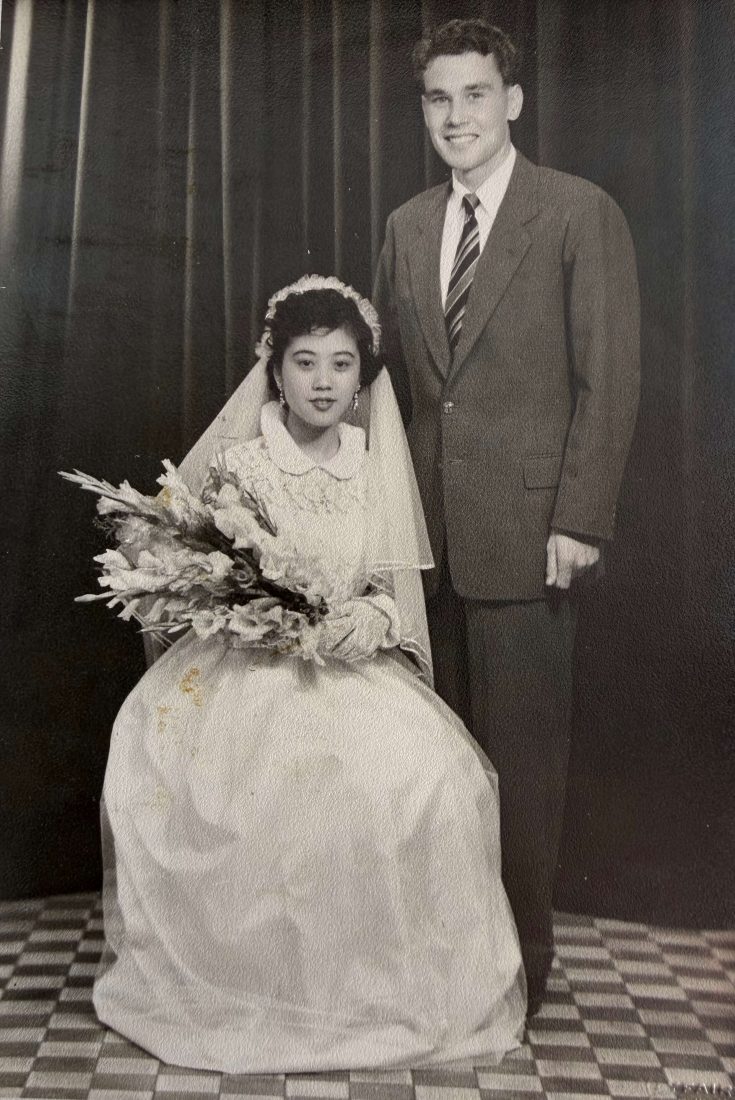
My mother, Yuet Wah, was 18 when she first met my father, Frank O’Neill, a young soldier from Lancashire serving with the British Army in Hong Kong in 1955. They began a six-month courtship under the strict supervision of my mum’s adoptive mother. It was the beginning of a new adventure for the young Yuet Wah on the other side of the world, marrying Frank, with whom she would go on to have four children – a daughter and three sons. But she would leave behind her family, friends and cultural ties and return to Hong Kong on only three occasions in the next 70 years.
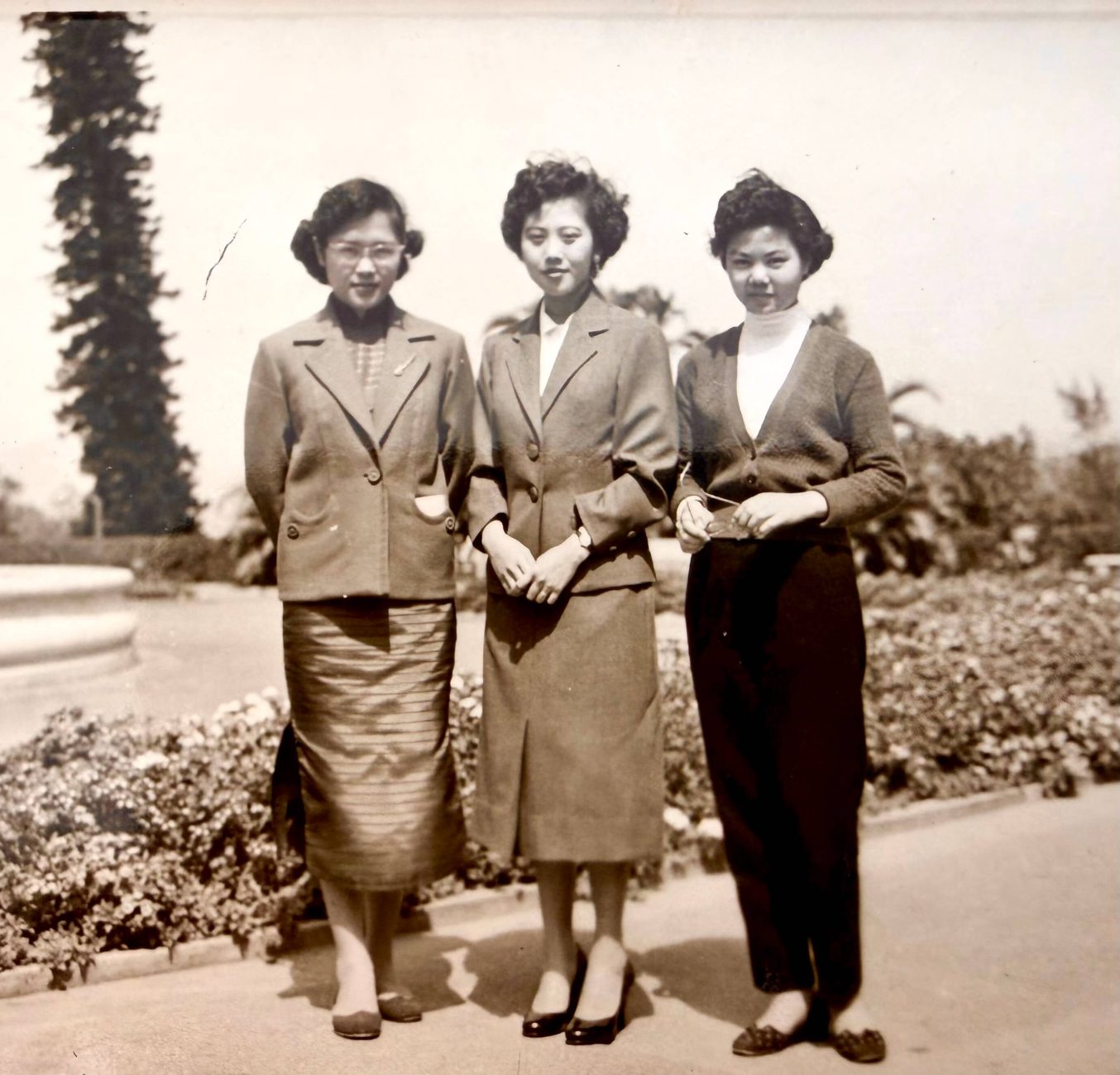
Because her adoptive mother had scraped the money together for her secondary education at Tak Ching Girls’ convent school in Hong Kong, my mum spoke English. This helped her to secure a job working in the NAAFI – the shop on the army barracks where soldiers would pass the time of day coming in for their cigarettes and chocolate – and that was how my mum met my dad.
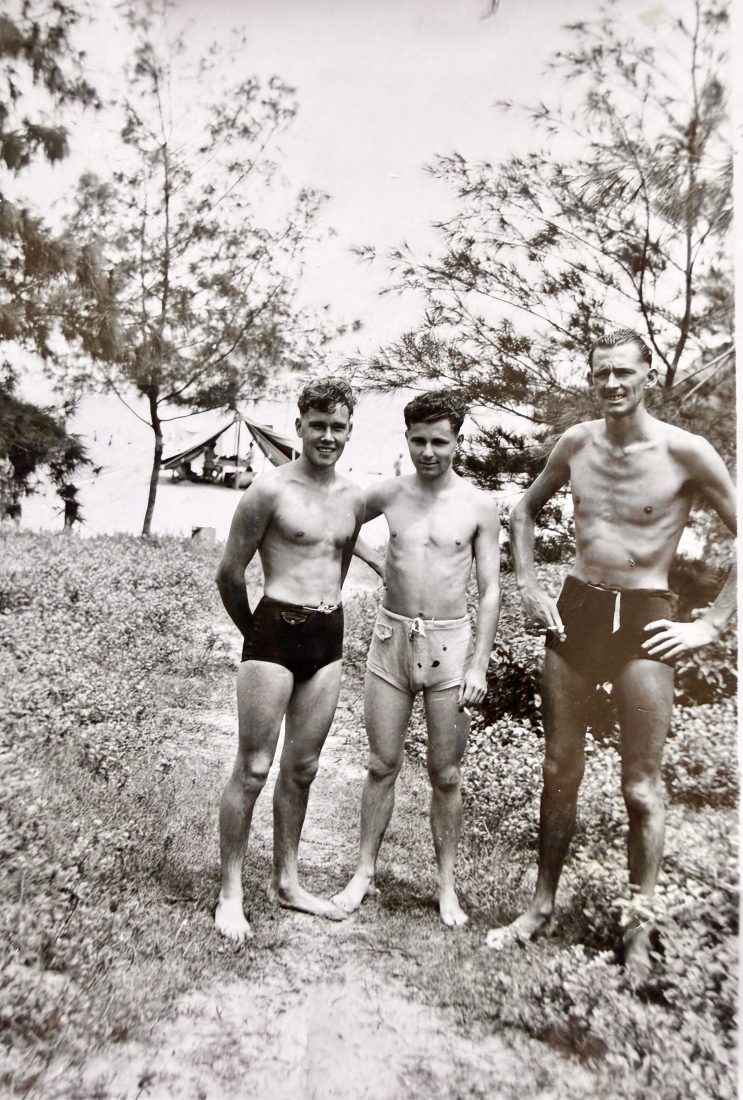
Frank had signed up for a three-year stint of National Service to secure the ‘plum’ overseas posting to Hong Kong, considered a jewel of the British Empire. He was 20 years old and came from Padiham, a small mill town located on the outskirts of Burnley, Lancashire. Frank found Hong Kong so vibrant and exciting: a complete contrast to the 'dark satanic mills' of Lancashire.
From Sunday walks in Hong Kong to married life in England
After my dad met Yuet Wah, he spent every spare moment hanging around the NAAFI shop getting to know her whilst fending off potential interest from other soldiers. Yuet Wah’s mother was very protective of her shy adopted daughter and aware of the reputational damage that could befall a local girl for appearing to ‘get too close’ to a British soldier. But my dad had fallen in love and was persistent, taking my mum for Sunday walks and trips to the cinema. Yuet Wah thought that Frank was handsome – “like a film star” – and spending time with him gave her the chance to improve her English. As Frank’s three-year stint neared its end, he asked Yuet Wah’s mother if he could send for her daughter when he returned to England. She reacted by chasing Frank down the stairs with a large bamboo stick – Yuet Wah was not going to be a Madame Butterfly, waiting for the call from a soldier that would never come!
Yuet Wah could not imagine emigrating to England as a single Chinese woman. There was also a racial prejudice embedded within the British Army establishment, which considered fraternising with local girls as to be expected, but actively discouraged the idea of a British soldier ever actually marrying a local Chinese woman. But Frank was determined. He fought the prejudices of his senior officers and married Yuet Wah in Hong Kong, which allowed the couple to return to England in 1955 as husband and wife, Frank and Yuet Wah O’Neill.
When Yuet Wah arrived in Padiham, Lancashire, she was embraced by the O’Neill family. My grandmother Nellie, a formidable matriarch and cotton mill worker, adored her new daughter-in-law. I grew up being told lots of beautiful stories about my mum’s early experiences in 1950s Lancashire. Her joy and wonderment as she ran into the street in her night gown to experience snow falling for the first time. My grandma taking my mum out shopping and having to stop her from haggling the prices down with the staff in Woolworths: “That’s the price Yuet Wah, you can’t change it!”.
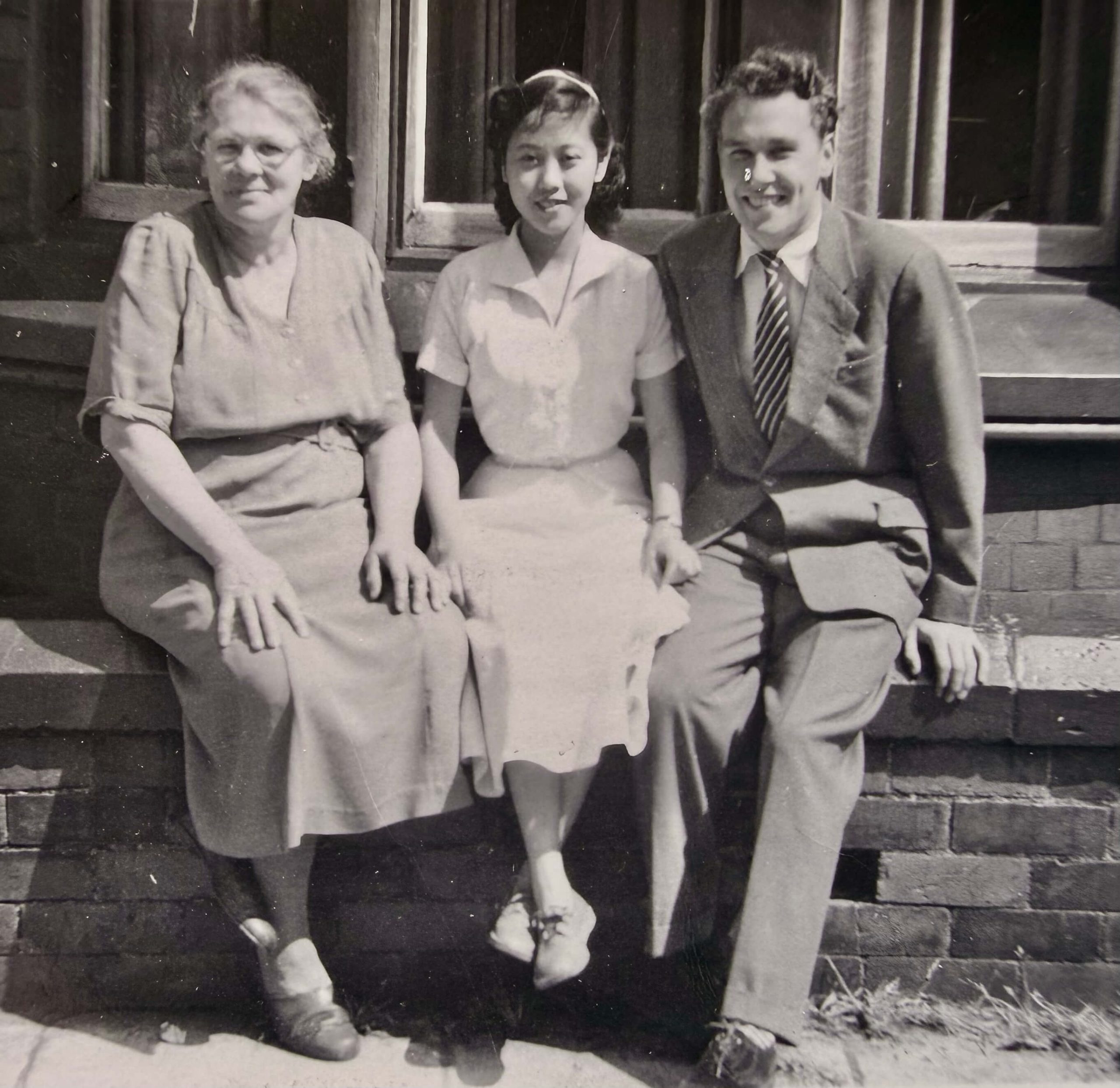
I always got the impression that the local community were curious about my mother’s difference rather than anything more malign. Yuet Wah was pretty, courteous and polite, and she always seemed to be greeted with warm smiles and was well-liked around Padiham, perhaps because she offered no threat. My dad told me that a reporter from the Burnley Express knocked on the door and wanted to write a story about my mum’s arrival from Hong Kong, but my grandma swiftly replied: "Mind your own business!" I also think that despite her racial difference, Yuet Wah had experienced a harsh and precarious life in Hong Kong, so she was well used to the daily struggles of ‘putting food on the table’. That meant she quickly assimilated into working-class life in Lancashire, and she is now as blunt-speaking as any Lancastrian I know.
When mum and dad first arrived in England, they lived at my grandma and granddad’s house with Uncle Harry, my dad’s twin brother. After leaving the army, Frank went back to his trade as a painter and decorator, and they moved to a council house in Windermere Road, Padiham. In 1957, my parents had their first child, my sister Carol, before having three sons – Michael, myself and Kieran. Only Carol has a Chinese name – her middle name is Tse. My mum was worried that “the boys will get trouble if they have Chinese names”.
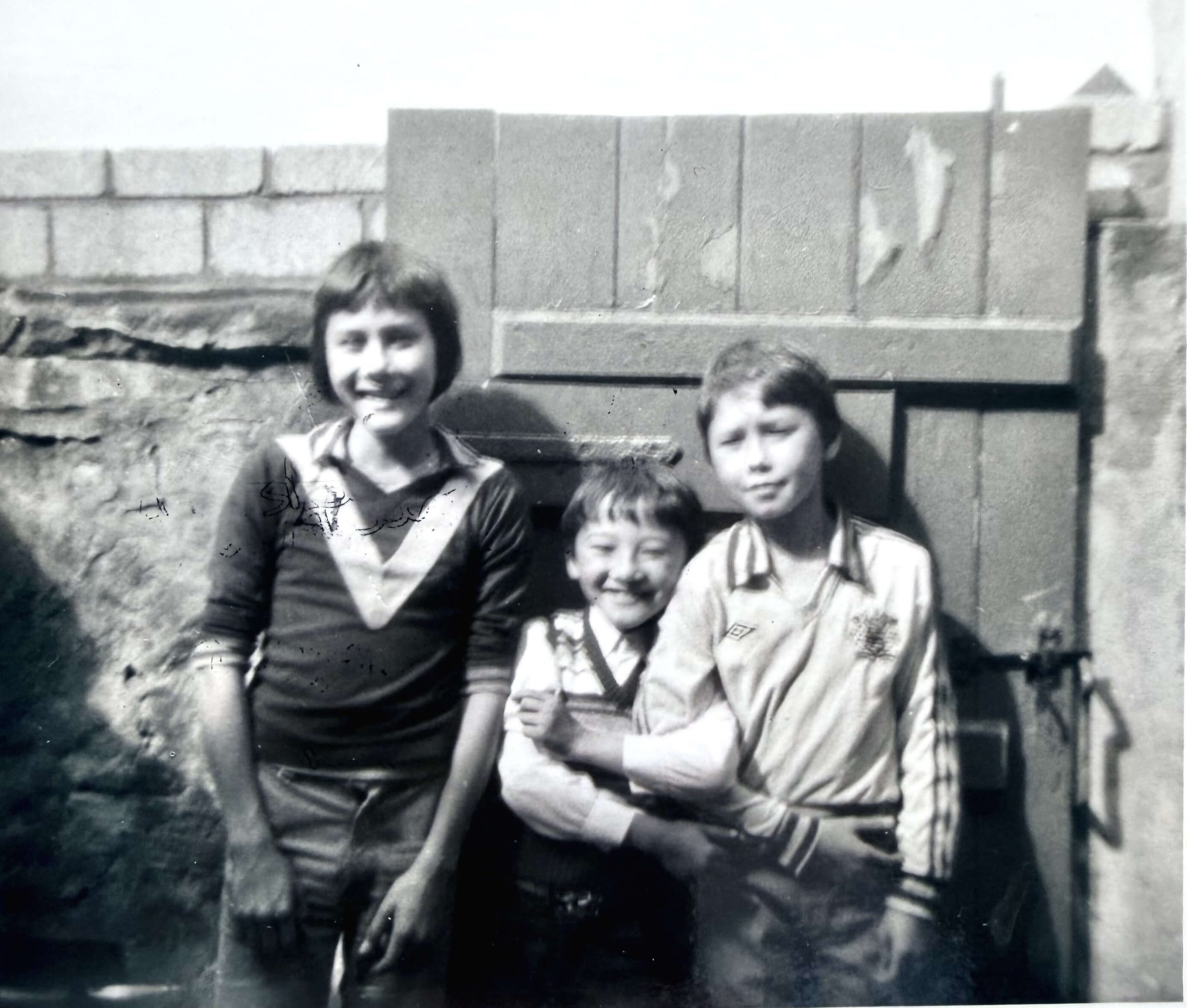
Growing up without an extended Chinese family
My mum was not close to her adoptive mother but did have a close bond with the girl she was brought up with in the same house, whom she would call ‘cousin’. Mum always kept in contact with her by airmail and telephone. We were not part of a Chinese community, but my dad found other ex-servicemen with Chinese wives, so we would occasionally meet other Eurasian children, which felt fun and different. I felt self-conscious if they met my English friends, who were curious as to who these Chinese kids were playing in our house. But I also had a sense of familiarity that felt safe and reassuring because they had the same mixed Eurasian look as we did. Looking back, it was a rare relief from being the only non-white person in the room.
We were brought up in ways that were typical of a white working-class northern town – except in our house there was the Chinese English dictionary, jewellery made from jade, Buddha ornaments, blue enveloped airmail letters postmarked from Hong Kong, a mah-jong set and chopsticks in the cutlery drawer. These were mum’s things and they were like secret treasures from a mythical land that in our house felt totally normal.
There would always be a big pan of rice in the kitchen and we had white fish with soy sauce and delicious, stir-fried meals which my mum would conjure up using whatever produce she could afford. When I discovered Char Sui – Cantonese barbeque style pork – I already had the taste ingrained from my mum’s fried spam with egg fried rice, and my brother ate beansprouts by the bucket load. It always seemed quite funny watching mum serve food, Chinese or English dishes, one bit at a time. Even an English breakfast was served separately – first the egg, then the bacon, add a sausage, then some beans and finally the toast. You never knew when your cup of tea would arrive! My dad would scream, “Yuet Wah, it’s not a Chinese restaurant!”. She never changed. She did things her way and, looking back, it was beautiful to see.
Coming to terms with my ‘Chinese-ness’
My earliest memory of being racially different was when I was five or six years old. Watching a martial arts class with my friends in a local scout hut, an older boy approached us and asked me directly, “Are you Korean?”. I’m not sure if I’d even heard of Korea at that age, but I still feel a shooting feeling in my heart, triggered when I saw another boy restrain him, saying “Leave it!” That’s when I recognised that I had escaped something which I had never ever encountered before.
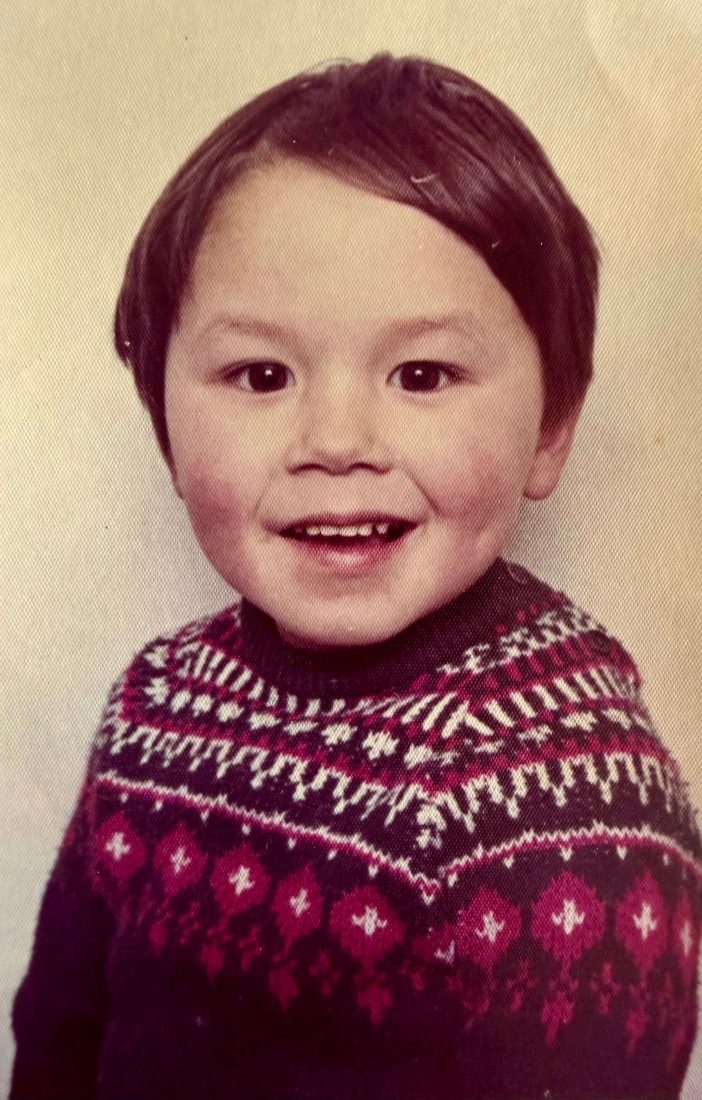
In so many ways we had completely normal lives. We made lifelong friendships in Padiham and were part of a close-knit community. We played football, representing Lancashire and captaining our school teams. My brother Kieran was an apprentice with Burnley FC and the whole town was so proud of a local Padiham boy signing for Burnley, though mum was less happy as she placed greater value on an education over professional football.
Yet Britain in the 70s and 80s was routinely racist, and a part of me would die inside if I sensed that a conversation was drifting towards a subject such as the TV character Kung Fu or Turning Japanese, an 80s pop song – anything that might bring attention to my ‘Chineseness’. I always felt uncomfortable in Chinese takeaways with white kids who were not my closest friends, scared that racist remarks would be made to the staff and that I might be implicated in some way. The Chinese staff seemed to look at me differently – as if they knew that I was ‘in disguise’ on the other side of the counter.
I experienced more racism than I ever admitted – not least, to myself. I often said, “Not as much as others”, but my brother once said, “It only needs to happen once, especially when you’re a child”. I never doubted myself, but there is something about racist abuse that is uniquely painful and truly demoralising. I’ve also experienced class discrimination, but somehow it never felt as personal.
I left Lancashire to go to university solely as my ‘English self’ – my Hong Kong roots became an abstract feature that I buried and grew insensitive to. It was my mother that was from Hong Kong, it had nothing to do with me. I created a protective mask so that I would ‘pass as white’ and I over-compensated with my northern sense of humour and extrovert personality. Casual racism was never far away, but I would joke about my heritage whilst foregrounding my northern roots. I became the ‘good immigrant’ and being successful became important as I thought it would make me safe. I became hardened and very pragmatic, telling myself, “Everybody is something, just get on with it".
“Becoming my whole self”
As I reached my mid-forties, I began to question the direction of my life. I tried out different hobbies, but nothing sparked my interest until I bought a camera and decided to enrol with the Open College of the Arts, embarking on a BA Photography degree course. It took a while to settle into my creative journey, but then, in 2017, my dad passed away and my wife survived a stroke. I hit a brick wall emotionally and had four years of therapy. I began to investigate my own identity and I started to realise just how far I had strayed from my true self. ‘I’ was buried deep somewhere else, and by concealing and repressing my Chinese heritage, I was neglecting the part of myself that made me a whole person.
My photography became a means of understanding and exploring the society that I had grown up in, and I learned that photographic images are not neutral objects. Instead, they are used to construct social identities and their meanings, as well as to establish the racial hierarchies that exist. In my creative practice, I use the technique of photo-collage making to disrupt established visual language and create new meanings that are inspired by personal reflections on my own lived experiences.
My work responds to Orientalism – the reductive and patronising way ‘Western’ art and literature has depicted Middle Eastern, Asian and North African cultures. I use photos from my family photo albums to make these works. My process involves cutting images from those photos and juxtaposing them with images of traditional ‘Oriental’ culture and artworks. In this way, I am using Oriental art as a visual language to deconstruct the idea that Eurasian identities are inherently situated in Orientalism – i.e. racially other, visible only through their exoticism. For me, this is a way of undercutting the sense that for Eurasian identities to be ‘authentic’, they must adhere to Orientalist ideas, rather than be treated in their own right as a genuine mix of Chinese and white. As Eurasians become more visible in the media and advertising, I am interested in exploring the contemporary idea of authenticity and the conditions that contribute to the legitimacy of Eurasian identities.
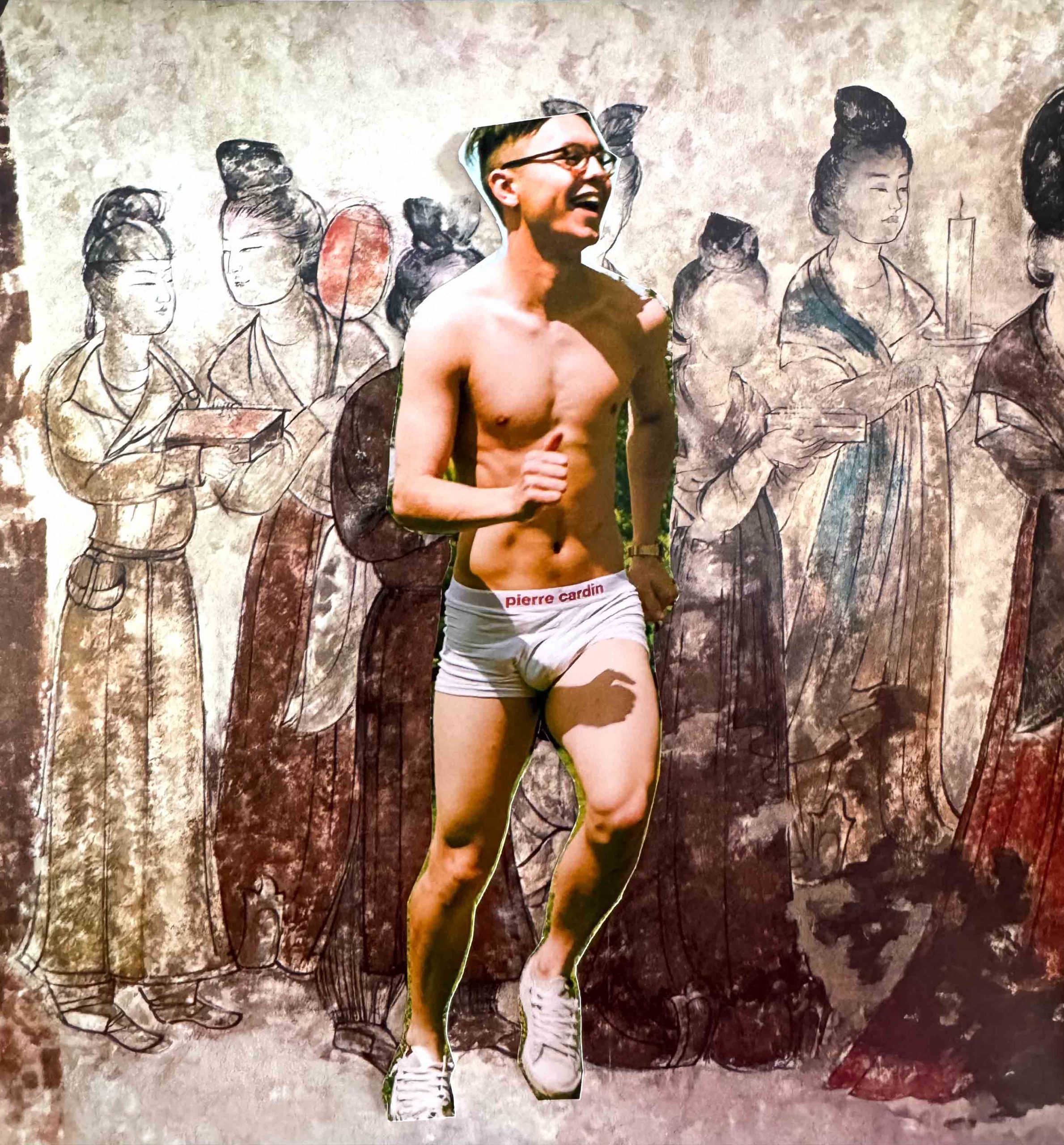
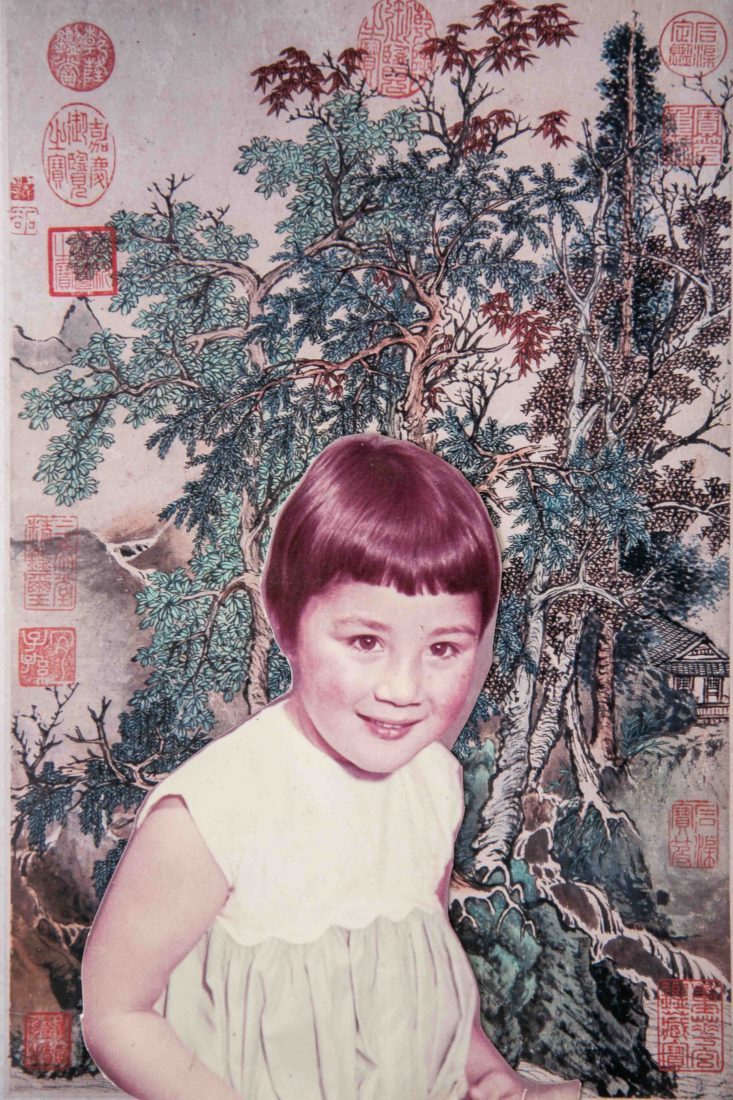
My creative journey has also ignited my interest in Asia as a source of cultural and spiritual influence that led to my more recent immersion in the practice of Butoh, a Japanese avant garde dance that is characterised by its grotesque form of movement in response to the atrocities of Hiroshima. I am a member of a Butoh dance company that has performed in studios and theatres to live audiences. My sister Carol has also started her own creative journey that is inspired by our Chinese heritage, having recently started to develop her skills as a painter using traditional Chinese methods and materials.
It is such a joy to share Yuet Wah and Frank’s story, and it is very cathartic to share my personal thoughts and feelings that were buried for so long. I know that in reflecting upon my own lived experiences, I don’t speak for everybody. But I know how it feels to be underestimated, to be different and alone. We had so many laughs and good times growing up, and I was never confused about being mixed race. I just could not bear it to be painful. It always came down to how I was being ‘seen’ by others, and what the implications of that were going to be. I now feel a deep pride in my Hong Kong Chinese heritage and my racial mixedness, and I found both liberation and harmony through this journey, which has enabled me to become my whole self and follow my true path in life.
My mum is now 89. I saw her recently and told her about this article that would begin to tell her story. She said, “My story is funny”. And I replied, “It’s a beautiful story”, and she just laughed and smiled.
About Allan O'Neill
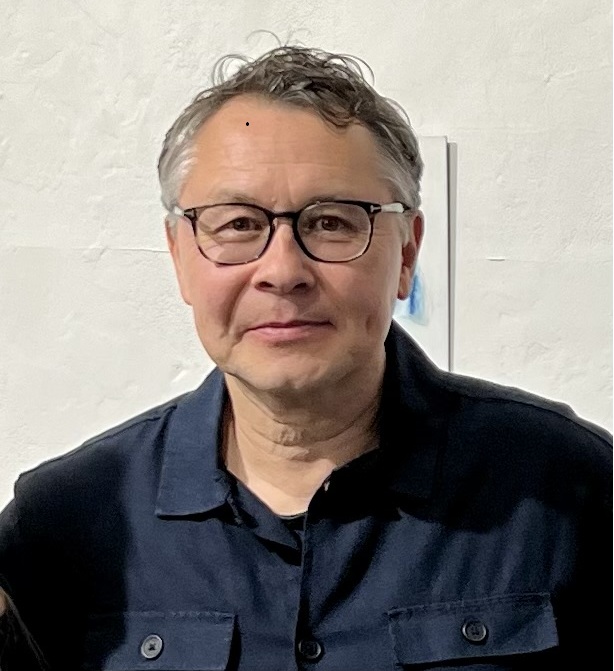
Allan O’Neill is a photographer and artist. He works in photo-collage to explore how Orientalism works as a site for mixed white and Chinese identities, in response to his own lived experiences and personal histories. Prior to this, Allan set up a recruitment company that provides professional staff to the education and healthcare sectors.
Follow Allan on Instagram: @allan.oneill_studio
All images © Allan O'Neill. Images not to be reproduced without permission. For any copyright requests or queries, please contact The Mixed Museum or Allan O'Neill directly.
Learn more
View some of Allan’s artistic work on his website
Read an account of an early twentieth century Anglo-Chinese family – the Hsiaos – in our work-in-progress Timeline
Learn about Irish-Chinese families in Britain in our Mixed Race Irish Families in Britain, 1700-2000 digital exhibition
Sign up to our newsletter for latest posts!
Enjoyed this article?
Sign up to The Mixed Museum’s newsletter to stay updated when new blog posts like this go live. We send highlights from the museum's collection, links to new articles, and other interesting updates direct to your email inbox once a month.