“How did I not know?” Curating Samuel Coleridge-Taylor’s history at the Museum of Croydon
Curator and artist Natalie Mitchell talks to TMM about creating The Sound of Croydon, a recent exhibition at the Museum of Croydon exploring the life and legacy of composer Samuel Coleridge-Taylor. Despite attending school in Croydon, Natalie had never been taught the story of the mixed Black British composer who lived in the same South London borough and rose to global fame in the early twentieth century. This gap shaped both the project and Natalie’s wider work bringing Black British histories into view.
The curator bringing Black British histories to the fore
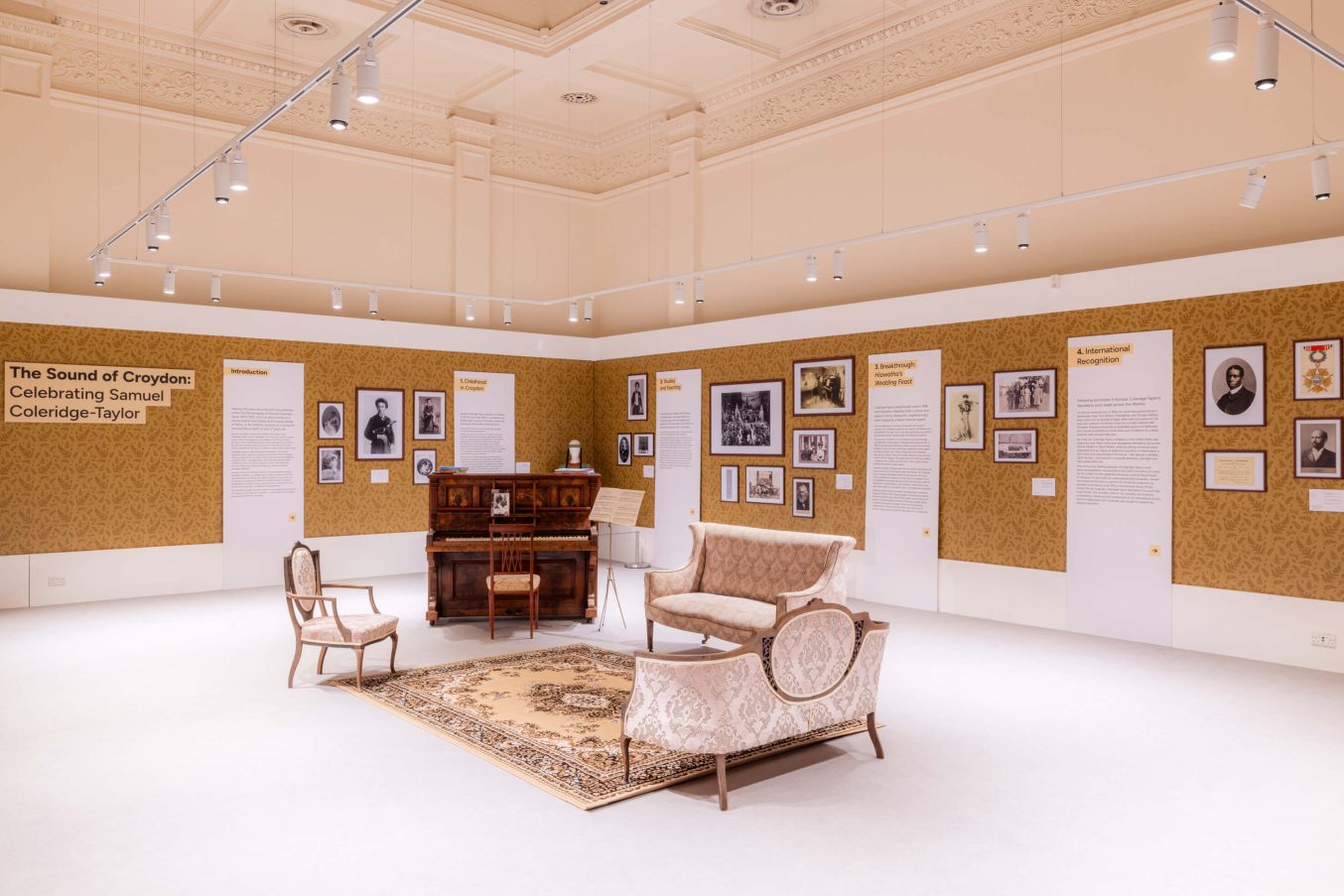
Natalie Mitchell has a bone to pick about their education. The curator and artist, whose Museum of Croydon show The Sound of Croydon: Celebrating Samuel Coleridge-Taylor ended in February 2026, says that despite going to school nearby, they knew little about the Black mixed race composer who reached international fame from this south London neighbourhood.
“My Black history education at school was pitiful,” Natalie remembers of their time at Ashburton Community School in the early 2000s. “We looked to America, and even then, it was very basic. We basically just watched Roots for three years straight, talked about Martin Luther King, Rosa Parks, Malcolm X. Maybe a bit about Nelson Mandela. There was nothing about the Bristol Bus Boycott. Nothing about Samuel Coleridge-Taylor. The fact that there was someone so important in our own backyard and we didn’t learn about him is really sad.”
Natalie set out to change that when they were selected to lead the exhibition marking 150 years since the composer’s birth, following a call-out by the Museum of Croydon for curators. Having predominantly worked in less mainstream spaces, Natalie admits to being a little sceptical at first – “I love doing archival projects, but they’re usually a little more radical”. But once they started the research, they realised the project’s potential.
“How did I not know what a radical person Samuel Coleridge-Taylor was?”
“I think the point of the show is that Samuel Coleridge-Taylor’s music, in some spaces, is not forgotten – I heard his work being played on Classic FM the other day. And his name might ring a bell to some of the people of Croydon,” says Natalie. “But his story and the broader history he was part of just isn’t known.
“When I was researching him for the show, I was like, ‘Oh my god, how did I not know what a radical person he was? That he was involved in Pan-Africanism and that the music that he wrote looks towards Africa, not away from it?' And I think that’s really important because it’s so easy to have a narrative that there’s this mixed race man who was raised by his white parent, and his dad left. But he’s not that trope.”
In deciding how to present the life of a man whose talent took him into the Royal College of Music at the age of 15 and then on to international fame, Natalie drew on an eclectic range of influences. One significant inspiration was the curator Malcom McMillan. His installation, The West Indian Front Room – based on the 1970s living room of a Caribbean migrant family – was first exhibited at the Museum of the Home (formerly the Geffrye Museum) in 2005. Renamed The Front Room, it has been iterated around the world, and, as of 2021, is now a permanent exhibition at its original home.
“I remember going to see it and I was like, ‘Oh this feels just like my grandma’s house’,” says Natalie. “I thought, ‘Can I sit on the sofa? I want to.’ I’m so bad at wanting to touch everything. I actually did once, at the National Gallery when I was about eight, but that’s another story!”
Creating a space for comfort and nourishment
Natalie continues: “Being a young Black person and growing up in London, we used to get taken to art galleries all the time. And sometimes you just felt more watched, you know? Having had that experience, I want people to feel comfortable in spaces.
“With this project, I was clear that I didn’t want it to be stuffy. I don’t love white cube spaces. I don’t love that feeling of ‘stand here, don’t go there’ that you sometimes get in galleries. They should be third spaces where people dwell and are encouraged to look for longer.”
Inspired by a well-known portrait of Coleridge-Taylor sitting at his upright piano at home, Natalie says they knew immediately that a piano needed to be the centrepiece. When they discovered that the museum already had one – engraved with daffodils, originally bought to be played on the high street – it felt like fate.
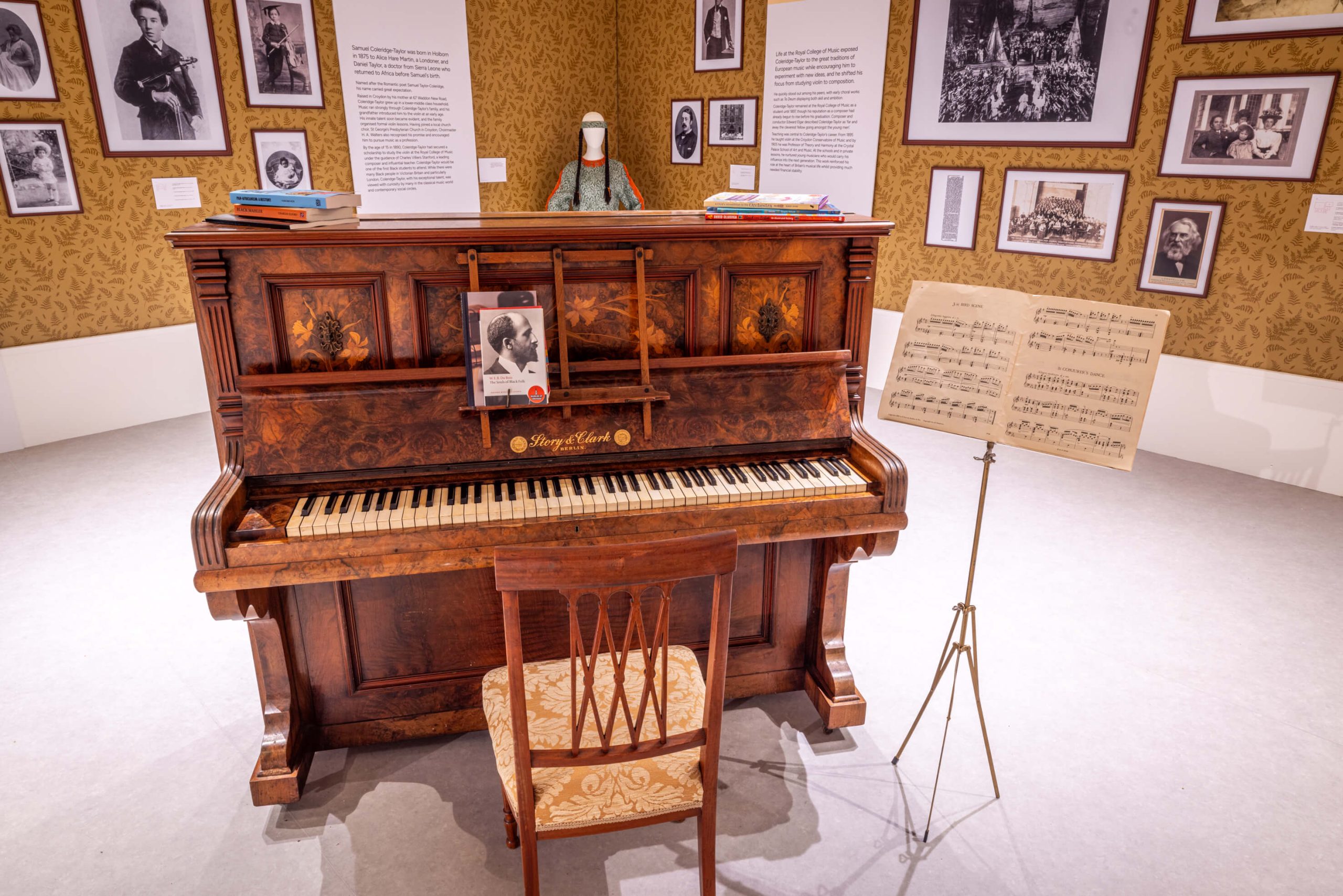
“That’s when the living room idea came back to me. I was like, ‘I want a living room. I want vintage furniture and a rug. I want people to be able to sit down. And there needs to be reading material.’ As a kid I loved reading but we couldn’t afford books, so I spent most of my time in the library. Finding ways for people to nourish themselves in that space was really, really important.”
Natalie has been delighted by the fact that while the exhibition was on between October 2025 and February 2026, visitors sometimes sat and played the piano in the warm and welcoming space they and their team had created in the Museum of Croydon’s Special Exhibition Gallery.
Watch an Instagram reel of Natalie discussing the exhibition and see footage of visitors in attendance.
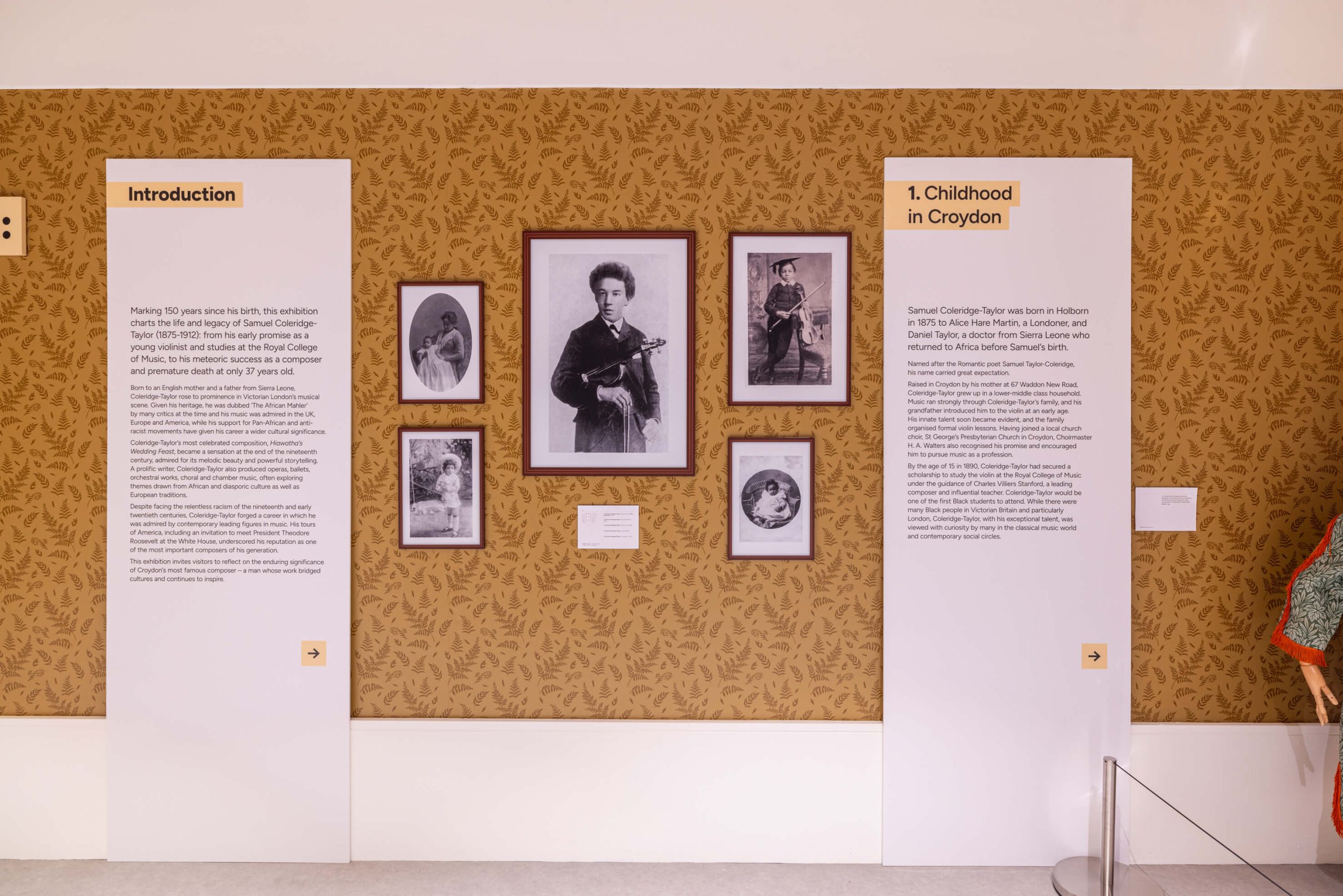
As a visual artist, Natalie was glad to be able to use multiple large-scale photographs to tell the story of Coleridge-Taylor and his family, including a whole section on his daughter Avril Coleridge-Taylor, who became a successful composer in her own right.
The exhibition drew on archival material from a range of sources, including a gold and aquamarine costume worn by Avril at the first Royal Albert Hall performance of Hiawatha – a piece that ended up inspiring the paint and wallpaper colours in the space. The Royal Albert Hall team who lent it were “incredible” with their time and support, says Natalie.
From film-making to curation: Natalie’s ‘squiggly’ career
The exhibition, which ended on 21 February 2026 and was funded by the National Lottery Heritage Fund, was accompanied by a programme of family activities, an adult heritage trail and a schools engagement programme. There was also a collaboration with students at the Brit School of performing arts, which is based in the borough.
The project continued Natalie’s longstanding interest in the gap between presence and visibility in the way cultural figures are remembered, and how Black British histories are taught and shared.
Natalie describes their career as “squiggly”. Having studied film-making at university, an unpaid internship at a Mayfair gallery discouraged them from the art world and Natalie worked in pubs, in catering and as a projectionist and a piercer. Then they got a job on the front desk of Copeland Park & Bussey Building in Peckham, where they had their first taste of curatorial work – “though I didn’t realise that’s what I was doing”.
As Natalie tells it, on a whim, they asked the events manager how much it would cost to rent the Copeland Gallery – “which is 4,500 square feet, like a huge hangar, and he was naming a price and I said, ‘What about £200 quid?’, and he was like, ‘Yeah, you got it.’”
That first break led to a three-day mini festival in 2017 called Super Yonic, which Natalie and friends put together in five months. “We had 25 women and non-binary artists. We had performances, film screenings, workshops. We got a beer sponsor and a tech sponsor. We donated to the period poverty charity Bloody Good Period. And we made loads of mistakes. But we did it!”
Developing a blueprint for what an art space could be
Later, a role as a gallery assistant at 198 Contemporary Arts and Learning in Herne Hill gave them the opportunity to work with “incredible Black artists like the photographer Charlie Phillips” and manage a trainee curators’ programme with Tate Exchange. It also gave Natalie a different blueprint for what an art space could be.
“There’d be Caribbean food at the exhibitions, and beer, and laughter. When I got introduced to the other art world, I’d be the only Black person in the room, and there was never any food. Well, maybe some crisps!
“I was like, ‘Oh right. It was more of a family feeling in the other place, but this is how that side of the art world operates’. Which I think was a good education.”
Natalie worked for three years as an assistant curator of participation at Studio Voltaire in Clapham, creating learning programmes for local schoolchildren and teachers and collaborating with Historic England and the Black Cultural Archives, among other bodies, while developing their own practice and assisting the artist Becky Warnock.
“I want people to understand at an early age that there’s a long Black British history”
Natalie’s practice has consistently explored Black British history, including the underground dormitories at Clapham South tube station that initially housed Windrush arrivals; the communes of Rectory Gardens; and the 1981 New Cross Fire.
Natalie says not growing up with grandparents who could tell them the stories of migration from the Caribbean to the UK left a gap. “There have been various points where I’m like, ‘I don’t know anything about why I’m here’. And I found that really sad.
“I’ve had to learn along the way, and now I want to shorten the gap, make sure people understand at a much earlier age that they can succeed. That there were people like them here. That we didn’t just appear on the Windrush. There’s a Black British history that weaves in longer than that, and it needs to be brought to the fore.”
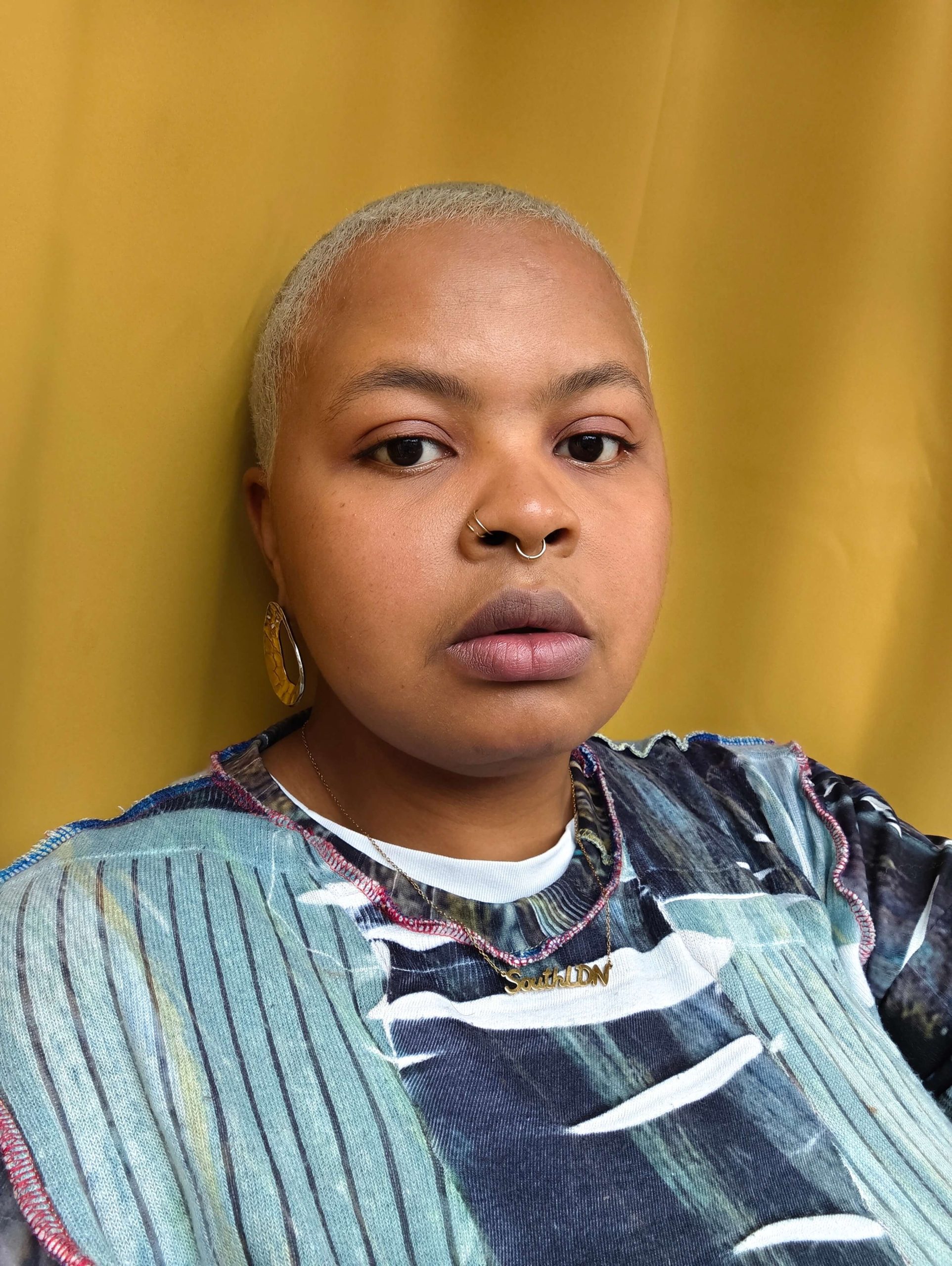
About the author
Natalie Mitchell is a multidisciplinary artist working across moving image, photography, sound, and archival practices. Based in the UK, their work explores memory, colonial legacies, and diasporic identity through processes rooted in care, collaboration and lived experience.
Their practice engages oral histories, found materials, and personal archives to examine how histories are held, obscured, and re-imagined. Working across film and installation, Mitchell creates space for quiet reflection, foregrounding voices and narratives that are often overlooked or fragmented.
Learn more
Find out more about Natalie Mitchell’s work on their website
Listen to our audio series Tracks of a Trailblazer about the turn-of-the-century rail travels of Samuel Coleridge-Taylor, and visit the accompanying interactive digital map
Visit our exhibition, A Tremendous Ovation, about Samuel Coleridge-Taylor’s 1908 visit to Brighton
Sign up to our newsletter for latest posts!
Enjoyed this article?
Sign up to The Mixed Museum’s newsletter to stay updated when new blog posts like this go live. We send highlights from the museum's collection, links to new articles, and other interesting updates direct to your email inbox once a month.