GUEST POST: “A dessert made of carrots” – Sheereen Khan remembers memories of an Irish-Indian childhood in 1950s London
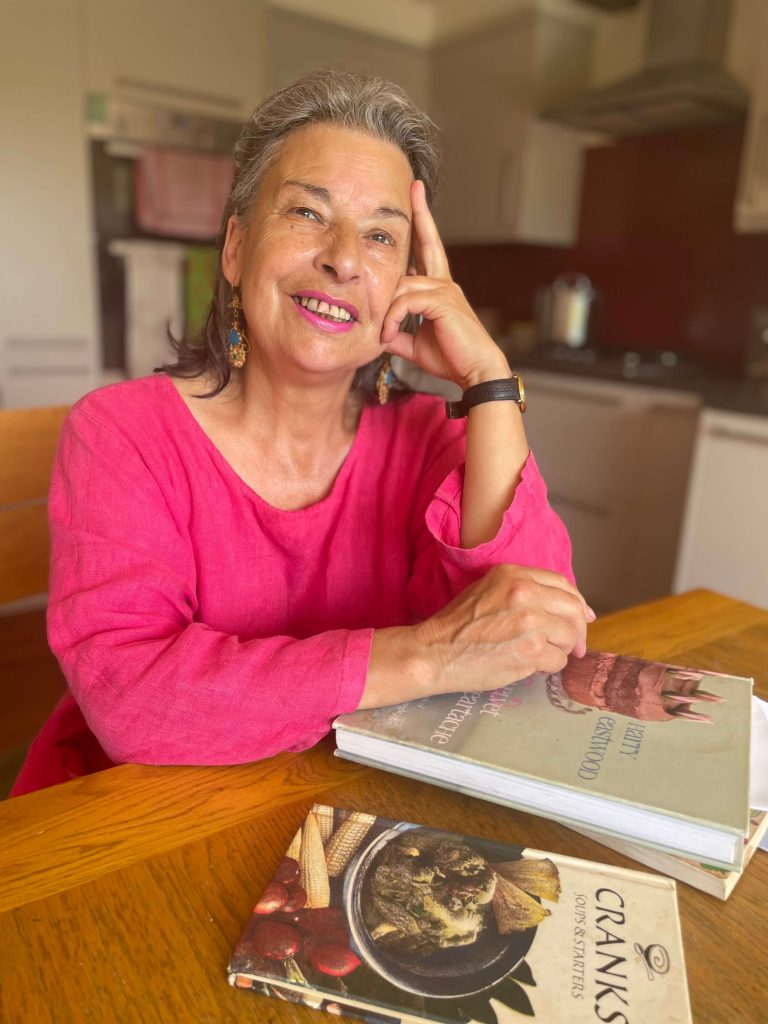
Sheereen Khan was born in Dublin in 1951 to a white Catholic Irish mother and Indian Muslim father from a wealthy Delhi family. In a guest blogpost, she shares her memories of two parents who “knew how to reconcile desire with need” – an attitude that extended to whether or not to make a particular Indian dessert for a visit by an esteemed family member.
Moving into a brand new estate in 1959
I think it was May. It must have been. The blousy pink blossom was out. For no reason, I had that ‘pinch me, this couldn’t get better’ moment. I was in the lift of a tower block on the new Alton Estate in London. It was 1959 and we’d been re-housed in a maisonette on the estate in south-west London, considered by many in the architectural world as the crowning glory in social housing. We were only the second family to move there, occupying a three-bedroom maisonette with living room, two toilets, bathroom, tiny kitchen and a balcony wide enough to hang washing. A friend already lived here.
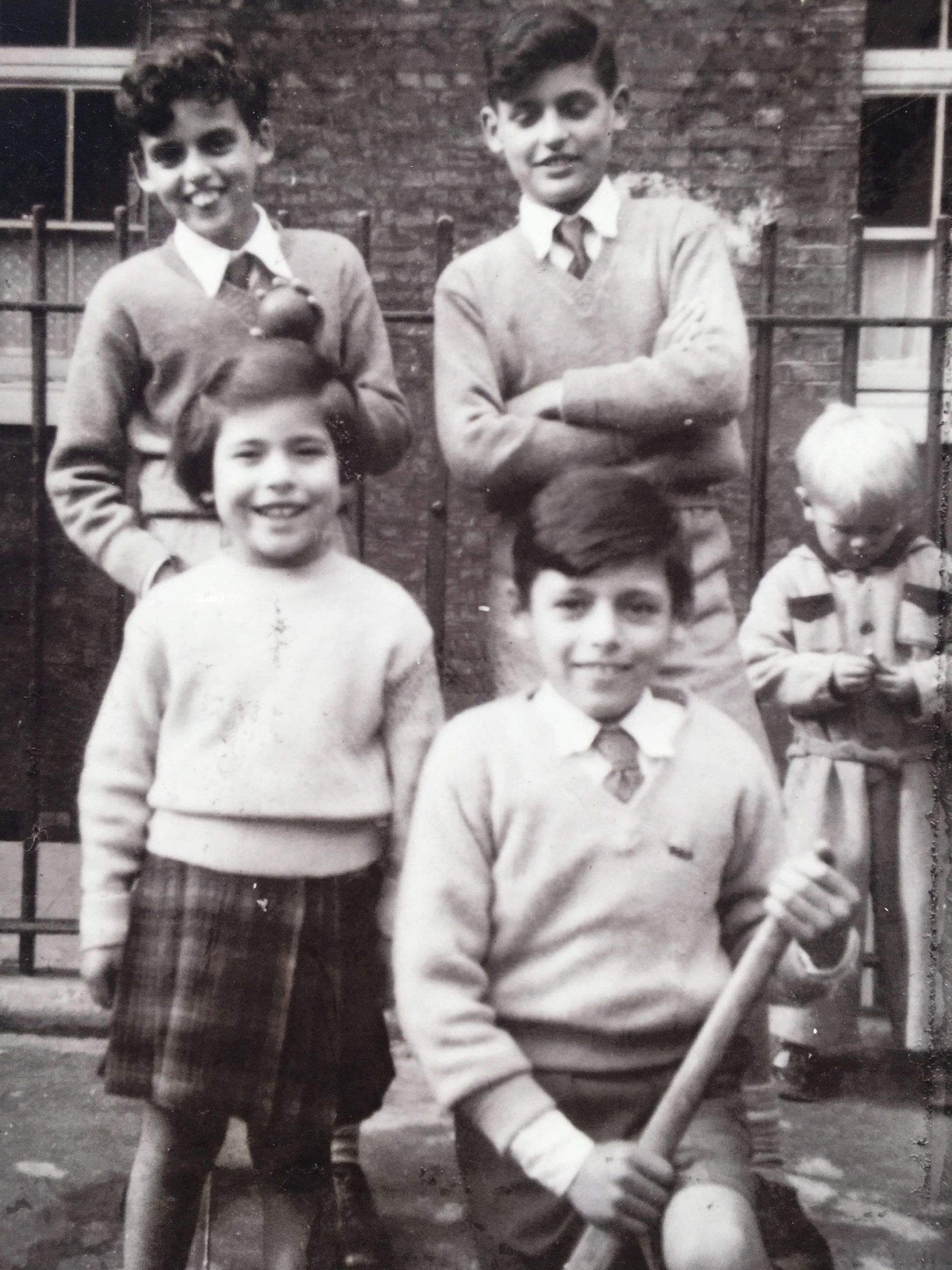
The lift chugged down noisily. To drown out the sound, my three brothers sang Running Bear, a number one hit by Johnny Preston in 1959. I was eight and had the feeling of fizzing excitement being with my big, tall brothers. We had a permanent home. No more halfway houses, no more landlords turfing us out for no apparent reason, no more seeing signs in windows for rooms to rent saying 'No Blacks, No Irish, No Pakis and No dogs'. We were in our new home, I had my own bedroom and my brothers were my heroes.
“My parents knew only one other mixed Indian-Irish couple in Dublin”
My parents never jumped into action about anything. Their days of hasty decision-making were over. They had been big risk takers, but experience and lack of money taught them to be careful. My mother Lillian Hickey, a white Irish woman – unmarried, childless, caring for an aging mother and rolling into her 35th year in 1941 – attended my Indian father’s doctorate celebration at Trinity College Dublin through his friendship with one of her brothers.
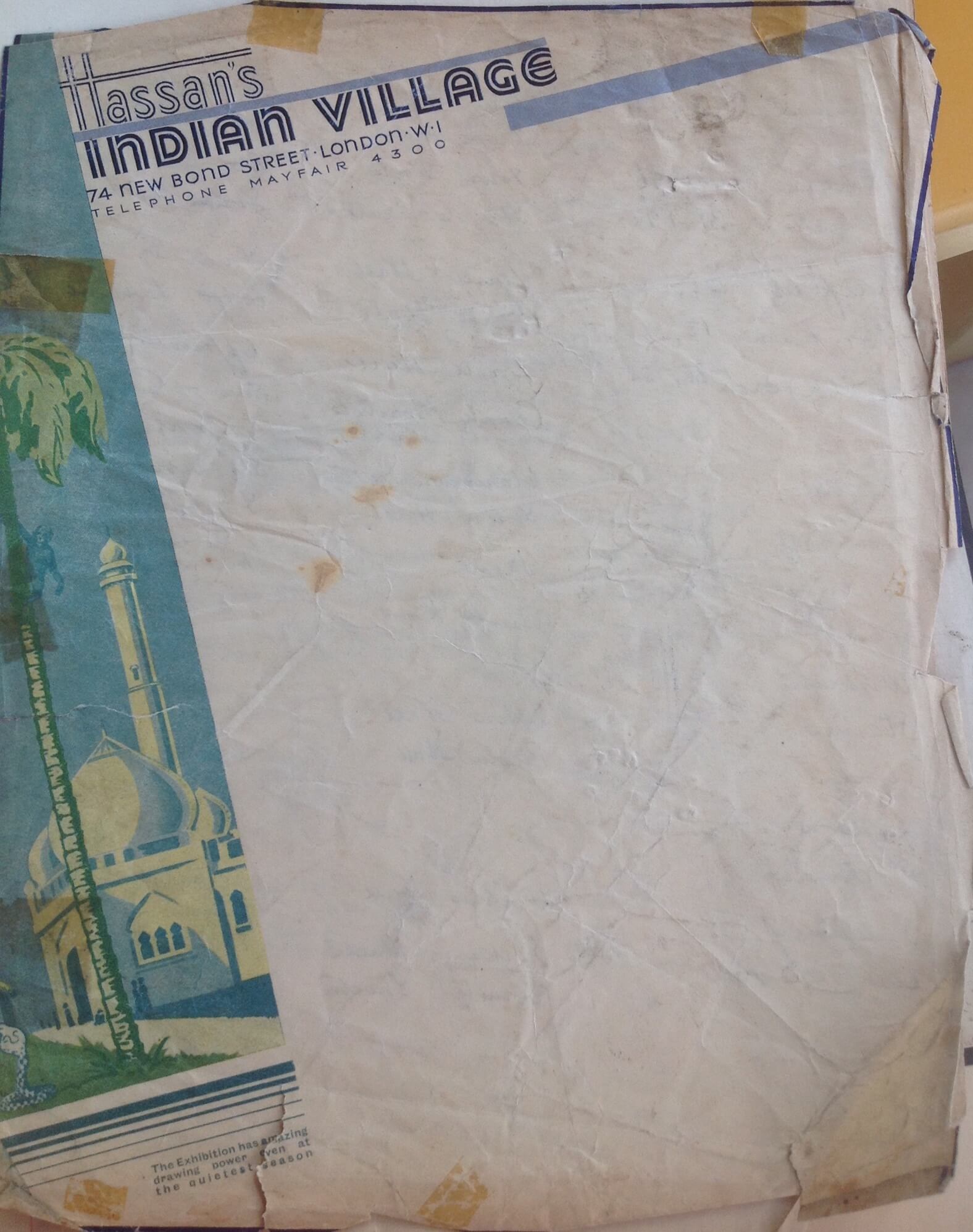
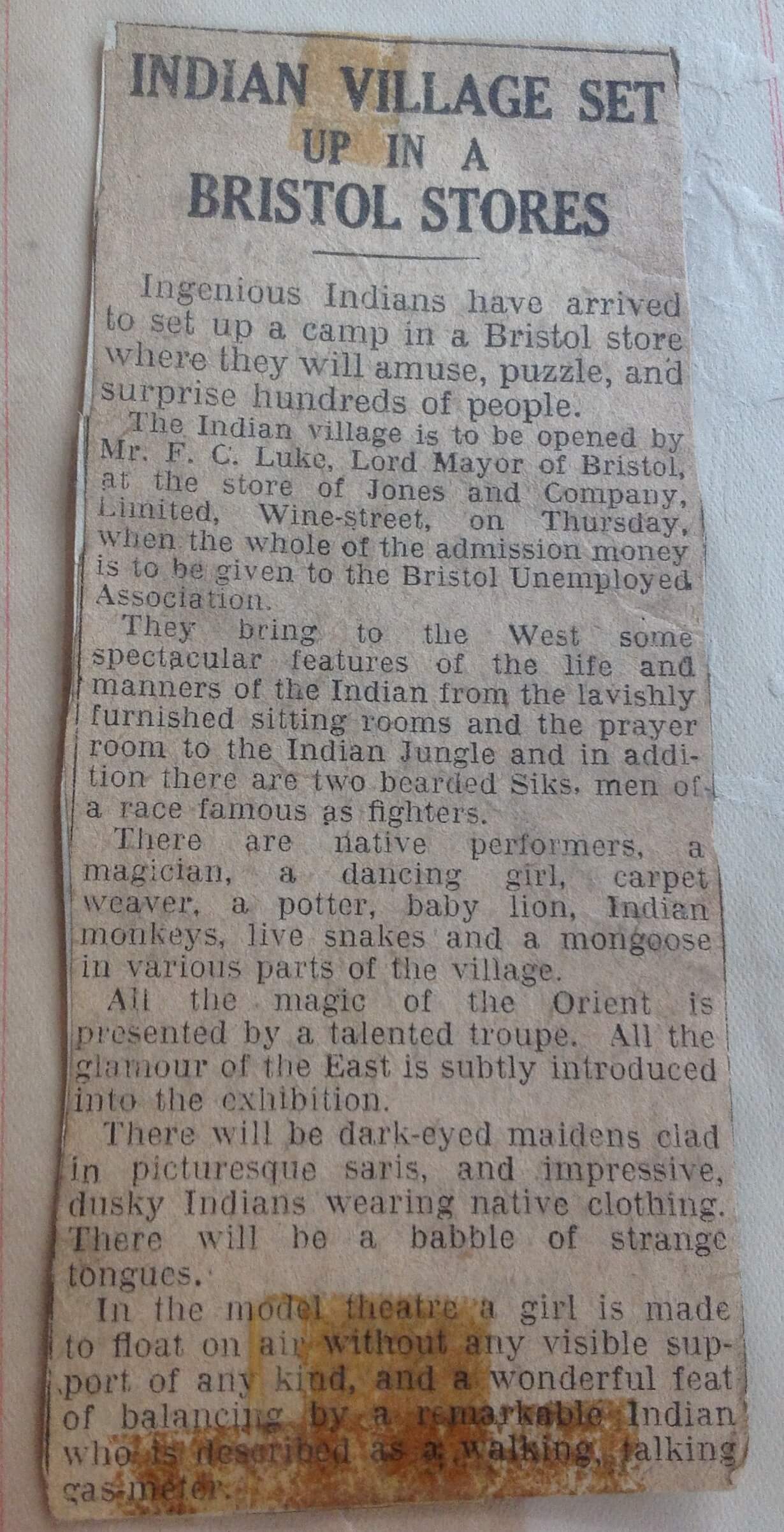
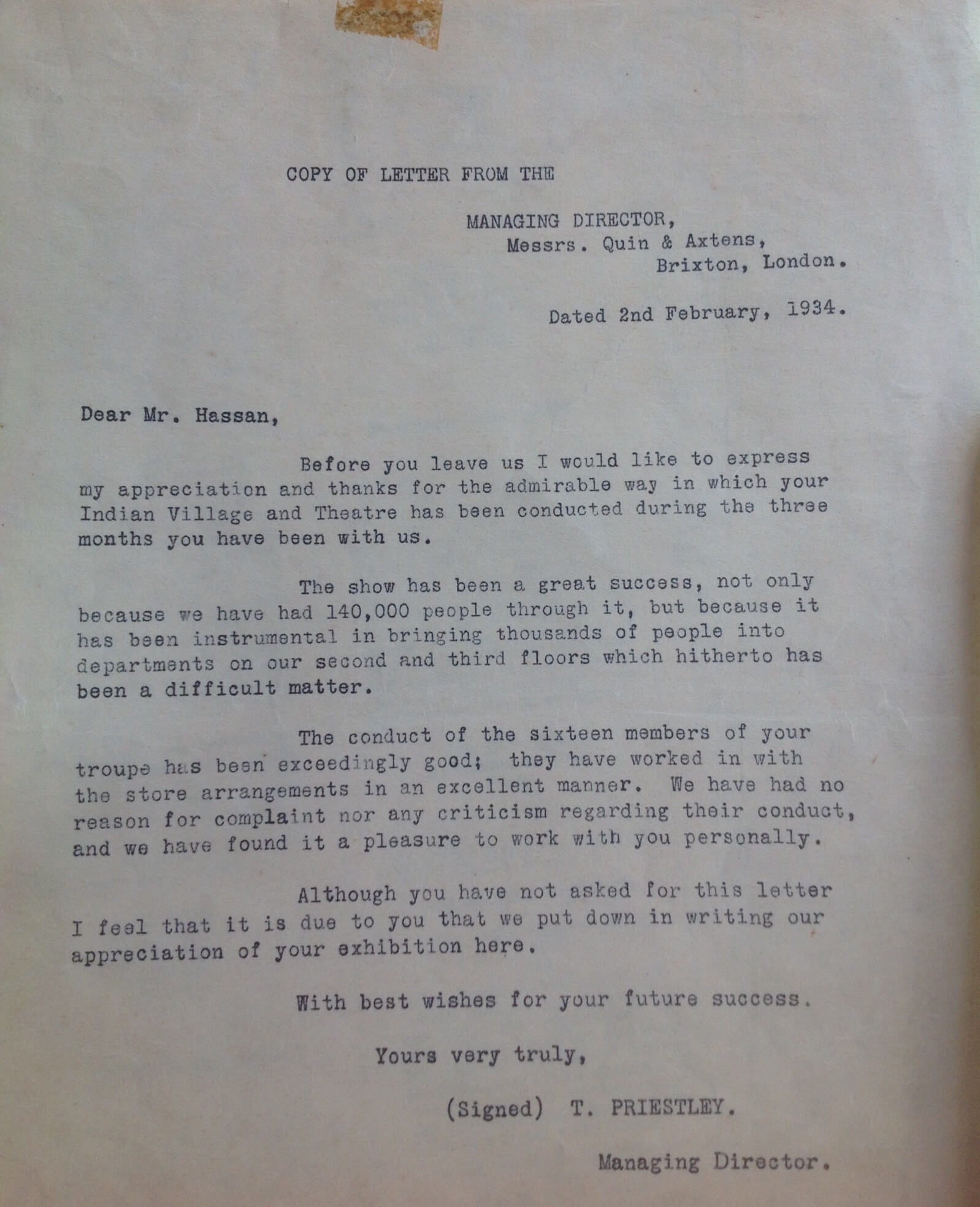
My father, Mumtaz Hussain Khan, was 34, single, childless and thousands of miles from home. Born into a rich Muslim family living in Delhi, he had first come to England in the late 1930s to assist his brother in his venture, the Indian Village, which toured the UK as a travelling show. They married in a rush in November 1941.
My mother was two months pregnant with their first child – my eldest brother – and Catholic Ireland had no flexibility for accommodating this type of union. To do the right thing and marry, my father had to convert to Catholicism, get baptized and take a Christian name. My mother’s brother, who introduced them, was a witness at the wedding ceremony. At his baptism, my father took the name Francis and for the paperwork, he was registered as Francis Mumtaz Hussain Khan. He never used the name again and reverted to Mumtaz.
My mother and father had much in common: both came from divided countries, both shared an easy-to-access rage at the British and both came from countries where your name alone signalled your religious alignment.
They went on to have two more boys in the 1940s and finally me in 1951. We were all baptised with Christian names followed by Muslim names. It was the only concession she ever made to his Islamic faith and culture. My family stayed in Dublin until 1949, when they moved to England looking for work. My mother returned to Dublin alone when my father went to help with the settlement of his family post-Partition, and I was born whilst he was there in 1951. We stayed in Ireland until 1953 when we returned to London, again for work.
In Dublin, my parents knew only one other Indian man at that time who had also married an Irish woman. They became close – of course they did. The need to find sameness. We all want to be part of some tribe. They never spoke of discrimination or alienation from my mother’s family or the Irish people. My father’s parents didn’t recognise my mother or us four children. Not a birthday card, or any words of care were expressed in the thin blue airmail letters written to my father in squiggles I later realised was Urdu.
Weighing up the costs
Despite my father being from a wealthy family, no financial support was offered to him when the lecturing roles dried up and he took any job to keep the family fed. In the absence of teaching or lecturing roles, my father took whatever work he was offered, including as a breakfast chef at The Cumberland Hotel in Marble Arch and the Skyline Hotel at Heathrow. He eventually took a clerical role with a computer company in Putney called ICT, where he stayed until his retirement.
His eldest brother, Ahmed Hussein Khan – who changed his name to Hassan when he came to the UK, becoming Uncle Hassan to us – also left India to attend the London School of Economics. But he dropped out, preferring to make money rather than learn about financial models. He married a white Scottish Presbyterian woman. I’d hear my father speaking in Urdu on the phone in our hallway when he rang his brother in Glasgow. His voice was loud, gruff, and I wondered if they were arguing. For those few minutes, my father was a different man. It was a part of him I didn’t know. A part that was also a part of me.
The closest we got to our Indian family was picking the thin blue tissue airmail letter off the doormat or seeing our father’s oldest brother sit on the sofa from which he interviewed my father about his prospects. Uncle Hassan was the eldest and, in a Muslim family, the eldest has the responsibility of caring for the physical, financial and spiritual wellbeing of his or her siblings. His visits were rare but, as his touring exhibition Indian Village became popular, he was able to travel the length and breadth of England, giving the British an insight into the India over which Britain had reigned.
For many reasons, Uncle Hassan was the man my mother should have married. He did everything right. He was successful, sophisticated and laid down everything he had at his wife’s feet. He was a brown Ludovic Kennedy: handsome, culturally adept and elegant. She thought he would be our saviour.
There was talk of a visit from Uncle Hassan, who would be visiting London and would come to see us in our home in south west London. As a gesture of celebration and to revive memories of India, my father suggested he’d make the famous Indian carrot dessert, gajar ka halwa.
My parents would discuss and review anything to do with spending money and could go round in loops for days. Reconciling desire with need was applied to everything: buying a new vacuum cleaner, our annual holiday to Ireland and my father’s trips back to India and then Pakistan. Bad decisions made early in their married life informed their caution. Money was tight so they developed patience. They knew how to wait, to long for something. Even a new recipe was considered from every angle. Would the children eat it? Would it stretch to a second day? Would it be easy to make? It would be priced out.
The chat could go on for days and nothing would happen. They’d return to the subject. “Carrots, a dessert made of carrots. I don’t know, Mumtaz, I’m still not sure,” my mother said after a good night’s sleep. But she was no match for him. In his strong voice, he did a sales pitch about the dessert, his favourite. He would show her how to do it. A project for them both, a shared interest – and God knows, they had few. The others were Scrabble, cards and political or philosophical discussions which often ended in an argument.
He knew how to debate from his years in academia. “But you have to see the pros and cons,” he’d say. “Firstly…” That word alone made our hearts sink. He’d raise his hand, bringing the thumb to the little finger to start his list of points and he was off. She was good, she stayed, she listened, cigarette in hand, one leg crossed and swinging, in and out as she looked anywhere but at him. We’d leave. We knew his eloquence, his extensive knowledge of educational systems, his idols in educational philosophy. No matter what the subject under discussion, he always managed to bring it round to his area of expertise – education.
“We were different enough – why add a crazy sounding carrot dessert?”
I giggled when I heard the carrot dessert chat. It must be a joke or some magic trick they would play on us. What would I tell my friends? A carrot was a carrot which sat on a plate with peas, meat and gravy. It was absurd. I’d say nothing for fear of ridicule. We were different enough. Why add the story of a crazy sounding carrot dessert?
He did it, he won her round. “I’ll give Brother a surprise.” In the Muslim tradition, the eldest brother is never referred to by their first name but instead, called bha'ee jaan, bha’ee meaning brother and jaan, meaning respect. I never heard my father refer to his brother as Hassan. We were allowed to call him Uncle Hassan, an anomaly only permitted in the four walls of our home.
There was a dummy run at the recipe. I returned from school, opened the kitchen door to see my father staring at the measuring jug full of milk. He didn’t move. He didn’t say a word. There was an air of mild tension. My mother stood against the kitchen table. In her left hand, a grater pressed down hard onto a plate. Her right hand pushed a thick carrot up and down against the grater with such force, her face looked as if she was being tortured. They didn’t acknowledge me. No “Hello sweetheart. Good day at school?” No, it was always straight into their drama, their thinking.
“Look at the colour of my hands,” she said, as I stared at their togetherness. “Extraordinary. Orange, bright orange.” She carried on grating as if their marriage depended on it. He counted out the cardamom pods from the little brown bag he kept in his pocket. Eight to ten cardamoms pods were needed. This was a serious investment. His brother was worth it.
There are three actions and one feeling which I associate with making gajar ka halva: staring, stirring, waiting and worry. It takes ages for the milk to be absorbed by the carrots. My father sat at the table in his three-piece suit, close to the stove, and the staring continued. He leaned his right elbow on the table, the forefingers resting against his cheek in a V shape. A position he often adopted when thinking seriously. He got up and down to stir. It was all about waiting, an hour of watching and waiting. I was bored, and left.
They shrieked when it was ready. “Come on, try it. You won’t taste the carrot at all.” He was right. The carrots were a mushy deep red with plump sultanas, slivers of almonds and a soft texture. I closed my eyes, took a spoonful and thought I was eating Christmas pudding. I told my father I loved it because it tasted like Christmas. “No, no, it’s nothing like Christmas pudding. This is the Indian dessert gajar ka halwa,” he said, in a reprimanding voice.
A visit from Uncle Hassan
The second time they made it was the day before Uncle Hassan’s visit. We imagined him belting down the newly opened M1 in his Jaguar. We imagined the gifts he might bring. We all knew he could make our lives better.
He was the only member of our Indian family we ever met. He was warm. He cared about us, asked us individually what we were doing, how it was going. These were mini interviews with a family benefactor. His visits were treated as royal occasions despite my parents being anti-royalists. Our modest council flat was spotless. We were spotless. My brothers lathered on the Brylcreem, polished their shoes and stood to attention on his arrival.
He and my father took over our one family room where we usually ate or sat on a stretched-nylon-covered sofa to watch telly. Sometimes we played Carom, a large Indian board game which was stored upright behind the sofa. But more frequently, my brothers would pretend to be priests and act out the Catholic Mass and even give a sermon. We rotated who would be the priest. It was never me.
It was in our living room or kitchen that we found our Irish or Indian halves. My mother dictated the food we ate, so it was mostly plain 1950s Irish cooking: boiled potatoes, bacon and cabbage if there was enough money that week or Colcannon, a potato and cabbage or leek mash if we were close to checking the sofa for any pennies which may have slid down behind the cushions. She didn’t cook Indian food until the late 1960s or early 1970s when her daughter-in-law – my second eldest brother’s wife – introduced her to other cuisines and she became more adventurous as her income increased from taking on more cleaning jobs.
The kitchen was also where she entertained any Irish relatives who visited. For some reason, she never did a stylish spread for them on the dining table in the living room. She wanted to keep them to herself in her domain, the kitchen. During their periods of ‘not talking’, my father would prepare his own Indian food and go to the dining table, eat alone. In many ways it was his own Indian cafe.
Uncle Hassan’s visit unified my parents. My brothers stared out the window waiting for his car. Our council estate in Roehampton had few car owners in 1959, so we knew he would park close to our maisonette.
The kitchen hatch was a border crossing
I was my mother’s assistant, still compliant and malleable at eight years old. She was deferential. Took instructions easily from my father: when to serve the food through the hatch between kitchen and living room, the role I would play, the type of tea Uncle Hassan would drink. The hatch was a checkpoint, a crossing, a border we happily crossed or passed through via an outstretched hand in good times or a closed window in times of silence when they felt cut off from each other. It was their partition from us children or each other when separation was necessary.
Uncle Hassan had an aura bigger than our flat. He was India, successful India. India without the British. We left them undisturbed as they chatted loudly in Urdu behind the closed door. I felt as though I didn’t know them.
My three brothers scarpered upstairs, and I moved quickly into the little kitchen to help my mother prepare the snacks and the garja. We stared at my father and Uncle Hassan through the glass hatch. My mother whispered the next thing to be done. Sandwiches were cut into triangles. She placed a pot of tea, cups, saucers, a bowl of sugar lumps through the hatch as I opened the living room door, quietly, causing no disturbance to the conversation.
Instantly, I was in a foreign land. The language, the smoke, the hand movements. I think I was lost. I remember thinking, ‘This is what it must be like in India or Pakistan.’ I took everything from the hatch shelf and placed it on the dining table where my father and his brother sat. I saw my mother through the hatch, craning her neck. The room seemed different. I was in India and she – well, she was Ireland. The kitchen was Ireland.
The halva was served with a small jug of cream. My mother acted like a servant, asking Uncle Hassan if everything was to his liking. She didn’t sit with them. It was as if she was a waitress, someone who had no connection to the people she was serving. She deferred to his family position and wealth. He was impressed with the halva. That was all that mattered.
“I took the not fitting in and made it work for me”
This half-in, half-out theme has followed me, and I have embraced it. Never the real deal, never the ‘pure breed’, never someone you could get a handle on. I took the not fitting in and made it work for me. In my twenties I used my exoticness, thrived on not being categorised. Spent years trying to mislead people as to who they thought I was. Drove to publicity events as a PR consultant in a beaten up VW camper van, wearing a fur coat, diamonds and pearls.
My work in public relations taught me how to promote my clients and myself and it met the need to have an alluring story about who I might be. In many ways, I was a chameleon. It was as if I have been holding up my name at airport arrivals: Sheereen Khan, followed by a question, “Who do you think I am?” The thing about being brown, Black or East Asian in a predominantly white country is, you stand out. Standing out is perhaps easier for women as it’s tinged with exoticism. That’s not to say I haven’t experienced racist words in my life, but they were mostly from other children. Now and then, I want a break from being different. I don’t want to be pigeonholed or even given space and more consideration as a ‘person of colour’. It’s another form of separateness. We are all a colour.
After marrying my Scottish-Indian husband, I became involved in his film animation business and stopped work to have my son and, two years later, my daughter – both Irish passport holders with double Celtic and Indian heritage. After a few years, I completed a comprehensive training to become a homeopath, a role my paternal grandfather also took up when he retired from the Indian Railway Board.
Now I'm a part-time homeopath, a writer and a cook, bringing people, sometimes strangers, together to eat at my table, to hear their stories, to learn a little of their culture, their cuisine, their traditions and beliefs. It's a theme, a patchwork, a mosaic and may it get bigger.
Sheereen Khan is seeking representation for her unpublished memoir, Belonging, Biryani and Bacon, for which she was runner-up in the 2022 Bridport Prize.
Learn more
Read a short extract of Belonging, Biryani and Bacon by Sheereen Khan
Read a blogpost about Irish-Bengali couple Nora and Sultan Shariff
Visit our exhibition Mixed Race Irish Families in Britain
Sign up to our newsletter for latest posts!
Enjoyed this article?
Sign up to The Mixed Museum’s newsletter to stay updated when new blog posts like this go live. We send highlights from the museum's collection, links to new articles, and other interesting updates direct to your email inbox once a month.