GUEST POST: “Let’s tell these stories” – Lucas Fothergill shares three tales from his new book on Britain’s mixed race history
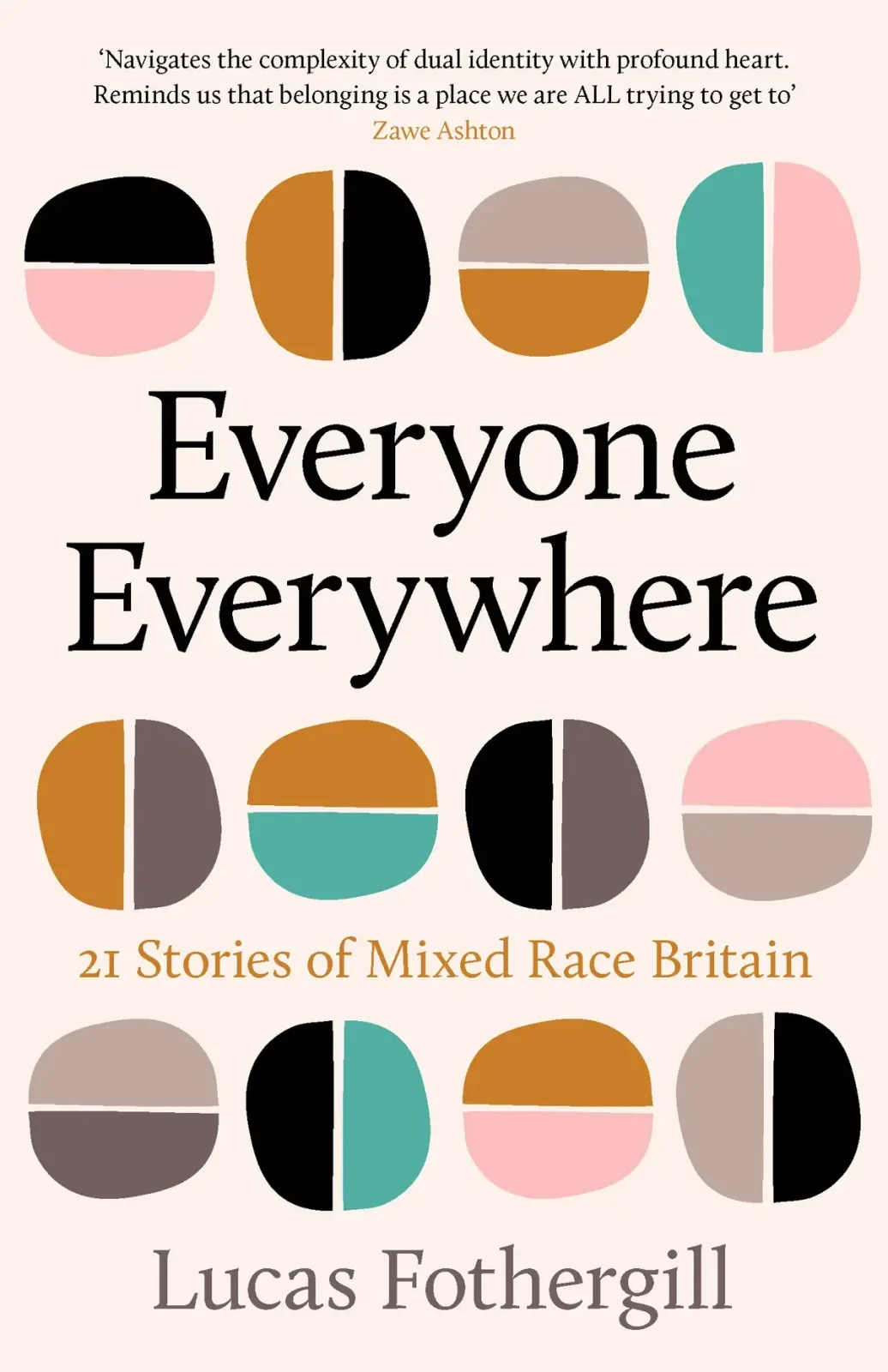
Author Lucas Fothergill had a mission: to tell an alternative history of Britain through mixed race lives. He spent five years delving into archives, making friends with librarians and interviewing dozens of people, including The Mixed Museum’s founders Dr Chamion Caballero and the late Dr Peter J. Aspinall. The resulting book, Everyone Everywhere, was published this month. In this guest blogpost, he shares three stories from the book – and his motivations for writing it.
“I thought you were Egyptian”
It’s 2013. I’m eighteen and in the disco room at Oceana in Watford, my knees creaking to ‘Summer Nights’. On my legs: Topman’s cheapest. On my chest: more where that came from, with some Lynx Africa sprayed in the pits for good luck.
The disco room is host to perhaps planet Earth’s dorkiest people: teenagers from Hertfordshire. It is a swirl of swinging bones. Middle-aged DJs spin ‘cheese’ as pimpled hordes slather sloppy kisses around. The aftermath of Jägerbomb shots trickle down chins as a hundred limp chat-up lines gush past in a gale of hormones.
I’m with my new-ish friend, Clive. That’s not his real name – he was born in the ’90s, a decade-long dry patch for Clive births. Clive and I flail around dancing, a moat of sticky carpet surrounding us.
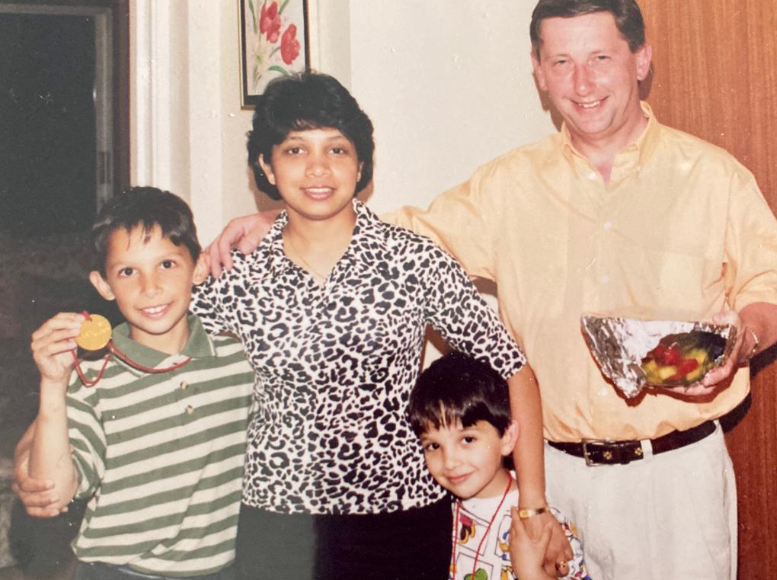
I notice my cousin, Liam, across the dance floor. Liam is Asian, while I’m Mixed: my Asian mum is Sri Lankan, and my white dad is English. I had never mentioned this to Clive before in our short, budding friendship.
‘My cousin is over there!’ I shout over Shania Twain. ‘Let’s go see him!’ Clive and I slither through the gaggles of people toward Liam. ‘Liam, meet Clive,’ I said. ‘Clive, meet my cousin, Liam.’
‘He’s your cousin?’ ‘Yeah?’ I notice confusion washing across Clive’s face, so I tell him about my family. ‘Ohhh,’ Clive says, the blanks filling in. ‘I thought you were Egyptian!’
Clive and I had never discussed my family before. He had just seen me and decided yes, this person is specifically Egyptian and moved on. Liam loved that I had been visually misidentified as an Egyptian.
Before I could say kaṭa vahapan, he had told all my Sri Lankan family, many of whom now live in the gloom of Southern England, having left their lush homeland behind for that of their former colonisers. And now they and I were amused at how identity can be ill-defined and elastic, stretching to encompass Egypt and perhaps every other country where the sun comes out. But this isn’t the only reason Clive’s comment has stuck with me in the years since.
“Being Mixed is nothing new – let’s tell these stories”
One grey, cold morning in the autumn of 2022, as the sun threatened to peek out over Britain, the latest census was published. It revealed a fascinating statistic: there were now 1.7 million Mixed people in Britain today, a tripling since 2001 – the first year that ‘Mixed’ was included as an option on the census.
But being Mixed is nothing new in Britain. Plus, that number was an undercount. Considering that many Mixed people don’t always identify primarily as such, that number has likely increased even further, and an earlier analysis by Alita Nandi of Essex University and Lucinda Platt of the London School of Economics confirmed this, suggesting that the true figure could be three times as high.
This is a huge group of people we barely hear about, an identity created centuries ago but rarely considered, whose fascinating history is often ignored. Instead, we consider it all rather ho-hum and ordinary.
A jolt of curiosity rioted through my brain. Let’s tell those stories. Let’s write the book my teenage self would have benefited from. And that’s where my new book Everyone Everywhere began.
In the five years I spent writing the book, I spoke to dozens and dozens of people. Some were high-profile individuals, but many were ordinary people with extraordinary personal stories set throughout the past century in Britain. The Mixed Museum’s Director and Co-Founder, Dr Chamion Caballero, and late Co-Founder, Dr Peter Aspinall, were among those who generously gave their time to help me with background research.
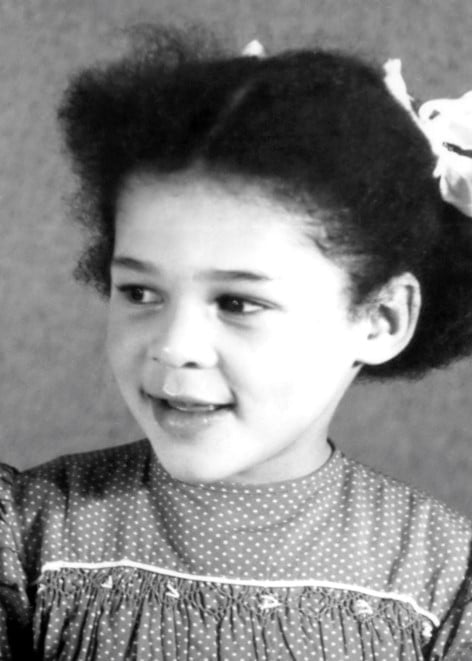
In the final book, I tell “21 stories of Mixed Race Britain”. I begin with some of the well-known people I spoke to – such as the chef Michael Caines, footballer Anton Ferdinand and broadcaster Miquita Oliver. Then I go back in time to share the stories of people and moments from the past that might be lesser known, including Deborah Prior, who features in The Mixed Museum’s exhibition The ‘Brown Babies’ of World War Two. Everyone Everywhere moves Deborah’s story forward from what has previously been published, with a deeply emotional family reunion taking place at the end.
I wanted to make it clear that being Mixed is nothing new. In fact, it’s been a part of life in Britain for thousands of years. By rifling through documents and older texts in The National Archives and the British Library, by building relationships with staff there who passed me extra files, through interviewing experts, and by reading many brilliant books on the topic, I found something that moved me. The question at the book’s heart – who am I, and how do I fit into this world – is universal. It’s one that every person in this book, and surely every reader, wrestles with in our lives, in our shared search for connection.
With that in mind, here are just three of the stories from the book.
Grandad Eddie: from the Bronx to South Wales
This first story, told to me by a Welshman named Toby, is about a historical miracle.
Born in 1912 in the Bronx, Toby’s great-grandfather walked to his Macy's job each day, until a train hit him and killed him.
Walter Craig, a Boston Philharmonic violinist, filled the gap for Toby’s grandfather Eddie Connick, marrying his mother Minnie and becoming his stepfather. But then a road-rage argument ended with someone shooting him dead.
By his teens, young Eddie had lost his grandfather, his father and his stepfather. Minnie rallied relatives to raise him. “He went off the rails a bit,” Toby told me. “They sent him to a school for troubled children.” But, at the school, “they actually persuaded, or encouraged, Eddie’s singing”. As it turned out, Eddie had a beautiful voice.
Years later, a college orchestra leader overheard Eddie singing in the bath, signed him up, and swept him on tour with Dick Meaddaugh's Orchestra. This was unusual, as it was an all-white group. Eddie found radio success and fell deep into jazz, singing at Harlem's Cotton Club and befriending Duke Ellington, Ella Fitzgerald, Lena Horne and other legends of the time. He married, launched his own broadcast show, as his fortunes soared.
Then the war reached America.
Called up to serve in forces entertainment and the military police, Eddie moved through Holland and Belgium before landing in Wales in 1944, where he fell for Cecily: “The whitest person you could choose,” says Toby. “Proper ginger!”
An estimated 7,000 to 10,000 racially minoritised people lived in Britain before the war. When a million American GIs arrived, the US Army kept its segregation intact on British soil: Black American soldiers built airbases but couldn't fly and couldn't bear arms. Furthermore, to marry, they needed permission from their white higher-ups in the force. This was almost always denied.

Which brings us back to Eddie and Cecily. Normal rules dictated that their relationship was doomed, meaning no children, no grandchildren, and no Toby. But against all the odds, against all the systems and structures and rules, they managed to stay together. To the best of our knowledge, Eddie is one of the few Black GIs ever allowed to carry on his relationship and to settle in the UK. Their relationship is a historical anomaly, a miracle, that has rarely been reported on before.
Yet how Eddie actually managed to persuade the army is sadly lost to history.
What follows is the magic of ordinary family life uninterrupted by the State.
Settled in Wales, with his mother flying over from the US to join them, Eddie embraced Max Boyce albums, rugby, and music. family. “My grandad loved Welsh life,” Toby says. He opened clubs across South Wales, giving sixteen-year-old Shirley Bassey her first stage and a young Tom Jones a platform. He and Cecily had eleven children, including Toby’s father. Though he went blind in his seventies, his lust for life never dimmed. Toby spoke of how Grandad Eddie loved reminiscing on a life, against all odds, extraordinarily well-lived.
Foo Hong Swane: a mysterious disappearance
Peter Foo hurries across a beach near Liverpool, baggy trousers flapping, long hair curling at the ends. It's 2022. “It was over fifty years before we found out,” he says. “I thought our father had just left us. Even to this day, my mother doesn't know. She thought he'd just left her.”
Peter's father, 'Mr Foo Hong Swane', as his ID card referred to him, was five-foot-three, with dark-brown eyes and greying hair. He lived in Liverpool for eight years, fell in love and started a family before a terrible event tore them apart.
Chinese seamen had been settling in Liverpool since the 1890s. During World War Two, they risked their lives crossing the Atlantic under Nazi U-boat attack, carrying food and fuel back to Britain. All for half the pay of their white counterparts.
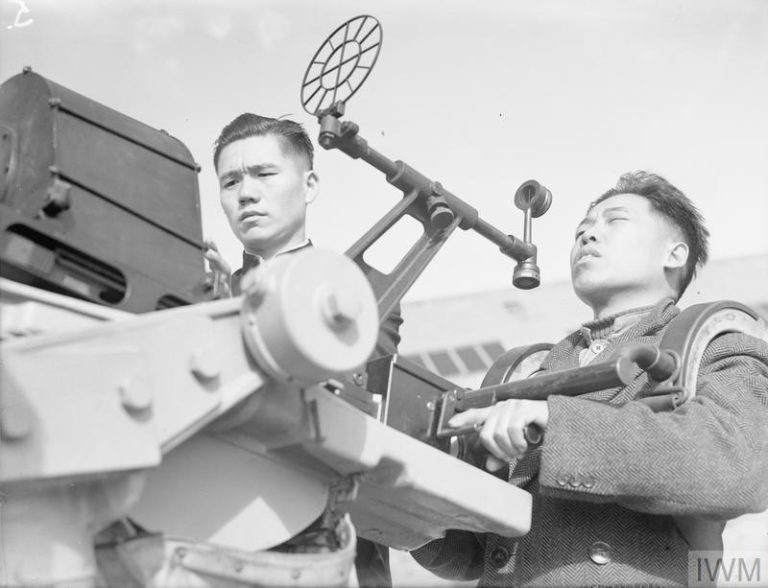
After the war, when they fought for equal pay, they “were seen as troublemakers”.
In October 1945, Home Office officials secretly convened in Whitehall and opened a new file that remained classified for decades. It describes how the men were deemed 'surplus to requirements'.
Within five months, nearly 2,800 had been deported; by July, nearly 5,000 were gone.
Official documents stated that Chinese men with British wives were to be left alone. This did not happen.
Some accounts describe the deportations as peculiar and banal: the government altered the men's 'landing conditions', put them on a boat to Shanghai and refused to let them return. It was evil dressed in dark suits and black felt hats, conducted by faceless men in an office. Others describe officers moving house to house, conducting a manhunt, almost ICE-style.
The actions were so swift, it was as if the men had vanished.
After being deported, Foo Hong Swane never spoke about his Liverpool life to his new family in Singapore.
After he died, a relative told Peter's half-brother, Thomas Foo, about the family in Liverpool.
In 1980, Thomas came to London with a telephone book. Four Peter Foos were listed. “The fourth one was actually my brother,” Thomas said in a CNA Insider documentary.
“When I looked at him I went, ‘Oh, you look like me!’ We were like old friends.”
“Not knowing my father... I've missed out on a lot of things in life.” Wiping away tears, Thomas says: “I feel really sorry for Peter. I hope to see him again.”
In 1925, under the Special Restrictions (Coloured Alien Seamen) Order, Black and Asian seamen had been ordered to register with police and threatened with deportation or denied employment, plunging their white wives and Mixed families into poverty – fuelling stereotypes throughout the 1930s that portrayed Mixed couples as tragic and unsuccessful. The Order remained in place until 1942.
And in 1914, British women could lose their nationality simply for marrying a foreign man.
Noor Inayat Khan: princess turned spy
Noor Inayat Khan’s Indian father was a descendant of the ‘Tiger of Mysore’ – southern Indian ruler Tipu Sultan, who had fought against the British in the late 18th century – making her a princess, while her American mother had parents who were Scottish, Irish and English.
By 1938, after studying at the University of Paris, Noor was becoming established as an ‘elegantly dressed’ writer, penning stories about ‘nymphs who lived on a high mountain slope’, where they ‘talked and jabbered and chattered more than the crickets in the grass and the sparrows in the trees’.
Impressively, Noor had written in both English and French, created her own illustrations, published her first book in 1939, and was soon broadcasting her tales across French radio. One day, she planned to publish a children’s newspaper, called Bel Age (Beautiful Age).
But then the Second World War erupted.
Noor fled to Paris, was recruited into the secret service, parachuted back into Nazi-occupied Paris and worked undercover to sabotage the invaders who had overtaken her city.
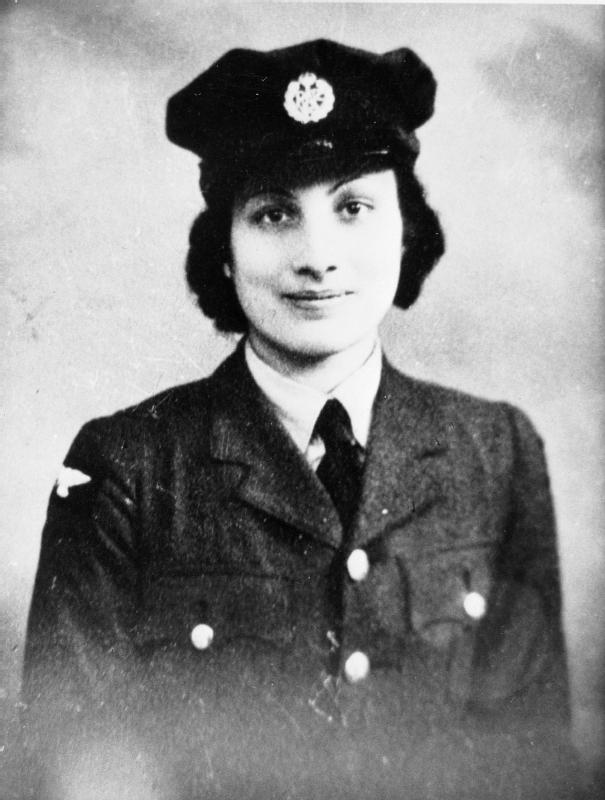
The tragic, history-altering events that came next were almost unbelievable.
Betrayed by her comrades, she was imprisoned, interrogated – she never gave away any secrets – then escaped, was captured, then escaped again, before, tragically, being sent to the Dachau concentration camp. Here, she was executed.
In recognition of her heroism, Noor was posthumously awarded the George Cross in 1949, and a French Croix de Guerre – two great honours the British and French militaries use to reward acts of heroism. Today, thanks to the brilliant writer, Shrabani Basu, there is a bronze bust of Noor in Gordon Square, Bloomsbury, where she once lived.
* It’s decades earlier *
Bodies are pressing and shoving past one another. Noor’s family were gathered in Baker Street station amongst its familiar arches and grooves, surrounded by chattering and trains huffing. This would be the last day they saw Noor.
At this moment, Noor shared some surprising news. She was in love – engaged to a British officer, she said, and the pair would get married as soon as she returned home from her undercover work.
Noor kissed her family before walking off, blending into the bustling station crowds, never to be seen again.
Lucas Fothergill is a writer and documentary filmmaker whose book, Everyone Everywhere: 21 Stories of Mixed Race Britain, was published on 4 June 2026.
His work has appeared in national newspapers and magazines, and he has developed and helped produce documentaries for the BBC, Sky, Netflix, and others. Everyone Everywhere is his first book. He lives with his wife, son and dog.
A note on style: In his writing, Lucas uses a capital ‘M’ for ‘Mixed’ because he sees it as not just a descriptive label, but a political one.

IMAGES: photographs courtesy of Lucas Fothergill and Deborah Prior not to be reproduced without permission
Learn more
Visit our exhibition, The ‘Brown Babies’ of World War Two
Read about the deportation of Chinese sailors after the Second World War
Read our interview with Sufiya Ahmed, author of the Rosie Raja series inspired by Noor Inayat Khan
Sign up to our newsletter for latest posts!
Enjoyed this article?
Sign up to The Mixed Museum’s newsletter to stay updated when new blog posts like this go live. We send highlights from the museum's collection, links to new articles, and other interesting updates direct to your email inbox once a month.