BOOK EXTRACT and GIVEAWAY: ‘Hair Apparent: A voyage around my roots’
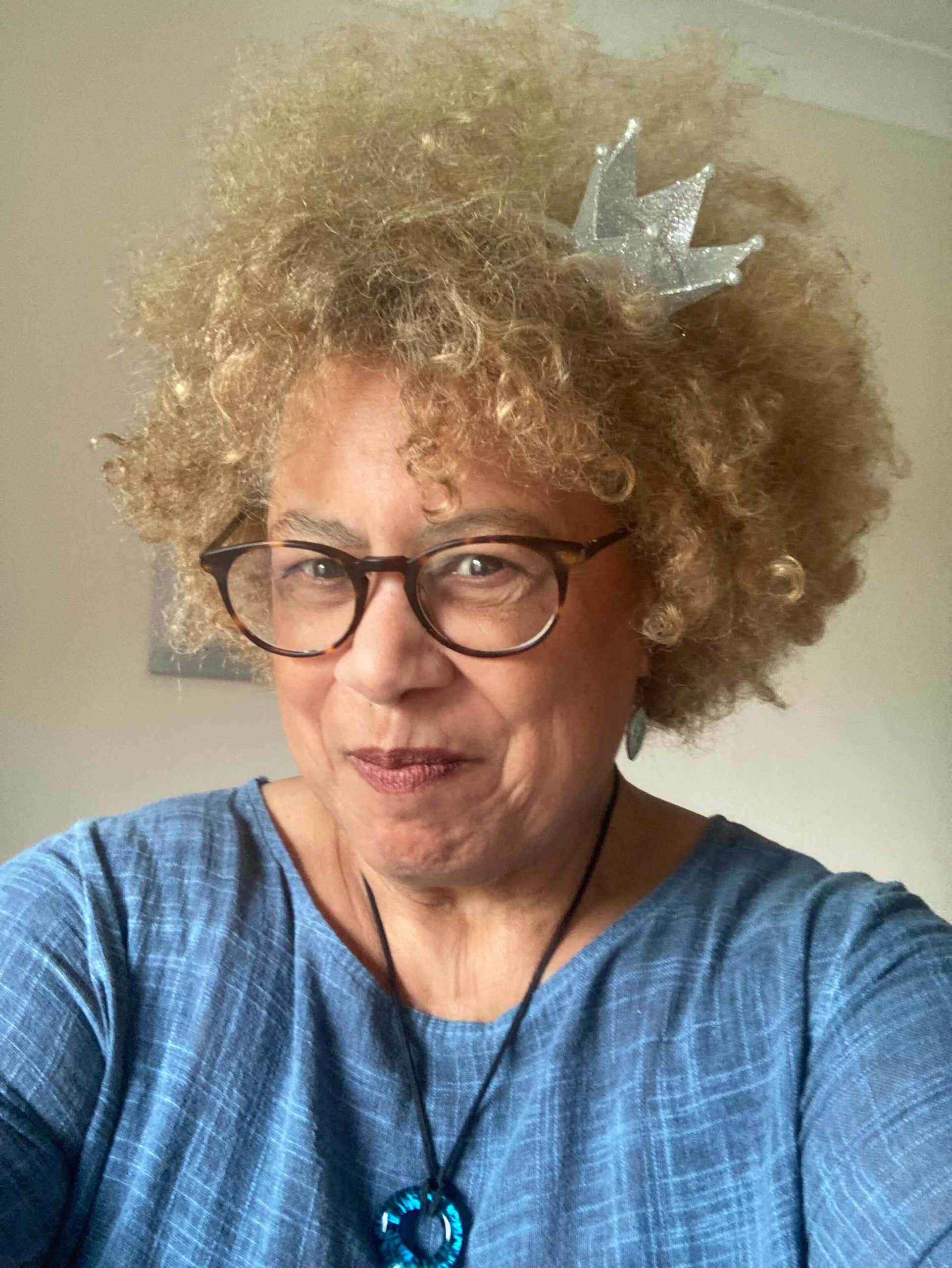
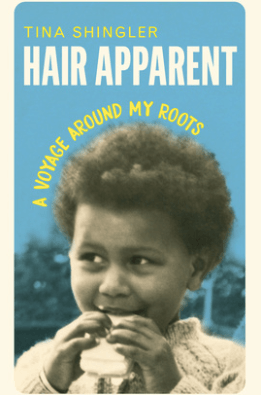
After a childhood with white foster parents in 1960s North Yorkshire, it took Tina Shingler decades to learn how to love and care for her hair. Now in her 70s, the daughter of a white Irish-Scottish mother and Black father began charting her personal experiences with hair a few years ago, preparing a talk which she delivered to schools, libraries, festivals and charities. Then she turned the talk into a book: Hair Apparent, published in 2024. Here, with her kind permission, we share extracts from what she calls her “hairmoir” – moments in her hair journey from childhood to her early 20s delivered with humour, pain and joy. Read more, and find out how you can win a copy, below.
‘My hair became my foster mother’s personal battlefield’
Growing up in a white foster home in an all-white community, I found that my hair’s unusual texture was met with curiosity and often with outright derision: ‘Here, let’s have a feel of it’ and ‘How on earth do you comb that stuff?’ or ‘What kind of shampoo do you use? Is it the stuff they use to clean carpets or what?’
My hair didn’t behave like ‘regular’ hair. It didn’t grow down; it grew out. It wasn’t loose, so it didn’t blow about in the breeze or fall into my eyes. In fact, it didn’t move at all. It was static. I got so used to people making fun of it that I too could only think of it in terms of a joke; a joke that I couldn’t bring myself to laugh about.
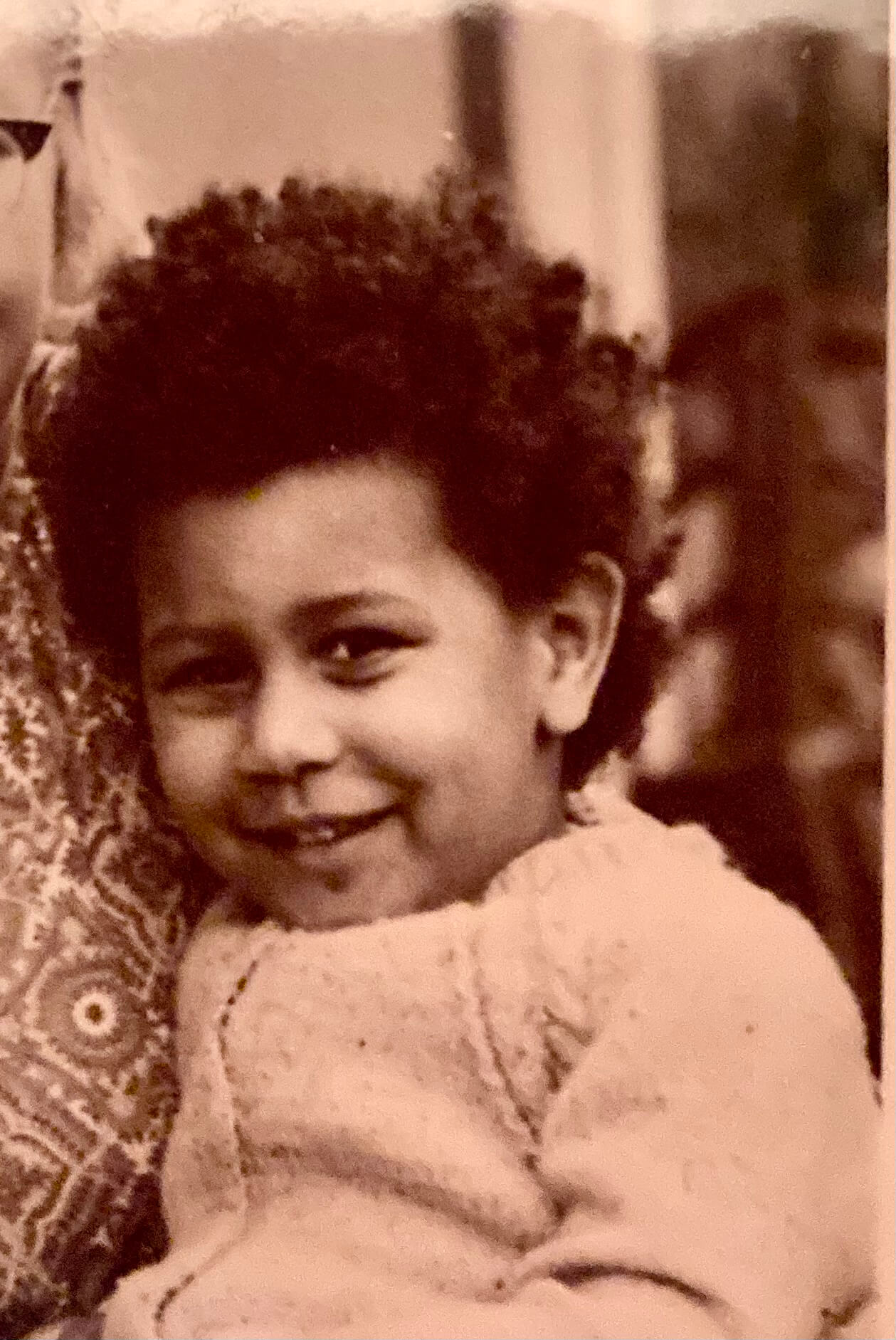
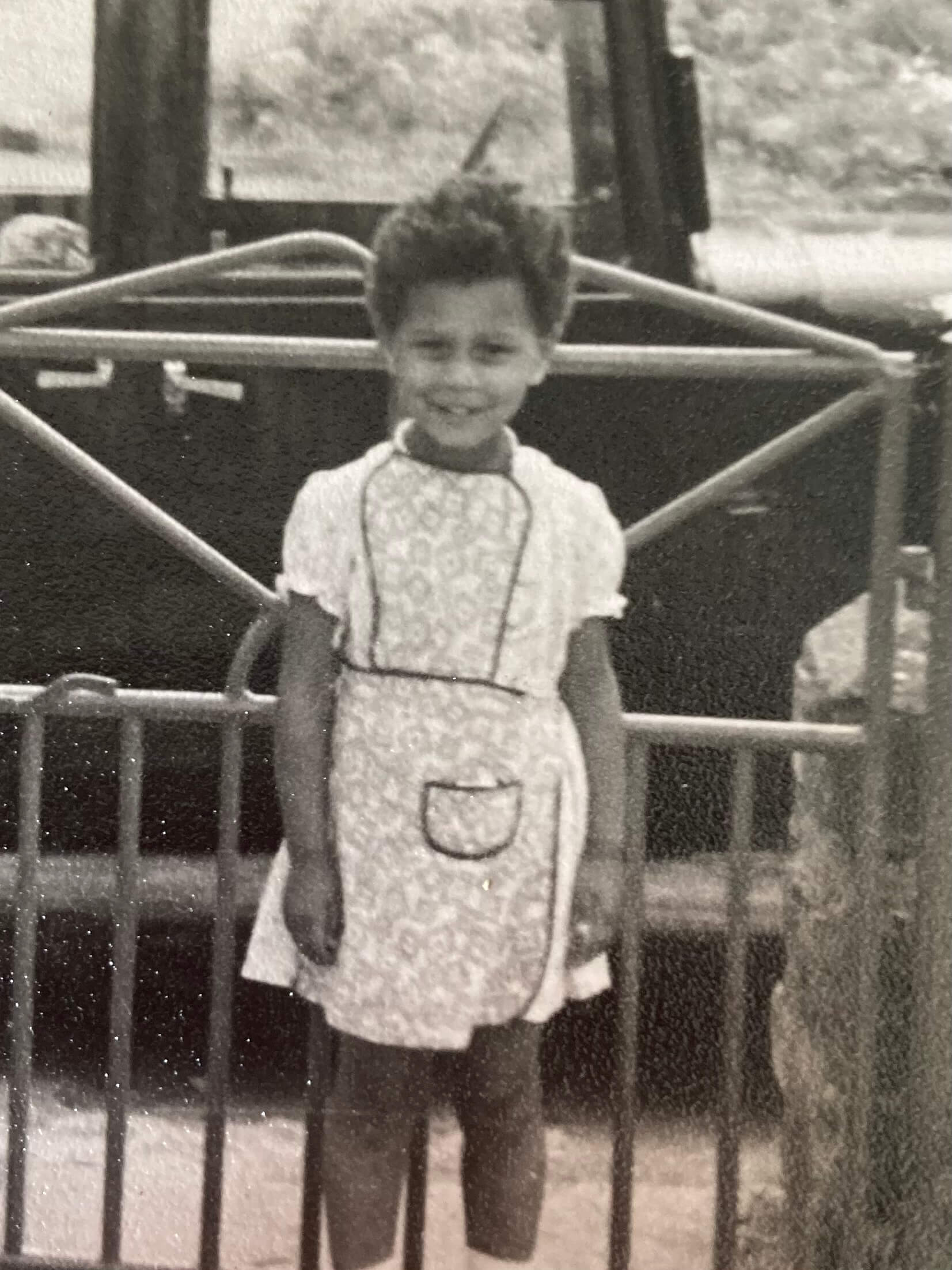
If mine and my Black foster sister’s hair was neglected, it wasn’t for want of trying on our foster mother Mary’s part. She did her best, but what did a white working-class housewife know about managing the complex texture of hair like ours? But as a practical, down-to-earth Yorkshire woman, Mary nevertheless rolled up her sleeves with every intention of ‘fettling’ it.
Fettle: it’s a good, solid word, isn’t it? The Oxford English Dictionary gives a whole list of meanings for it, from its modern industrial applications to more idiomatic usages such as the Middle English ‘to address oneself to battle’. In other words, it’s fighting talk, and when used in Yorkshire dialect, it usually means ‘to sort something out once and for all’.
And so our hair became Mary’s personal battlefield, and her valiant attempts at ‘fettling’ it were distressing and painful ordeals that we dreaded. Brushes and combs became instruments of torture that tore into our hair, only to be instantly snarled up in the impenetrable tight tangle of coiled curls.
The complex texture of our hair proved resistant to bristles of brushes and it gave no quarter to flimsy combs, bending and sometimes snapping them clean in two. Mary tugged and teased in vain while we sobbed and squirmed in misery. It felt as if we were having our hair ripped out at the roots. Distressed by our suffering and exhausted by her futile efforts, Mary did the only thing she could: she reached for the scissors.
Like Marie Antoinette at the guillotine, we took it in turns to kneel with our head in Mary’s lap and wait for the chop. Then it was yank and snip, yank and snip as she cropped our hair close to the scalp as evenly as she could.
Being unceremoniously shorn like sheep every so often felt like a punishment. It served us right for having such troublesome hair. Back then, it was common for little boys to have their hair close-cropped but not the girls. Looking boyish was an added indignity.
BOOK GIVEAWAY!
We have one copy of Hair Apparent to give away, thanks to Biteback Publishing.
To enter, email info@mixedmuseum.org.uk with the subject line HAIR APPARENT and include your full name. Please note that due to postal costs, this giveaway is open to UK residents only.
Entries close at 11.59pm (BST) on Friday 14 August 2026. The winner will be chosen at random and contacted by email. The winner's name and postal address will be shared with Biteback Publishing solely to send the prize. All personal data will be used only to administer the competition and deleted once it has been completed. See our Privacy Policy for more information.
Good luck! And why not sign up to our newsletter to make sure you don’t miss future giveaways, including subscriber-exclusive competitions.
Unwelcome hands and wash day dread
When I was out at the local shops with Mary, I was back in the firing line. No longer able to hide behind my books, I dreaded being waylaid by one of her gossipy friends. These stout, ‘I-speak-as-I-find’, Yorkshire women were a frightening breed. Broad-shouldered and tight-lipped with judgement, they looked at Mary, shaking their heads with a kind of baffled pity.
‘Of all the kiddies who need a good home, you had to get yourself a couple of little darkies,’ one of them said to her with sanctimonious indignation.
Determined to have their say, they were just as determined to have their feel. Without reference to either Mary or myself, they proceeded to dig their fingers into my hair for a good old-fashioned rummage, tugging and twisting the dense curls and examining the texture between thumb and forefinger. It seemed to repel and fascinate them at the same time and they shook their heads ruefully at Mary.
If she was struggling with it, they had little sympathy. It served her right for taking us on when there were surely more deserving (white) kids she could have lavished her attention on.
‘Ooh, it is queer stuff, i’nt it? Feels just like wire wool. However do you manage it, luv?’ they gloated.
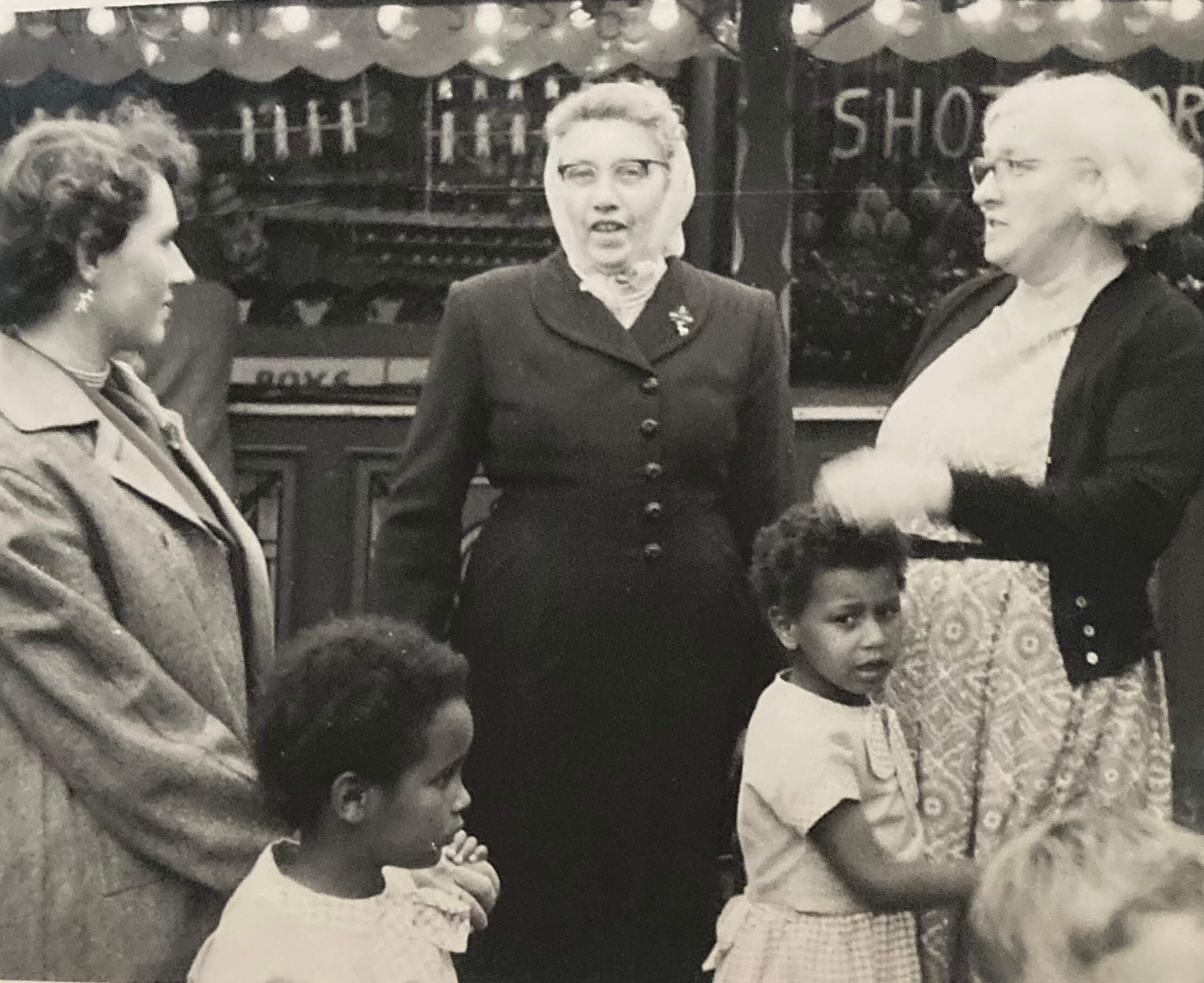
I hated those nosy old crows with all their poking and probing and their curdling looks; but I knew they weren’t wrong. Without proper care and attention, my hair was as coarse as rush matting. And they were right again: it was ‘queer stuff ’. I could scarcely bear to touch it myself. I didn’t want anything to do with it. And if I had no respect for it, why should anyone else?
Like a lot of kids, I used to hate having my hair washed at bath time. It wasn’t about the hair any more, it was about the water; lashings of it being thrown over my head and pouring down my face again and again. The sensation panicked me into a kind of wild hysteria. With eyes blinded and smarting from shampoo, I gulped down mouthfuls of soapy water. I choked, I spluttered, I thrashed and splashed. The water flooding my face made me feel as if I couldn’t breathe. In my child’s mind, I couldn’t work out why, oh why, were they trying to drown me?
Years later with my own small daughter, I spared her the same shampoo meltdown that I’d suffered by investing in a shampoo shield. This was a stiff rubber disc with a hole in the middle, allowing me to draw her hair through the hole and wash it while letting the water and shampoo splash onto the disc and well away from her face. Shampoo-time became a joy. She looked like a little flower in the shampoo shield. With eyes wide open, she laughed and played with the spray of water splattering around her. It was like sitting under an umbrella during a rainstorm.
But for me as a kid, it was only when I began taking swimming lessons at the local pool that I finally overcame the fear of water all over my face; until then, shampoo-night was a fraught and dismal business.
‘Young, Gifted and Black’
I was still in school when those first stunning images of beautiful Black women wearing their Afros like dark, fluffy halos started to appear in the fashion magazines. They looked sensational. Their hair was their whole look.
Finally. Here was a look for my kind of hair and it was so hot it was cool. All at once, my kind of hair was the hair to have. It was all part of a new buzz of excitement around just being Black and I longed to be part of it. The first time I heard Bob and Marcia’s song Young, Gifted and Black on the radio, I felt a new sense of identity and pride. The lyrics were loaded with such promise and optimism.
This was powerful stuff to someone like me. As a Black face whose only experience of life was in a white space, the song felt like a joyful affirmation. It was a seal of approval for my uniqueness. It was good to know that somewhere out there a celebration was going on about looking the way I did and having this kind of hair. But the truth is I was a long way away from that excited buzz where I lived.
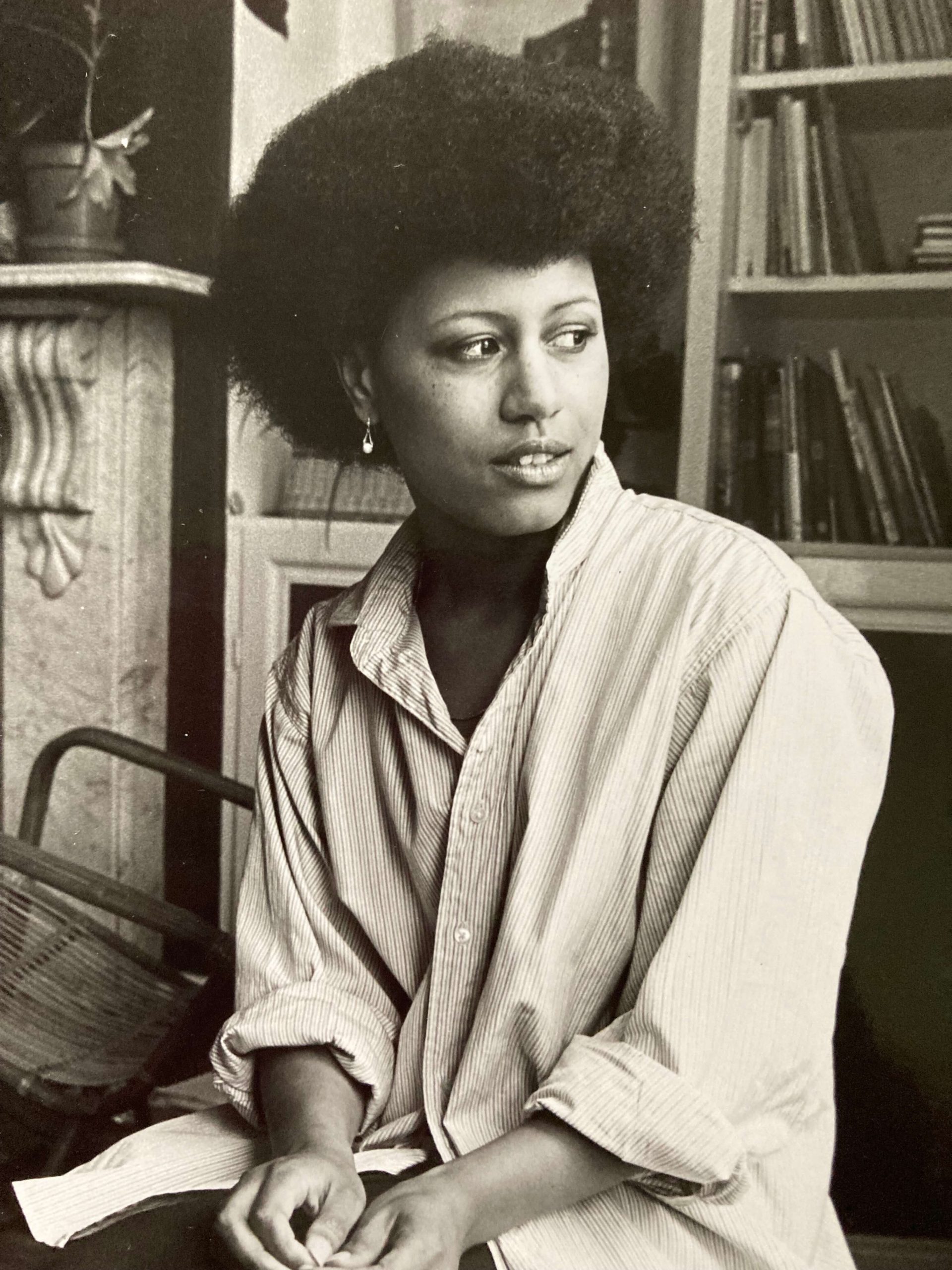
I didn’t have the nerve to grow out an Afro. The way I saw it? If you were a fashion model or maybe singing on the Tamla Motown label, well then, OK, you could definitely pull off an Afro. And if you were a Black American political activist like Angela Davis, well again, ‘right on, soul sista’. It was OK for them. There were others around like them; others who appreciated your style and recognised what it meant. But for a lone Black teenager like me, trapped in the hinterlands of North Yorkshire, a real Afro was too much of a statement. I didn’t have the confidence to carry it off in isolation. And why would I draw any more attention to my Black self than I already had? No. Forget the Afro. I was working the ‘nofro’ look. By the time I was fourteen, I was playing my hair down, not up. I was trying to work my unorthodox hair into the mainstream.
I remember spending hours teasing out the tough kinks in my hair with a big wide-toothed comb until my scalp prickled with pain. While still damp, I parted my hair into small sections and slathered each one with sticky globs of setting gel. Next, I wound the gluey strands around big plastic rollers; these were of the hard and spiky variety, and the whole operation felt like wrestling with small hedgehogs. Then I skewered the rollers to my scalp with little plastic spears like a pincushion. Left in overnight, the rollers temporarily tamed the tough kinks in my hair into a looser wave I could work with. While the whole operation didn’t straighten my hair, it did make it appear straighter. I spent so many nights sleeping on that prickly pillow like a saint in a hair shirt. But a sore scalp and a headache seemed a small price to pay.
I was mad at my hair all through my teens. I couldn’t find a good word to say about it. I hated its toughness and its wiriness. I believed that it was holding me back from ever looking as attractive or as fashionable as all my white friends. Sure, I could wear the mini-skirts and the bell-bottom trousers, I definitely had the figure for them, but with my gravity-defying hair, I couldn’t pull off the same look as them. With their neat bunches, ponytails and plaits, their hair had all the bounce and swing of the ’60s dolly girls we saw in the teen magazines. With no guidelines for hair like mine, I battled on privately, stretching it straighter with rollers or dampening it so that I could pat its bulk down into a more even shape.
An Italian adventure and sun-frazzled hair
While the rest of my schoolmates were all headed to university, my predicted grades weren’t impressive enough to tempt any offers of a degree course. I had only myself to blame: I loved the camaraderie of school life more than the focused study that ensured good results.
But I was quick-witted, resourceful and had an independent spirit that yearned to travel. I decided that I quite liked the idea of myself as an au pair; an au pair in Italy sounded even better. ‘Oh, Tina?’ I could hear them say. ‘Didn’t you know? She’s living in Italy now.’ It had a devil-may-care ring that appealed to both the romantic and the rebel in me. With a little imagination and daring, I might still turn academic failure into personal triumph. My further education would be to take off on a foreign adventure; and unlike all my friends, there was only one book on my required reading list and that was Teach Yourself Italian.
Even at eighteen, I knew I wasn’t cut out to be an au pair. I didn’t much care for children and I hated any kind of housework, however ‘light’. But in the ‘70s, au pairing for young British girls was the easiest way of getting and staying abroad for a while.
It wasn’t long before the Italian sun began to give me some trouble. After the damp climes of northern England, the unrelenting Mediterranean heat was playing havoc with my hair. Perpetually sun-frazzled and dry as straw, it was crying out for some serious moisturising and the frizzy ends needed trimming. Once again, there was noone around with hair like mine to advise me. Maybe it was time to try a professional? Steeling every nerve, I walked into an Italian hair salon.
As I walk in, it’s as if the whole place freezes and business comes to a standstill. I was no troublemaker, just a Black gal looking for a hair rescue remedy, but to judge from the collective gasp of stylists and clients alike, I might as well have been Medusa, with a head full of hissing serpents dropping in for a shampoo and set.
Suddenly, all eyes swivel in the direction of Rodolfo, the master stylist. A true ’70s man, Rodolfo is sporting a fashionable handlebar moustache with sideburns and a shaggy mane of dark shoulder-length hair.
‘I’d just like... I’d like... just a treatment... per favore… a moisturising treatment, I mean. And a trim... yes... a light trim.’
Rodolfo glances at my hair and for a moment I see a look of panic flash across his face, but then with all the dignity of man who knows his limits and isn’t afraid to admit them, he says loftily, ‘Preferirei di non provare, Signorina.’
He would rather not attempt it; simple as that. And with a toss of his lustrous locks, Rodolfo turns back to fuss over his client, a petite blonde whose hair he has just lacquered into a stiff helmet.
“Wish I had hair like this”
It was a good thing that Linda, my flatmate and an art history student, liked a challenge. A big, blonde athletic girl from Seattle, it was she who came to the rescue of my hair. ‘Hell, how hard can this be!’ she said as she began tugging at the kinky coils of my hair and snipping the ragged edges. As with most things, when it came to my hair, Linda was fearless. She became my live-in stylist, cutting my hair into a neat crop and smothering it with coconut oil to keep it soft. Much better for the Italian climate, I told myself. But I couldn’t help feeling it was a last resort, a crisis crop, and my hair was being ‘fettled’ again just like the old days as a kid.
The small kitchen of our second-floor flat became our makeshift salon where Linda, humming along to her Carly Simon tape, snipped my hair while I looked out over the glorious, ramshackle roofscape of Florence. Medieval towers and domes and palaces; each stone steeped in a history that had shaped the thinking of the modern world. So how, I wondered, had a nation that had forged the Renaissance with such ingenuity and imagination five hundred years ago, been completely stumped by my kinky hair in 1974?
‘Wish I had hair like this. It’s got so much character. I’d do all kinds of crazy stuff with it if it were mine. And best of all it stays put.’
I smiled. Linda was being kind. You either had good hair or bad hair like mine, but hair with character? And with all the ‘swishability’ and sex appeal of her own long, blonde tresses, she couldn’t seriously envy my hopeless head of stiff, wiry curls. But I was just glad there was someone around who looked on my hair with a benevolent eye and was prepared to help me manage it. The experience in Rodolfo’s salon had shaken my confidence to the core, but now, thanks to Linda, I could begin to see myself in a more kindly light.
Falling in love with my ‘basket of curls’
There was nothing I could do about the routine racism and, once I learned to ignore the pestering men, there was a lot to love about being in Italy in the ’70s.
It was a place where, despite some old-world attitudes, and despite my self-doubts, I might even fall in love.
His name was Marco, and we used to rattle around Florence together in his nifty, little Fiat 500, or what the Italians called a ‘cinquecento’.
Besides the thrill of whizzing about Florence in his car, the thing that really blew me away about Marco was that he genuinely loved my hair. Ever since those unfeeling old busybodies had manhandled me as a kid, I’ve always been wary of people touching my hair. I was nobody’s prize renaissance hair poodle, and as I got older, I’d been known to slap away curious hands. But when Marco put his hands in my hair, he did it with a sense of wonder and real pleasure.
He loved to draw one of my springy curls out to its full length, laughing with delight when it simply sprang back into place like elastic. To Marco, my hair was a sexy playground and he loved to stroke it and snuffle it like a dog with its favourite bedding. I had always hoped someone might love me despite my hair, but I had never imagined it being a big part of my attraction. When Marco called my hair his ‘nido di dolcezza’, or his ‘nest of tenderness’, I felt as if the whole of me was being loved for the first time. It took me by surprise.
I was so used to seeing my hair as the ‘enemy’ that had to be clobbered into submission. So used to writing it off. Now I would shiver with anticipation when Marco nuzzled at my hair and murmured: ‘Che cesto di capelli ricci! Sono così vivi. Sono bellissimi. Quanto mi piacciono questi capelli.’ What a basket of curls. They are so alive. So beautiful. I really love this hair.
Yes. Yes. And yes.
And if that isn’t poetry, what is, I should like to know? It was as if this man had created a whole new language for my hair that made me feel beautiful and special, a language of praise. I turned his words over in my head like a prayer and I felt transformed. Marco had composed a hymn to my hair. After the dark ages of Rodolfo with his lofty dismissal, I felt as if my hair was having its very own Italian Renaissance, an awakening to its inherent vitality and all its possibilities.
Meeting Mamie and growing into my crown
Still buzzing from my Italian adventures, I came back to England and belatedly began a university degree. After two years studying and living in Florence, Italian seemed like the most natural thing to do. And in choosing drama as my subsidiary course, I met Mamie, my Black South African friend, and it was with her help that I began to discover the true versatility of my kind of hair for the first time.
Mamie taught me that the ritual of hair grooming among communities of Black women, wherever they were in the world, was a big part of Black culture. It was a community and a culture I had never known growing up in my white foster home in North Yorkshire, and the more she talked about it, the more I realised that it was an experience that would have given me a very different relationship with my hair from an early age. My hands would have become familiar with its texture; my fingers would have known how to manipulate it.
As a child, Mamie would sit at the knee of her mother or some other female relative or friend known as ‘auntie’, while they oiled and brushed out her hair before nimbly working it into intricate braids and cornrows. The process often took hours and it was in this intimate company of women that Mamie sat quietly listening to the easy talk and laughter going on over her head. As expert fingers wove her hair, she absorbed the collective wisdom, humour and strength of the women around her, and it had given her a strong sense of her own identity.
Care and respect for hair was part of a loving, social ritual that bound Black women in friendship and trust across the generations. The fact that it took time and patience was all part of the natural female bonding process. When I compared this with my own painful and private struggles, I knew that I had missed out on a vital rite of passage towards not just loving my hair but loving my identity.
I may have missed out on the experience, but with Mamie it wasn’t too late to get a taste of what that felt like. As Mamie tugged and twisted my hair, we sipped cheap wine, gossiped and swapped our stories, while Joan Armatrading crooned soulfully in the background. True, there was just the two of us, but it was a relaxing and restorative time with a good friend; a good friend who understood and loved my hair.
‘You’re lucky that it’s so thick,’ she said, raking her fingers through its volume in admiration. ‘And it’s so easy to work with.’
Tell that to Rodolfo back in Florence, I wanted to say. Then I suddenly remembered Linda saying: ‘I’d do all kinds of crazy stuff with it if it were mine.’ At the time, I had thought she was just trying to make me feel better. But I wished Linda could see me now, because ‘all kinds of crazy stuff ’ was what Mamie did best.
She twisted my hair into complex geometric designs of cornrows close to my scalp, threading pearl beads or fine gold thread into the weave; or she fashioned loose braids that swung and rattled with colourful beads when I moved.
And once, when I wanted a special ‘look’ for a party, she took the loose ends of my braids and looped them together so that they stood upright on the top of my head. It looked amazing. It was as if I had grown my own crown and my hair had become a piece of natural architecture. With this hair not only did I have extra height but my confidence was sky-high too. It was the first time that I’d felt a sense of pride and power in my hair. I remember walking into the party that night feeling like an African Queen.
Many thanks to Tina Shingler and Biteback Publishing for allowing us to publish these extracts from Hair Apparent: A voyage around my roots.
All images copyright Tina Shingler. Images and text extracts not to be reproduced without permission.
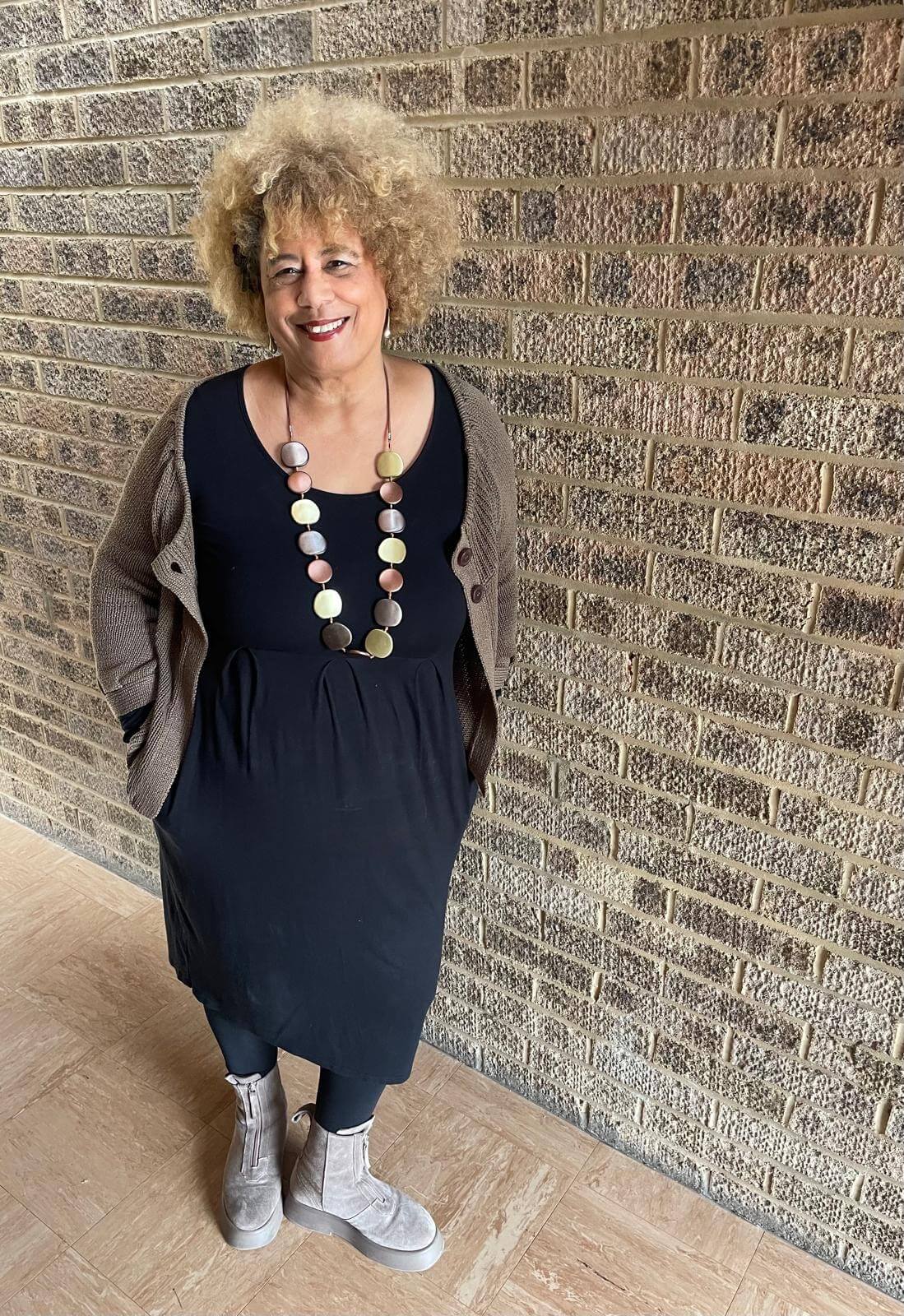
Tina Shingler is a writer and speaker. Her children’s book Princess Katrina and the Hair Charmer celebrates the versatility of Afro hair and was featured on BBC Teach. Her work explores racial identity at home and abroad with stories that aim to shift perceptions.
Visit her website to learn more about her work: https://www.tinashingler.com/
Learn more
Read an interview with Tina Shingler in The Guardian
Read accounts of the children of Black GIs and white British women who grew up in 1950s' chidren's homes in our 'Brown Babies of WW2' exhibition
Win a copy of the book! See details above
Sign up to our newsletter for latest posts!
Enjoyed this article?
Sign up to The Mixed Museum’s newsletter to stay updated when new blog posts like this go live. We send highlights from the museum's collection, links to new articles, and other interesting updates direct to your email inbox once a month.