
GUEST POST: Victory at home and abroad: Dr Liam McCarthy on how Black GIs returning home from Europe after WW2 influenced the US civil rights movement
In the years after the US joined the Second World War in 1941, approximately three million American soldiers, known as GIs, passed through Britain. About 240,000 of them were African American. While the US military remained segregated, the Black GIs enjoyed a warm welcome from the British public, with George Orwell commenting (in the language of the time): “The general consensus of opinion appears to be that the only American soldiers with decent manners are the Negroes”.
In his new book, historian Dr Liam McCarthy explores the lives of Black GIs stationed in the UK and finds that many were inspired by their experiences of relative equality during the war to fight Jim Crow segregation on their return home to the US.
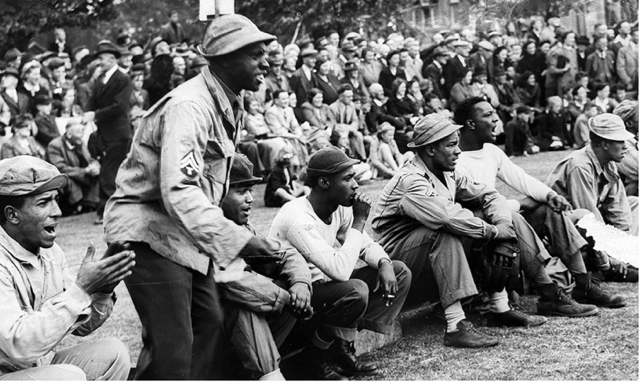
How African American soldiers returning from Europe after World War Two drove forward the civil rights movement
I estimate that as many as 20,000 people in Britain today may be able to trace their roots back to the African American soldiers who served in Britain during the Second World War. They are the children, grandchildren and great-grandchildren of the ‘brown babies’, who themselves are children of relationships between Black GIs and local women between 1942 and 1945. Theirs is a complicated history that has been hidden for too long: a history of the racial tension and violence in the segregated American military and the warm reception given to Black GIs by civilians up and down Britain. But the ‘brown babies’ and their descendants are not the only legacy of that period. Another is the impact the returning African Americans had in driving forward the civil rights movement after their experience of relative equality in Britain. Indeed, some of the most iconic post-war images of non-violent protests at lunch counter sit-ins, bus boycotts and marches can partly trace their roots back to an African American chaplain who served in Britain.

Stories of a warm welcome for Black GIs
When I began researching material for this book, I did so in an environment of increasing racial anxiety in Britain and, from my present-day perspective, it seemed improbable that Britain’s wartime population had been genuinely welcoming to the largest number of Black people ever to come to the country. But the evidence I found for their welcome was overwhelming, not only from British sources but also hidden in the archives in Washington DC and across the United States. General James Gavin of the 82nd Airborne Division discovered this warm welcome for himself when his paratroopers arrived in Leicester in 1944. He wrote in his personal diary in February 1944:
‘English people, especially the lower classes do not discriminate in any way. In fact, they prefer the company of colored troops. The colored troops have been in this community for almost a year and they are well intrenched (sic). Many are living with local english (sic) women. With the advent of the white troops frays and minor unpleasant encounters have occurred in the local pubs and dance halls. American whites resent very much seeing a white woman in the company of a colored soldier. Here they almost see them in bed with them’.
Immediately after the end of the war in July 1945, Brigadier General Kincaid, the Chief of Staff of the US Strategic Air Force in Europe, wrote that relations were ‘amicable’ between African American GIs and British civilians:
‘Amicable relations have been the rule rather than the exception between negro soldiers and white British civilians of the lower classes, especially women. As evidence of this, numerous applications for marriage between negro soldiers and white British civilians have been received’.
An estimated 60-70,000 British women married their GI sweethearts and went to live in the US after the war. Army and Airforce officers had to grant permission for these marriages to occur and very rarely allowed African American soldiers under their command to marry white women because mixed marriages were illegal in many US States. Indeed, they remained illegal in sixteen states until 1967 when the Supreme Court overturned state marriage laws in Loving v Virginia. When the US Army grudgingly accepted the conscription of African Americans in 1940, it argued that the Army was no place for ‘social experiments’, and the senior officers were not joking. But they had little sway over British civilians, as Brigadier General Kincaid noted:
Negro soldiers have been invited to homes and community functions, such as dances, in many towns in England … they still enjoy a certain measure of social equality.
Dozens of documents in British and American archives underline the view that white US military leaders had of African Americans in the military as ‘second-class Americans’. These ranged from strategic papers that were dripping with the racist hangover of slavery, southern segregation and stereotypes, to the successful political and media attempts to undermine any Black success in the war, and letters back home from white GIs who could not understand why British civilians did not discriminate against Black GIs.
African American soldiers served in multiple roles
I wanted to tell the story of the lives of African American soldiers in Britain in a personal way, to examine how individuals and their units managed during their time here. In the book, you will find stories of African Americans serving as chaplains, truck drivers, stevedores and unit clerks in the US Army and Air Force. During my research, I have spoken to many people in the United States and Britain who were proud of their relatives’ war service but had little knowledge of the difficulties they faced in a segregated army or the equality they enjoyed on British streets. Much of the research was done using personal collections of letters, documents and photographs. It was a privilege to be given access to these collections, and it has been a humbling experience to bring the stories of these brave people to life.
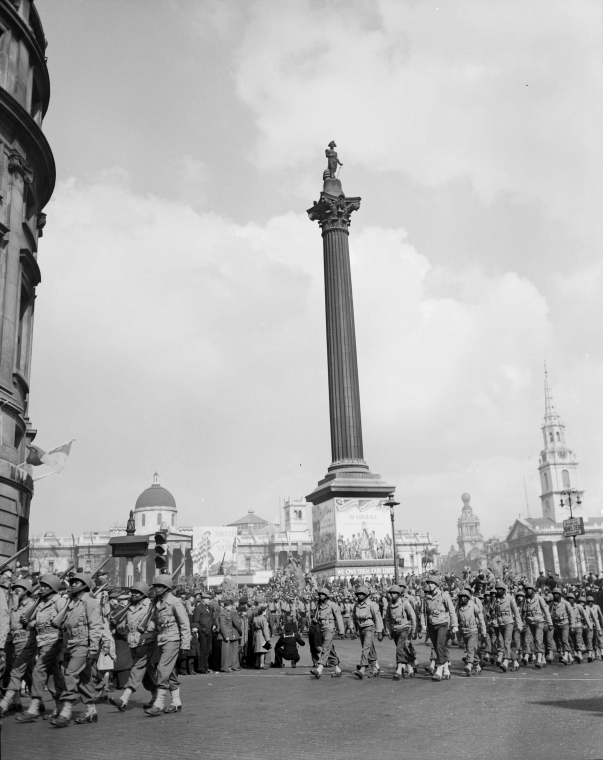
Captain Edward Carroll was a Yale-educated chaplain in an all-Black engineer company and a port company. He joined the US Army in 1939 and was one of just five African American officers. In his letters home to his wife during the war he described how the treatment of his men by white officers was like living on a plantation, and about the wrath of unequal military justice he personally suffered. Watch any war movie about D-Day and you are unlikely to see any Black faces on the American beaches of Utah and Omaha in Normandy. Yet Edward Carroll, his port company and other units were there all day on 6 June 1944.
John Hendricks was part of the 1938th Quartermaster Truck Company (Aviation), which was based in England from 1942 until 1944 when the company left to go to France and on into Germany.
In the book I follow their journey through England to seven bases from Lancashire in the north, Ipswich in the east and Portsmouth in the south. The 1938th had its fair share of both trouble and joy. On the positive side of the ledger they were able to build up relationships with British civilians, and at least one soldier fathered a baby in the small Leicestershire village of Gaddesby in 1944. Terry Harrison is one such example.
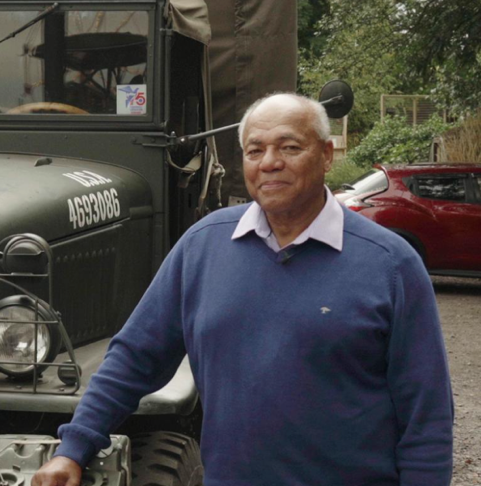
The time of Private First Class John Hendricks in England was cut short when he was shot dead at a traffic stop by a white American shore patrol officer in Cardiff. Through the trial transcripts of the officer who shot Hendricks, we can hear the frustrated voices of his fellow Black GIs who were with him on that terrible night that showed the uglier side of American military racism.
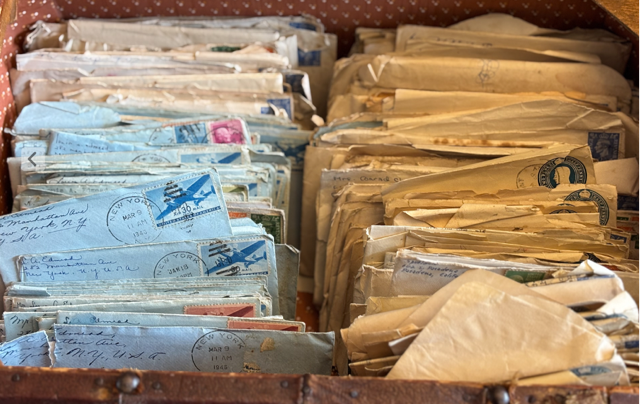
A more uplifting story I came across was that of New Yorker Louis Edmead who was stationed in Bristol in a Quartermaster unit. In 1943 Louis met local girl Patricia Venn, who turned out to be the love of his life. The chapter in my book focused on their relationship is punctuated with excerpts from their carefully preserved love letters. They tell of hope, despair and eventually bliss as after the war Louis fought bureaucracy and post-war austerity to make his way back to Bristol and marry Pat. Through their story I have been able to outline the difficulties faced by other Black GIs and their lovers and the racism they encountered as a couple, sometimes from both British and American people.
Black GIs brought their wartime experiences back to the US – and fought for their civil rights
These stories, together with newly uncovered evidence of deadly American race riots in the city of Leicester in 1944, form the spine of this hidden history that is slowly being brought to light across Britain and the United States. After the war, Black GIs did not receive a hero’s welcome in the United States. Instead, they were vilified by Southern politicians and faced official cruelty. Sergeant Isaac Woodward was beaten and blinded by a white policeman while still in his uniform in South Carolina.
African American GIs who had enjoyed equality while stationed in Britain refused to accept that they should give it up when they returned home. Many of the significant figures in the early civil rights movement served in Europe during the war. Medgar Evers served in Britain and Normandy and returned to become the National Association for the Advancement of Coloured People’s (NAACP) first field officer in Mississippi – a job that would cost him his life when he was murdered by local white supremacists in 1963.
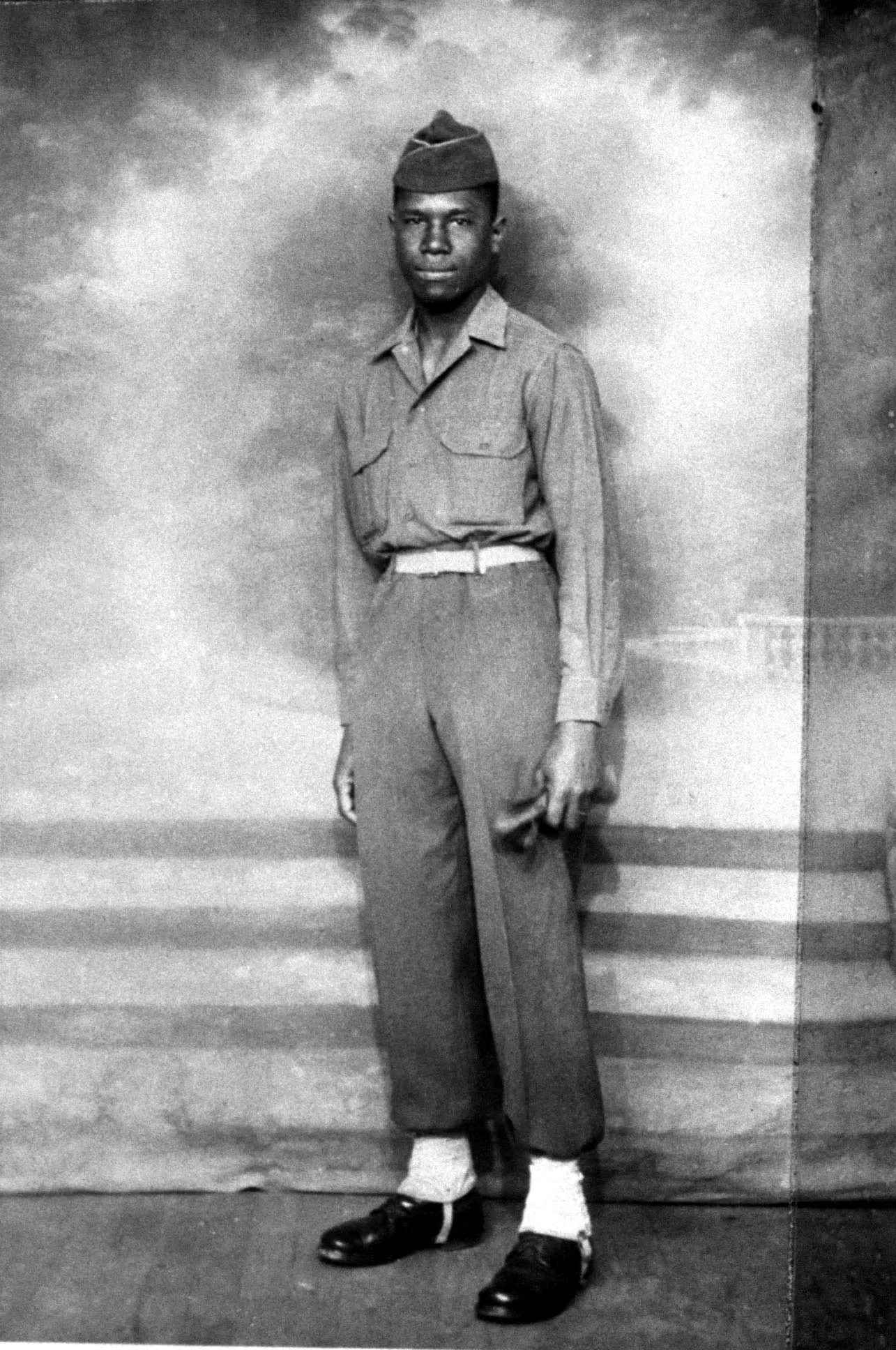
Captain Carroll, the Yale-educated US Army chaplain previously mentioned, who served in Britain and landed on Omaha Beach on D-Day, had a particular influence on the post-war civil rights movement. In 1936, Carroll and his lifelong friend, preacher Howard Thurman, travelled on a Christian mission to India where they became the first African Americans to meet Mahatma Gandhi, then leader of the Indian National Congress. This meeting was pivotal for the civil rights movement as Gandhi talked to them about ‘satyagraha’ – his doctrine of non-violence against the British occupation of India. After the war, Carroll who became a Bishop was a member of the NAACP, running campaigns for Black voter registration. His friend Howard Thurman became a mentor to a young preacher named Martin Luther King, who would go on to take up the method of non-violence learned by Carroll and Thurman from Gandhi in India.
In 1948, partly as result of the treatment of returning Black veterans, President Truman legislated for the desegregation of the US military – the first post-war victory of the civil rights movement. What their time in Britain had shown the estimated 240,000 African Americans who served here was that relationships with white people could be better, segregation was not tolerable and equality was worth campaigning for. They were no longer going to accept being treated as ‘second-class’ Americans. In 1963, World War Two veterans formed part of the security detail for the march on Washington where Martin Luther King made his ‘dream’ speech.
African Americans are still underrepresented in American military leadership
Today, African-Americans are overrepresented in the US Armed Forces: they make up around thirteen percent of the American population but sixteen percent of the total military headcount. Even so, less than one percent of those who make up the very senior ranks of the military are African American. The recent fate of some of those in the most senior ranks is also extremely troubling.
In February 2025, Pete Hegseth, the incoming US Secretary of State for War, used his prerogative to sack Air Force General Charles Q. Brown, the chairman of the Joint Chiefs of Staff – the most senior American military officer. Brown, an African American who had served in the US Air Force for 40 years, was fired by Hegseth since he “wasn’t sure” if he’d been hired by President Biden under some ‘DEI’ initiative because he was Black. Bringing the lives of African American soldiers in wartime Britain back into focus shows both how far we’ve come – and just how little has changed.
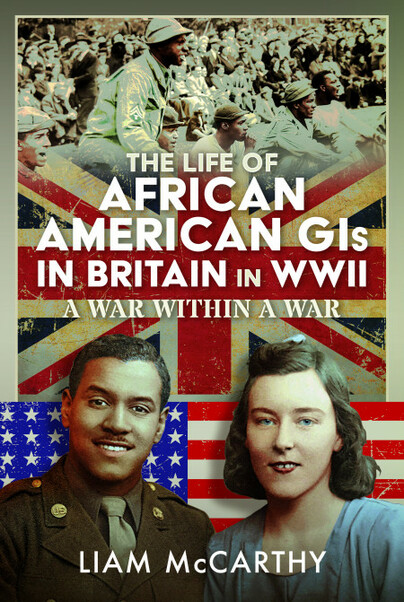
The Life of African American GIs in Britain in WWII: A War Within A War is published by Penn & Sword. It is available from the publisher or from online retailers.
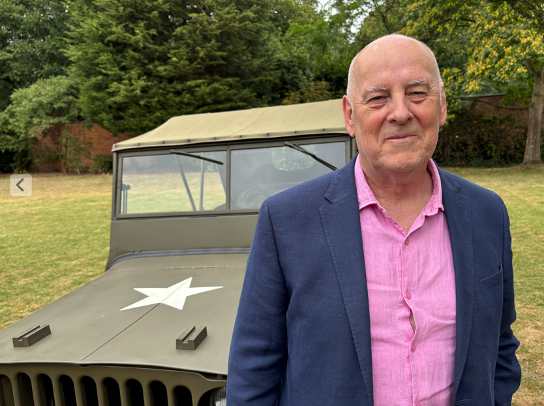
Dr Liam McCarthy is an Honorary Fellow in the school of History, Politics and International Relations at the University of Leicester. He has published works on the history of Asian and Black programming at the BBC and has contributed to a number of books about the BBC. Previously, he worked as a journalist for the BBC across England as Managing Editor of three BBC local radio stations.
Learn more
Visit our ‘brown babies’ of WW2 exhibition curated with Professor Lucy Bland
Learn about Terry Harrison - who is connected to the story of John Hendricks - and the film Terry's GI Dad made about his DNA journey
Watch our YouTube video interview series featuring wartime and cold war ‘brown babies’