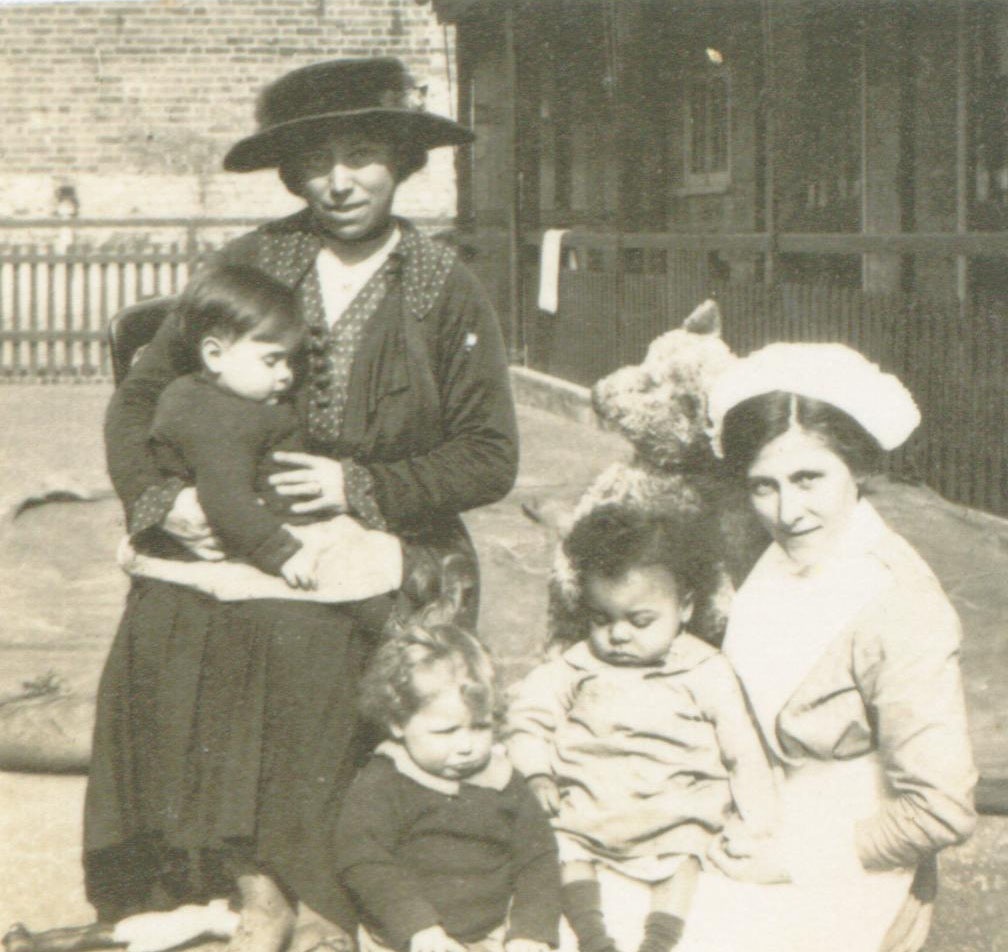
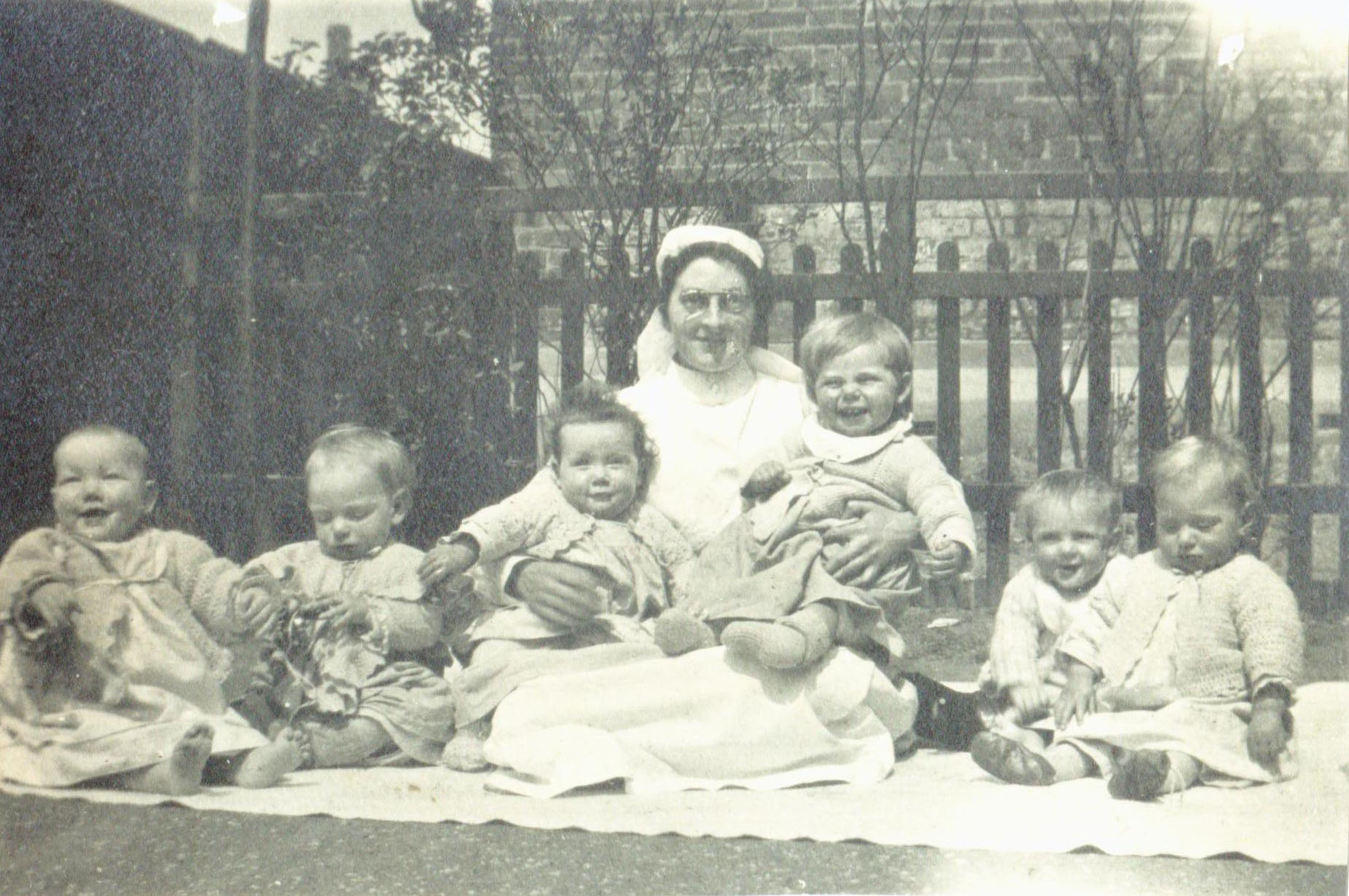
A mixed race child at the Woolwich Nursery for the Children of Munition Workers?
The Mixed Museum’s Director Dr Chamion Caballero couldn’t have predicted that attending a screening of the 1929 British silent film Piccadilly would lead to the museum being involved in a historical mystery. But a passing conversation with fellow audience member Rachael Grant about an old family photograph, which opened up a fascinating window onto wartime Woolwich, did exactly that. Taken at a pioneering nursery for the children of women working at the Royal Arsenal, the photograph appears to show a mixed race child in the care of Rachael's great-grandmother, Ethel. However, apart from learning the photo was taken around 1919, Rachael had no details about the child or their family.
Here, we share what we have found out so far – including the account of Donald Adolphus Brown, a heroic mixed race worker at the Royal Arsenal – and ask whether The Mixed Museum’s community can help us uncover more.
Who is the child in the photograph?
We are always pleased to hear from people whose family research connects with the histories explored by The Mixed Museum (TMM). So when Rachael Grant happened to mention an intriguing photograph in her family collection featuring her great-grandmother, Gladys Ethel Moss (known as Ethel), we were keen to know more.
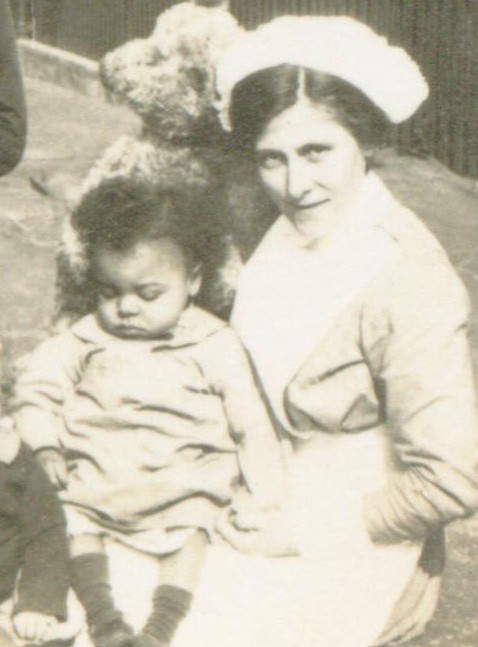
Ethel is the uniformed nursery worker in the photograph, seated on the right and holding a young child who appears to be of a mixed racial background in her lap. From Rachael’s own research into her family history, she knew the photograph came from her grandmother’s time as a nursery nurse at the Woolwich Nursery for the Children of Munition Workers around the period of the First World War (1914-1918), and assumed the child was one of the many who were looked after there. The identity of the other woman in the photograph, dressed in black and seated beside Ethel, is currently unknown.
Images: Nursery nurses with children at the Woolwich Nursery for the Children of Munition Workers. Images © Rachael Grant at The Mixed Museum / Courtesy of Rachael Grant
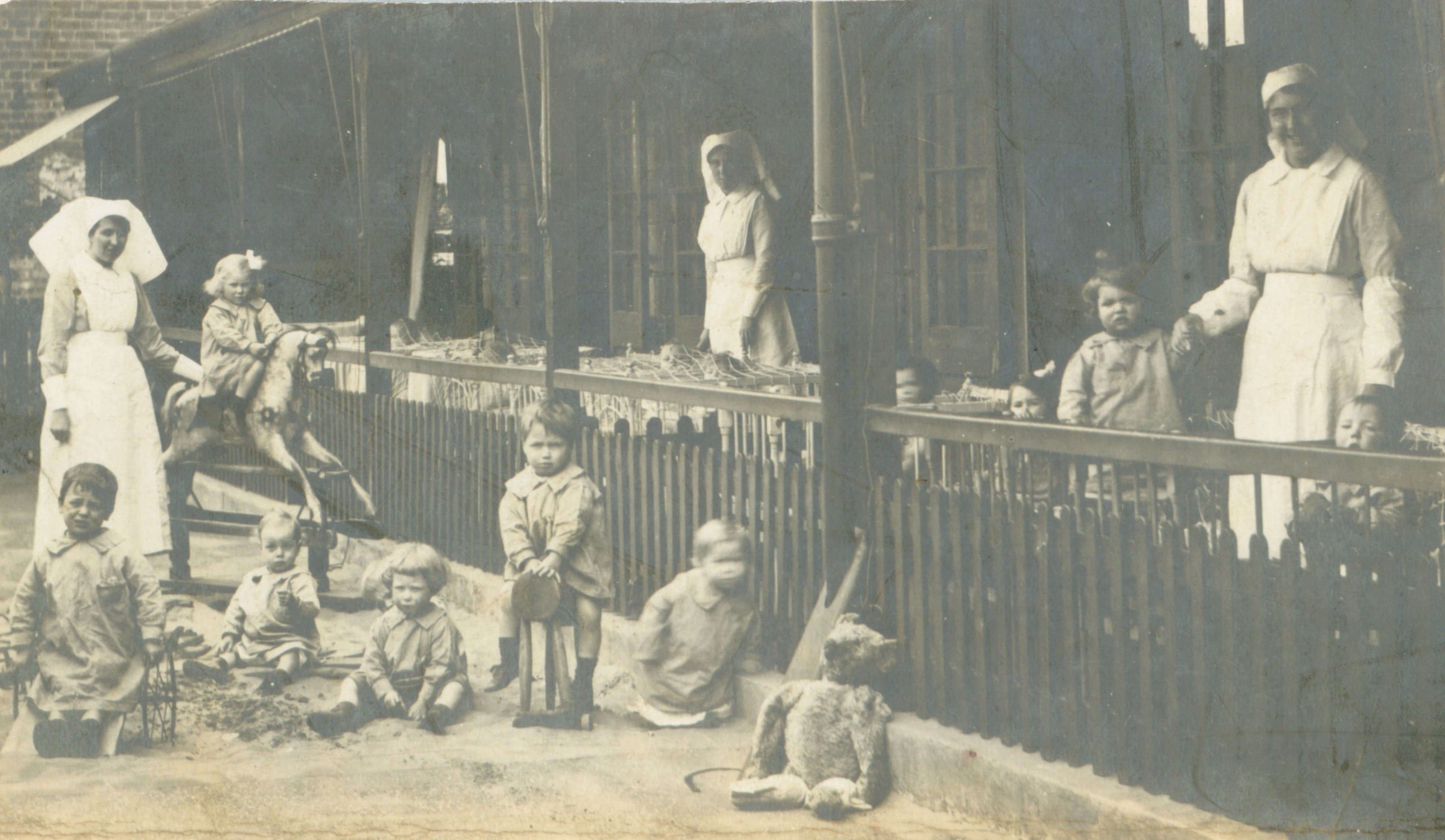
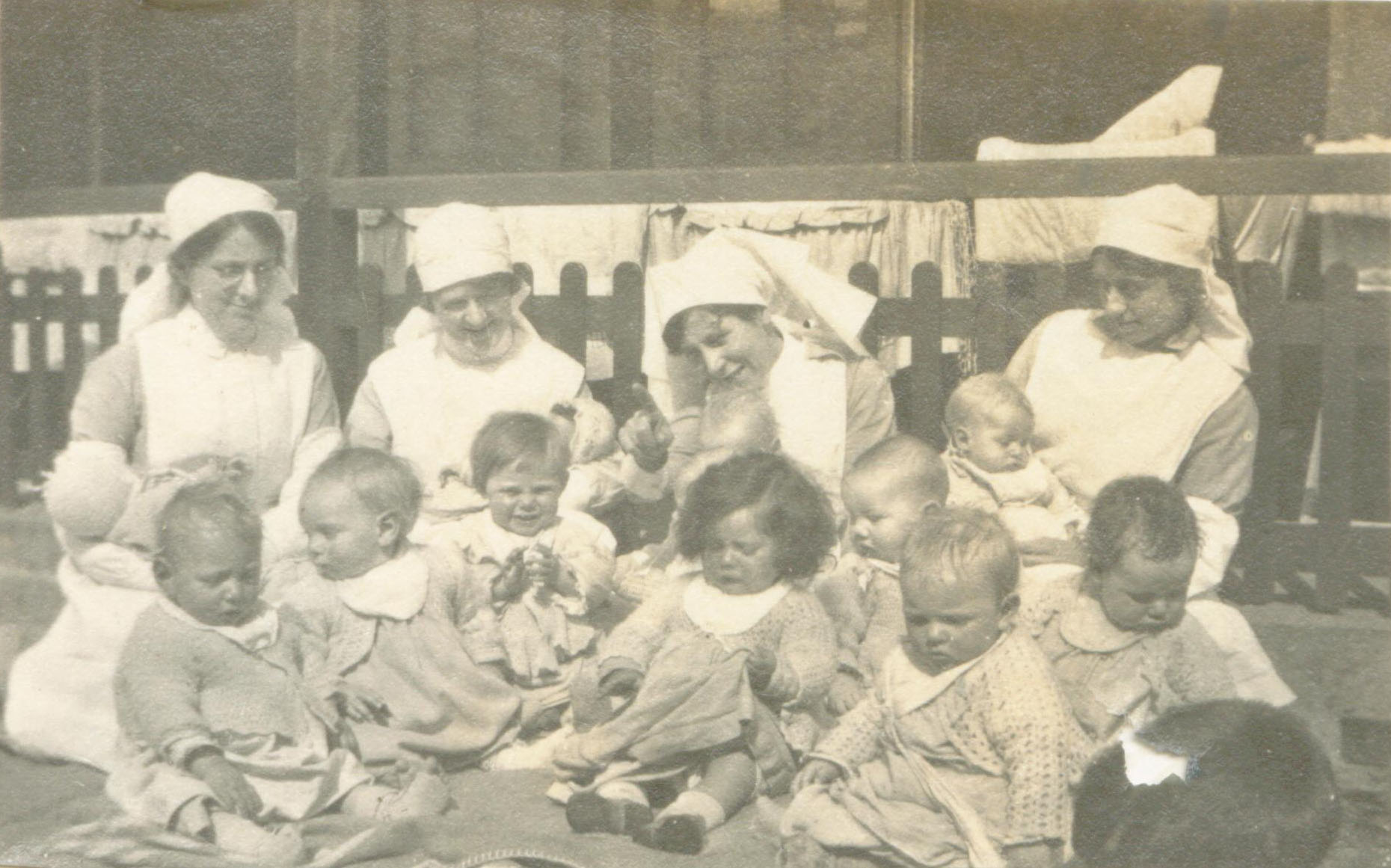
Rachael wondered whether TMM might be interested in adding the photograph to our collection – and perhaps helping to find out more. She told us about the research she had already undertaken into Ethel's life and a wider collection of photographs from the nursery, which she generously offered to share with us. Fascinated by this glimpse into a potential mixed race family history, we also began to look more closely at the nursery and the wider social context in which the photograph was taken.
Childcare and women's work at the Royal Arsenal at Woolwich, London
During the First World War, the demand for weapons and ammunition – known collectively as munitions – grew enormously. The Royal Arsenal at Woolwich was one of Britain's major centres of munitions production, and as increasing numbers of men left employment to serve in the armed forces, thousands of women were recruited into work that had previously largely been done by men. For women with young children, however, taking on this work created an immediate practical problem: who would look after their children while they worked?
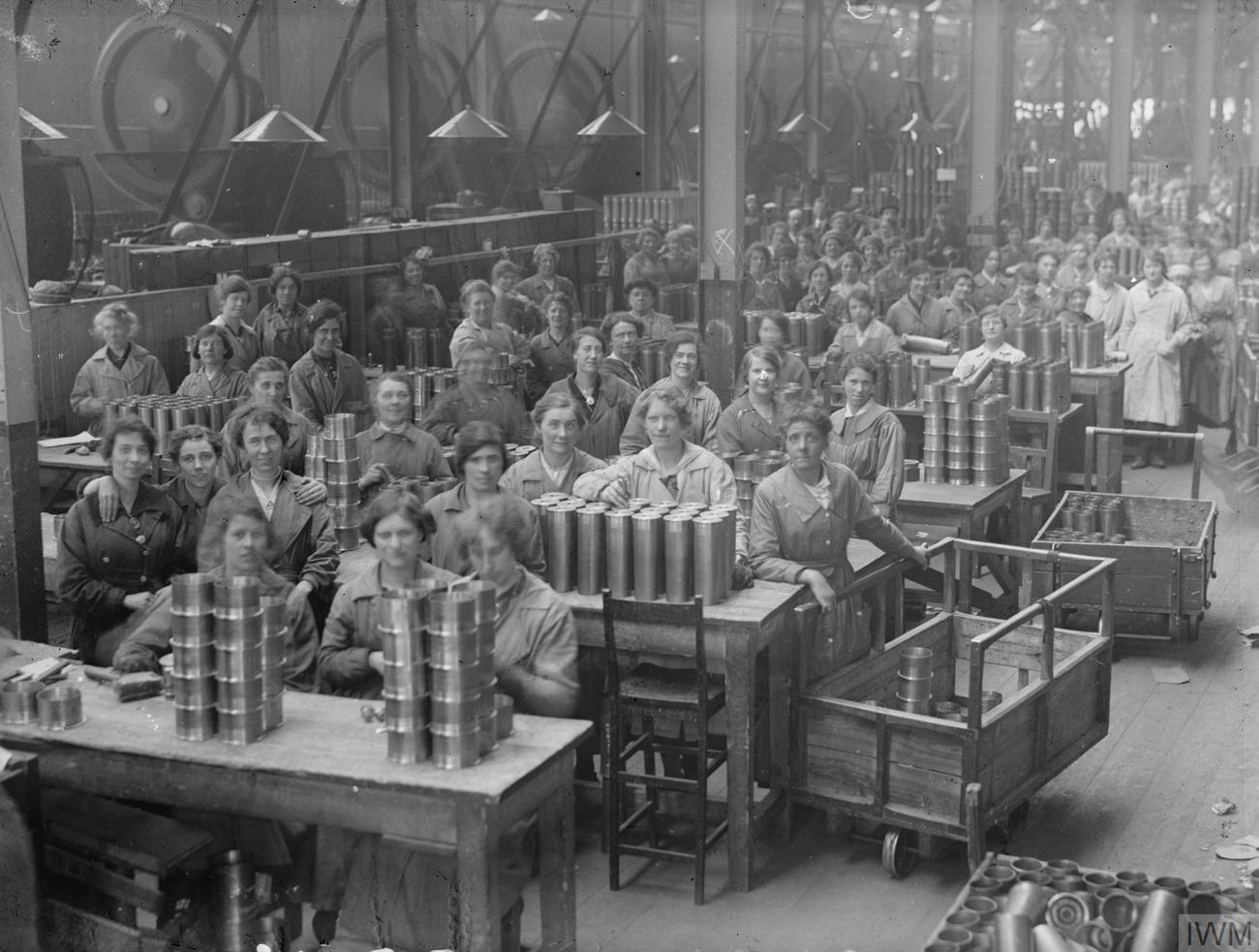
Contemporary newspaper reports we found during our research show just how difficult this could be. In one appeal to the Prime Minister Lloyd George published before the nursery opened, The Morning Chronicle highlighted how women working at Woolwich Arsenal faced twelve-hour working days which could mean leaving home at five in the morning and returning at nearly eight at night. Mothers had to find – and pay – someone else to look after their children. For some, the lack of suitable childcare made taking work at the Arsenal impossible.
As the demand for women's labour increased, childcare therefore became a practical concern for the production of munitions. If women with young children were to be recruited into this work, some form of provision was needed to make that possible.
One response was the Woolwich Nursery for the Children of Munition Workers, which opened at 57 St Mary Street in May 1917.
Lady Julia Henry’s 'model nursery' for munitions workers at 57 St Mary Street
Lady Julia Henry played a central role in establishing the nursery, including financially. Born Julia Lewisohn, she was the wife of Liberal MP Sir Charles Solomon Henry and already had experience of supporting childcare and welfare initiatives in London. The nursery commemorated her only son, Cyril Charles Henry, who had been killed at the Battle of Loos in 1915. The nursery later became known as the Cyril Henry Nursery School.
At 57 St Mary Street, an existing house was converted and new nursery buildings erected alongside it. The Woolwich Nursery for the Children of Munition Workers opened there on 3 May 1917, providing childcare for women working in munitions at the nearby Woolwich Arsenal. It attracted considerable attention, including in time from the celebrated artist Sir John Lavery; in 1919, he painted Lady Henry's Crèche, Woolwich, showing babies and young children being cared for inside the nursery.
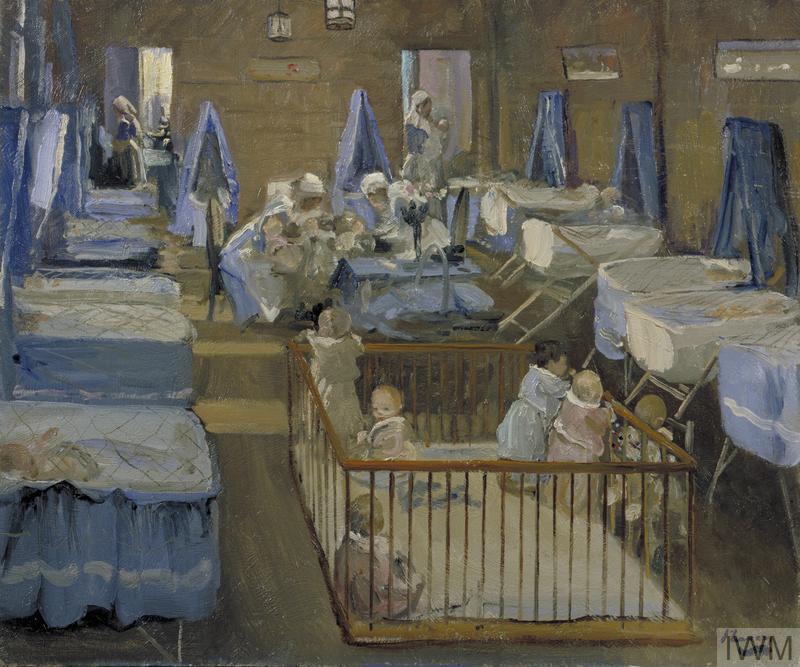
The facilities were extensive. There were separate spaces for babies and older children, bathrooms, laundries and service rooms, while outside was a large garden, including a sand pit for the children. Children could attend from just four weeks old until the age of five, with space for around 100 children. Importantly for mothers working shifts, care was available during both the day and night.
The nursery was supported through a combination of public subsidy, philanthropy and fees paid by mothers. The government increasingly recognised that childcare was essential if mothers of young children were to work in munitions. But not everyone welcomed the idea. Some within the labour and women's movements, like Marion Phillips, worried about the impact on working-class family life, particularly when babies and young children had to travel to crèches around long and sometimes overnight shifts. Others saw good nursery provision as essential to supporting women who needed or wanted to work. The Woolwich nursery formed part of a wider wartime effort to provide childcare for women working in munitions, with similar nurseries established near factories elsewhere in the country.
Seeing Ethel's workplace on film: Mighty Atoms
Remarkably, we can see the nursery in operation thanks to the 1917 silent film Mighty Atoms which takes us inside 57 St Mary Street during the nursery's first year. Babies and young children can be seen playing, eating, sleeping and being cared for by nursery staff.
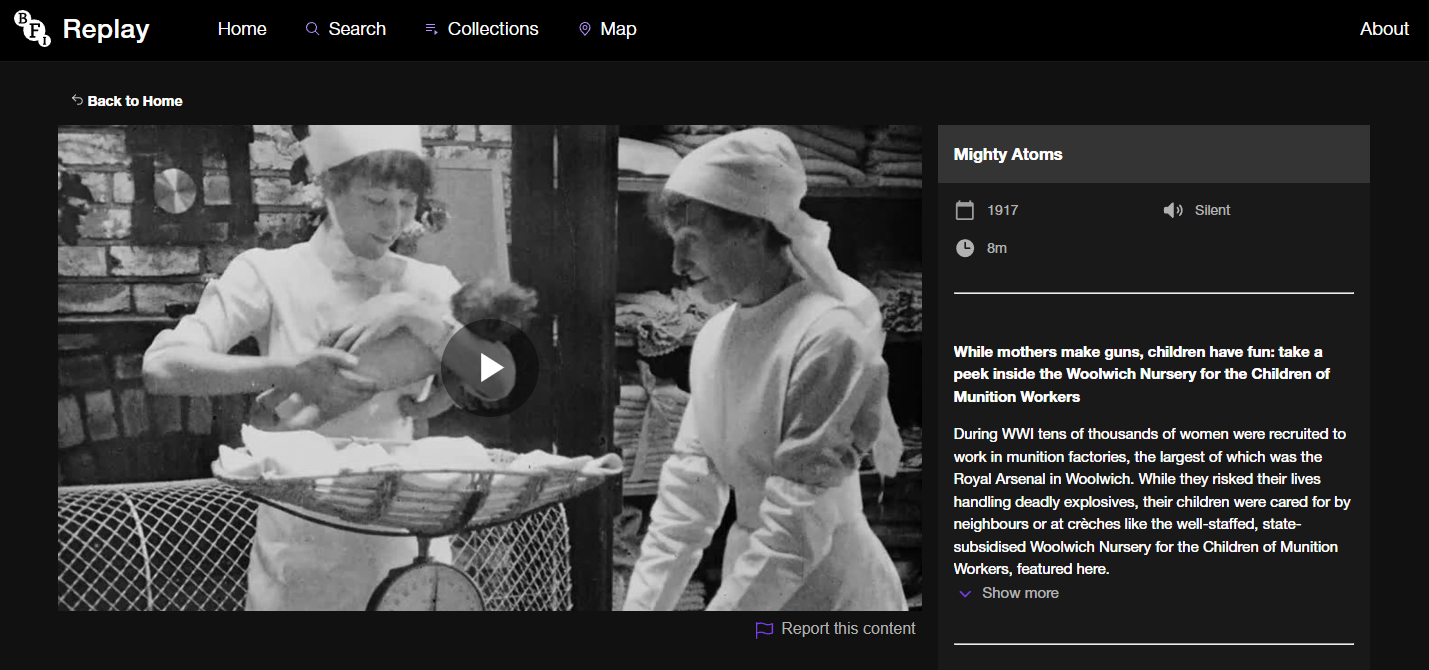
Rachael had never seen this film before, and when we shared it with her she said it felt like seeing her family photographs “come to life”. Rachael doesn't think Ethel herself appears in the film. She has not been able to establish exactly when Ethel began working at St Mary Street and suspects that it was later than 1917. Intriguingly, however, some of the other nursery workers look familiar to her from the photographs that have survived in the family.
Black and mixed-race families in wartime London: Donald Adolphus Brown and Eliza Adelaide Knight
But what about the child who first sparked our interest?
A photograph alone cannot tell us about someone's ancestry, and we still know nothing about the child's family. But as we began looking more closely at Woolwich itself, we found evidence that mixed race people and families did live and work locally.
One particularly interesting example is Donald Adolphus Brown. Born in Kent in 1873, Donald was the son of a Black Royal Navy sailor from British Guiana (present-day Guyana) and an English mother. He later married Eliza Adelaide Knight, a white working-class woman who became a prominent campaigner for women's suffrage. The couple initially lived with their children in Plaistow, East London, before moving to Abbey Wood around 1909.
Donald had previously travelled from Plaistow to work in Woolwich each day via the Woolwich Free Ferry. By the time Ethel was working at the nursery, however, he and his family were living locally in Abbey Wood. However, in January 1919, Donald was working as a foreman at the Royal Naval Ordnance Depot at Woolwich when a case of rockets caught fire. He dragged the burning case from a store containing explosives, helping to prevent a much larger explosion. He was subsequently awarded the Edward Medal and a Carnegie Hero Fund Medal for his bravery.
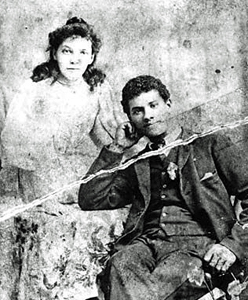
There is no known connection between Donald's family and the child in Ethel's photograph. But his story gives us something important: direct evidence of a mixed-race family living locally and connected to Woolwich's vast ordnance workforce at precisely this time. Moreover, Donald's daily journey from Plaistow also reminds us that the people working at Woolwich did not necessarily live south of the river.
This is particularly interesting when we look just across the Thames. By the First World War, the docklands of East London were home to an established and growing multiracial population. Sailors and other workers from Africa, the Caribbean, Asia and the Arabian Peninsula had settled there, some forming families with white British women. TMM has long been exploring this history, including with our co-founder Dr Peter Aspinall and more recently with Professor Lucy Bland and James King.
Life within these communities was not always easy. During the summer of 1917, only months after the Woolwich nursery opened, racial violence occurred in Canning Town, with Black men, their white partners and homes targeted in attacks by white men.
Contemporary newspaper reports suggest the violence was motivated by hostility towards interracial relationships, issues that would again become highly visible during the racial violence that occurred in nine British ports in 1919-20, including again in East London.
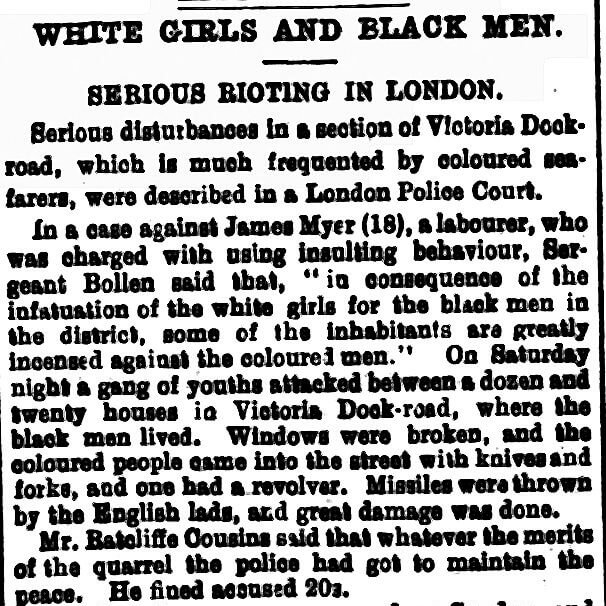
Yet relationships and families endured. Alongside the prejudice and violence recorded in the newspapers can also be found everyday experiences of people building relationships, raising children and making lives for themselves in the communities around the docks in the interwar and postwar periods.

Can you help us find out more?
There is still much more we would like to know. Do any registers of children attending the nursery, staff records or related welfare records survive? Are you researching a Black or mixed race family with connections to Woolwich, Greenwich, the Royal Arsenal or the surrounding area during the First World War and its aftermath? Perhaps your own family had a connection with the nursery, or you have photographs which might help us identify some of the people pictured here. If so, we would love to hear from you.
Our enormous thanks to Rachael for sharing Ethel's story and photographs with TMM, and for allowing us to share this particular image from her family archive. Her family photo is a reminder that so much of Britain's mixed race history has survived not in official archives, but in family albums, boxes of photographs, letters, memories and stories passed between generations. On their own, these fragments may seem small, but brought together with archival research and the knowledge held by families and communities, they can help us rediscover new perspectives on British history, as well as who was a part of it.
Nursery images © Rachael Grant at The Mixed Museum collection images / Courtesy of Rachael Grant. Not to be reproduced without permission.
Learn more
Read about mixed families and WW1 in our work-in-progress Timeline
Learn about the racial violence in British port cities in the aftermath of the First World War
Watch The Strangers Home and learn about the mixed communities of East London
Find out about and watch Piccadilly, the film that connected Rachael with The Mixed Museum
Sign up to our newsletter for latest posts!
Enjoyed this article?
Sign up to The Mixed Museum’s newsletter to stay updated when new blog posts like this go live. We send highlights from the museum's collection, links to new articles, and other interesting updates direct to your email inbox once a month.