BOOK EXTRACT: Belonging, legends and magic – racial representation in Welsh children’s literature
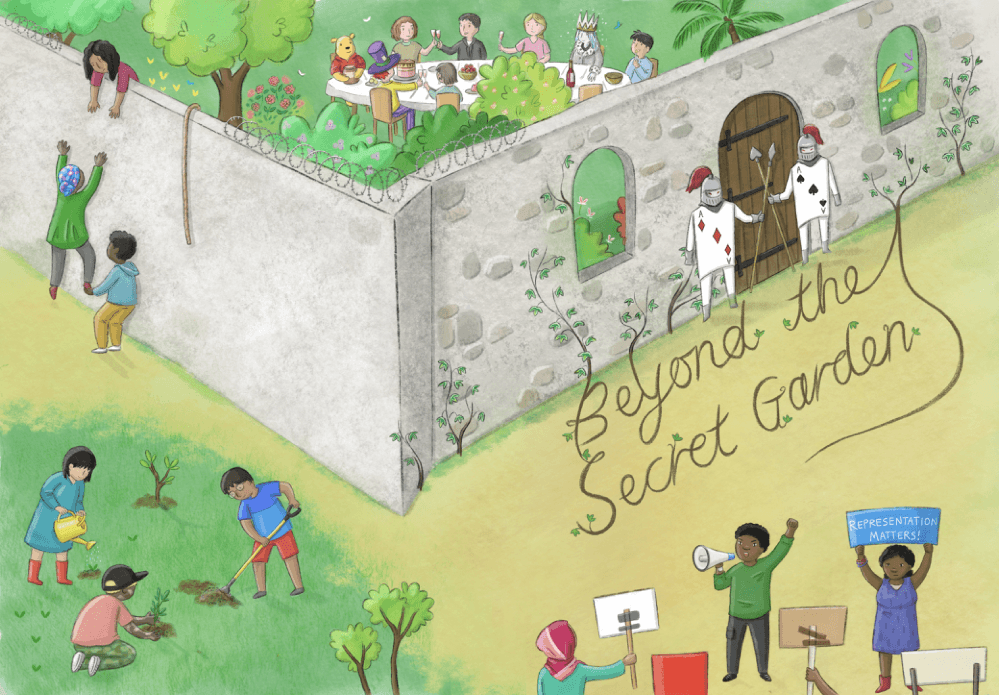
Dr Darren Chetty and Professor Karen Sands-O'Connor’s book Beyond the Secret Garden: Racially Minoritised People in British Children’s Books was first published in 2025. Drawing on and expanding their long-running column in the magazine Books for Keeps, the book traces how Black and brown characters – including those from racially mixed backgrounds – have been represented in British children’s literature from the 19th century to the present day. Here, with their kind permission, we share an edited version of their chapter ‘It Starts in Wales’, which charts how shifting perceptions of Wales and Welshness have been expressed through racially minoritised characters in books for children over the past 60 years. Please note that the books referenced were those published at the time of publication in 2025.
Why don’t more children’s books set in Wales feature racially minoritised characters?
Books set in Wales and featuring characters of colour have two sets of obstacles to overcome. We continue to be told by literary agents that children’s stories featuring a Black or brown main character are difficult to sell to publishers. At the same time, best-selling Welsh author Sophie Anderson reports having been told by publishing professionals that books with a strong Welsh subject matter are considered niche, having a more limited market, especially internationally. There are very few writers who can afford not to take these commercial pressures into account. Children’s literature set in Wales and featuring racially minoritised people is, therefore, still rare.
Many children’s and young adult novels written before the 1990s centred on the difference between Welshness and Englishness, or drew on connections to British myth and legend – from King Arthur to the Mabinogion. In the case of Alan Garner’s The Owl Service (1967) and Susan Cooper’s The Dark is Rising sequence (1965-77), they did both.
Children’s books based in Wales featuring minoritised characters
The perception of Wales both as a country that was colonised by the English and as a place of legend and magic has made it a particularly useful setting for English authors looking to broaden the definition of Britishness. Manny Singh, a Sikh boy from an Indian family in Cooper’s award-winning Silver on the Tree (1978), can be read as a plot device to allow Cooper to draw connections between the magical world of the Dark and real-world racism.
Philip Pullman’s young adult novel, The Broken Bridge (1990), about Ginny, a girl with an English father and a Haitian mother, living in Wales, draws on Gothic tropes to explore fear over mixed race liaisons. Haunted by the ghosts of colonialism and racism, she tries to use Voodoo to solve her problems, but only ends up in danger. It seems that only by rejecting her Haitian mother is she able to heal her family. Having stopped trying to connect with her mother in any way (including through Voodoo), she ends the novel by embracing the beauty of the land around her and the Welsh language, calling ‘bore da’ (good morning) to her mother as she passes by.
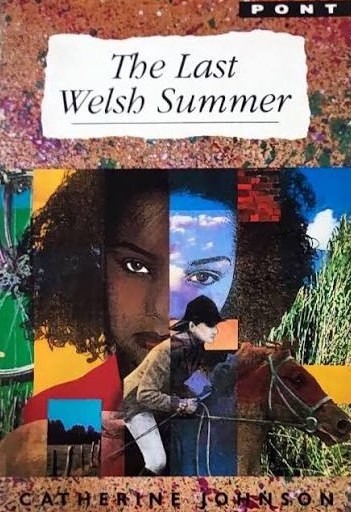
The assumption that a character must reject aspects of their racialised or cultural background is resisted by other writers. Catherine Johnson, of Welsh and Jamaican heritage, grew up in London but has a deep connection to Wales where several of her early novels are set. Like Pullman’s Ginny, Johnson’s protagonist in The Last Welsh Summer (1993) sometimes feels like an outsider in Wales because of her Guyanese heritage. But despite overhearing one of her cousin’s friends ask, ‘How can she be black and Welsh, she’s foreign, isn’t she?’ Suki knows her connection to Wales is real. ‘Even if I don’t belong,’ she concludes, ‘this belongs to me’. The land itself welcomes Suki, even if the people don’t always.
In Johnson’s novel Other Colours (1997), Louise runs away from Wales to London because she too feels like she doesn’t belong. The only brown-skinned girl in her town, she comments that people ‘stare at me in Safeway’. In London, through a positive meeting with an art teacher and negative encounter with skinheads, Louise comes to realise that she doesn’t belong there simply because she is Black. Returning to Wales, she brings with her images of multiracial London:
‘...the woman in a sari with a pattern of gold and blue … the dark brown man with the scars on his face … the two black girls with sculpted hairdos hard like shells’ to ‘keep in my head for the long white Welsh summer up ahead’.
‘There is a future, even if it starts in Wales’, she thinks. The novel suggests that in order to belong, this is a future she has to create herself.
Louise’s pronouncement at the end of Other Colours could have been the opening line of Patience Agbabi’s The Infinite (2020). The novel opens with the protagonist Elle declaring, ‘Today I got a text from the future!’ Agbabi spent her teenage years in North Wales, and the setting of her novel about 12-year-old Elle shows a multiracial town of Italians, Nigerians, Poles and British people who don’t always get along (the Polish deli’s windows are smashed and graffitied).
But Elle – autistic, Nigerian-British, and one of the best sprinters in her school – goes to the future to make the world better. When she returns home to her grandmother’s pepper soup, she can see how the future of both the town and the world might change if people like her decide to do something:
‘Today is a special day … I can help save the planet … Maybe one day there’ll be no more fish in the sea. Or maybe human beings will fall in love with Planet Earth. The future needs the past to become itself.’
Inaugural Children’s Laureate of Wales, Eloise Williams has included characters of colour in two of her novels set in Wales: Seaglass (2018) and Wilde (2020), both aimed at 9 to 12-year-olds. Alex Wharton’s poems in Daydreams and Jellybeans (2021) are accompanied by Katy Riddell’s illustrations of children, including Black children and another child wearing a hijab.
A number of picture books with Welsh connections have been published in the past decade. The Girls (2018) and its sequel The Boys (2021) by Swansea-born Lauren Ace and Cardiff-based Jenny Løvlie feature a number of characters of colour. Books such as Splash, Anna Hibiscus! by Atinuke, an author born in Nigeria and living in Wales, and illustrated by Lauren Tobia (2013) are set in Africa.
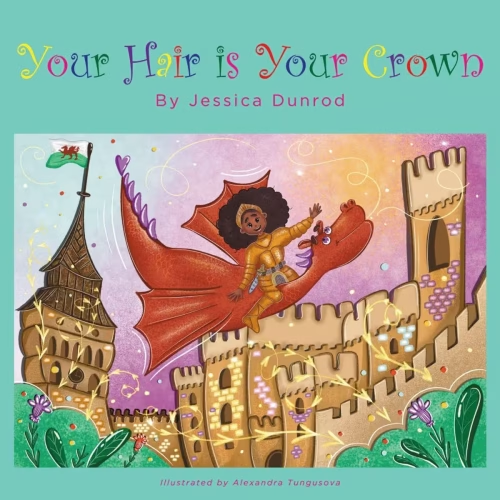
To date, the only fiction picture book featuring a person of colour and explicitly set in Wales is Jessica Dunrod’s Your Hair is Your Crown (2020), published by Dunrod’s own company, Lily Translates. In this story we see Hope with her white mother from Cardiff and her Black father from St Kitts. Hope encounters Dewi the Dragon and Afrodite, a Black mermaid, before flying over Cardiff and learning that there is magic to be found in the curls of her hair.
Non-fiction books about Wales have started to include racially minoritised perspectives
Recent non-fiction books about Wales indicate a broadening of perspectives. As recently as 2017 Terry Deary’s Horrible Histories: Wales has room only for the unsubstantiated story of Madog ab Owain who, in the twelfth century, travelled to North America and intermarried with Native Americans. There is no mention of racially minoritised people. Patagonia is mentioned only as a place where Welsh migrants set up tea houses and ‘do well’.
Since 2021, when the New Curriculum Working Group chaired by Professor Charlotte Williams OBE published its report, a number of non-fiction books have been published by Welsh publishers that do pay some attention to people of colour.
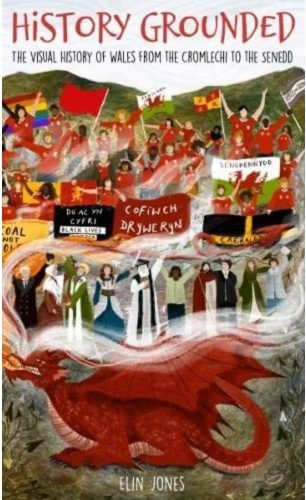
The cover of History Grounded by Elin Jones (2021) features a bilingual Black Lives Matter banner next to Coal Not Dole, Votes for Women and Cofiwch Dryweryn (Remember Tryweryn). Jones includes a two-page spread on Wales’s part in the slave trade, with a map showing the location of slaver families who were compensated by the British government after abolition. Less is said about the long-standing Black and Asian communities in Wales, though a page is devoted to Betty Campbell, the first Black headteacher in Wales, whose statue was unveiled in Cardiff in 2021.
Ten Stories From Welsh History, written by Ifan Morgan Jones and illustrated by Telor Gwyn (2021), also mentions Campbell, along with diplomat Abdulrahim Abby Farrah and Colin Charvis, the first Black man to captain the Welsh rugby union team. All three are included in a section entitled ‘multiculturalism’ that also refers to Yemeni, Romani, Italian, and Jewish communities. Again, Welsh involvement in the slave trade is acknowledged. The 1919 ‘Race Riots’ are given a double-page spread, which concludes, ‘it’s important that we remember this history so that we never face such a situation again’.
Fighting for Fairness: Righting Wrongs and Battling Prejudice by Greg Lewis (2021) is a 68-page non-fiction book, with short sections organised around significant figures in Welsh history: Eddie Parries, the first Black footballer to play for Wales; Clive Sullivan who captained the Great Britain rugby league team; Billy Boston, one of a number of Black players overlooked by Welsh rugby union clubs, whose record of most tries for Wigan still stands after forty years; Cameroon-born writer Eric Ngalle Charles; Frances Batty Shand, Jamaican-born child of John Shand, a Scottish slaver, and Frances Brown, an enslaved woman (described as ‘a plantation owner’ and ‘a slave’). Frances Batty Shand founded Cardiff’s oldest charity, the Association for Improving the Social and Working Conditions of the Blind, which became known as the Cardiff Institute for the Blind.
Lewis’ book is noteworthy for not skipping over Crimean War nurse Betsi Cadwaladr’s time in the Caribbean, as other accounts of her life have often done. Indeed, a final section entitled ‘Slavery and Wales’ mentions Welsh abolitionists alongside slaver Thomas Picton and Henry Morton Stanley, who worked for Leopold II of Belgium, in the context of recent conversations in Wales about statues erected to honour them.
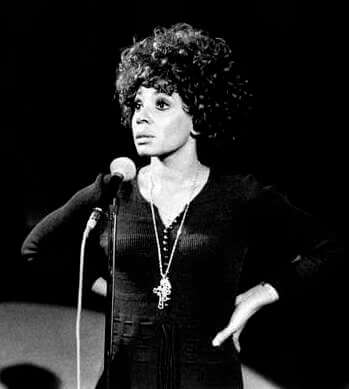
Bethan Gwanas’s picture book Shirley: The Dazzling Life of Shirley Bassey (2021, illustrated by Hanna Harris) is part of the Welsh Wonders picture book series. Shirley Bassey’s journey from Tiger Bay in Cardiff to Monaco, via London and Las Vegas is chronicled, with both challenges and successes included. In a spread where Bassey, her siblings and her parents are depicted, the text reads, ‘Shirley’s father was a sailor from West Africa. Her mother had moved to Tiger Bay to avoid people who didn’t like her children because of the colour of their skin’. Bassey is also included in Great Britons: 50 Amazing People Who Have Called Britain Home by Welsh writer Imogen Russell Williams, illustrated by Sara Mulvany (2021).
Welsh language books featuring racially minoritised characters
It is important to acknowledge that Wales has two official languages, and indeed some of the most interesting children’s and YA fiction in recent times has come out of Welsh language publishing. Welsh language publisher Y Lolfa has recently published a number of books featuring people of colour in Welsh settings. In Sw Sara Mai by Casia Wiliam (2020), a novel for 9 to 12-year-olds, Sara Mai, who lives in South Wales with her zoo-owning parents describes herself as ‘dark brown, somewhere between Mum’s skin colour and Dad’s skin colour’. Pam? by Luned and Huw Aaron (2021) features a young boy of colour who is forever asking his parents, ‘Why?’
The Crown in the Quarry (2019), first published in Welsh as Y Goron yn y Chwarel and translated by Susan Walton, is one of a number of historical novels written by poet and Archdruid of Wales, Myrddin ap Dafydd. Sardar arrives in Blaenau Ffestiniog as a wartime evacuee from Liverpool having migrated with his family from the Punjab. The book describes the racism Sardar encounters, but also the friendship and solidarity offered by his new friends as he settles in and learns a third language. An image of his vocabulary book is shown where he translates Welsh into Punjabi. As well as racism, colonialism and class exploitation emerge as central themes of the book, which includes references to the Amritsar massacre, as well as English landlords who exploited Welsh workers. As such, it provides an important space to talk about the complexities of Welsh history in relation to race and nationhood.
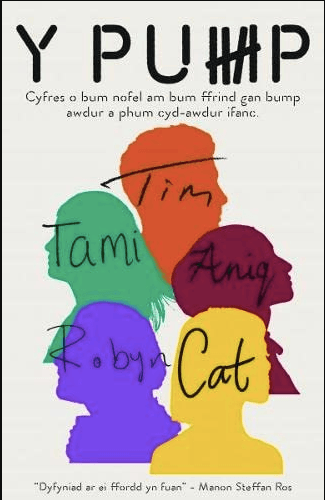
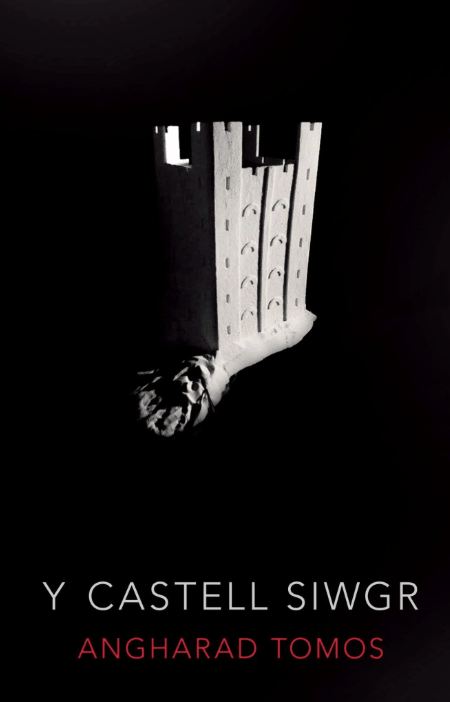
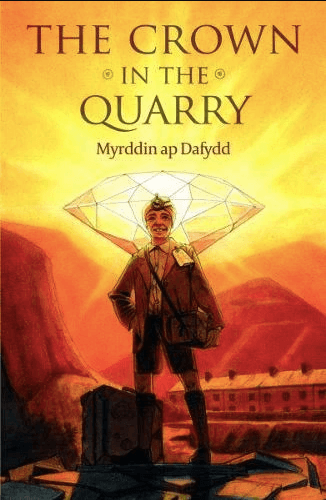
Images: Welsh language books Y Goron yn y Chwarel, Y Castell Siwgr and Y Pump all feature racially minoritised characters
Welsh children’s literature scholar Siwan Rosser informs us that whereas three Welsh translations of Uncle Tom’s Cabin had been published by 1853, we had to wait until Angharad Tomos’s 2020 novel Y Castell Siwgr for a Welsh children’s novel to deal directly with Wales and the slave trade. The stories of two teenage girls are offered; Dorcas, who is forced to serve at Penrhyn Castle in Gwynedd and Eboni, an enslaved person on the Penrhyn family plantation in Jamaica. The two stories are told separately with the reader being invited to observe the similarities and differences between class oppression and enslavement, while also gaining insight into one of the Welsh families that made a fortune as slavers.
The recent publication of Y Pump (The Five), a series of five interlocking YA narratives set in North Wales, is a fascinating development in publishing. Series editor Elgan Rhys drew on his theatre background to develop a project with both collaborative storytelling and young writer development at its heart. The series writers were mentored by Manon Steffan Ros. Both Aniq by Marged Elin Wiliam and Mahum Umer and Cat by Megan Angharad Hunter and Maisie Awen include young people of colour as protagonists. These characters also feature in the other three books about Year 11 students at a school on the North Wales coast. The books’ co-authors, roughly the same age as the characters portrayed, played integral roles in the writing process.
As Elgan Rhys writes in Two Rivers in a Common Spring, a book celebrating 60 years of the Books Council of Wales: ‘The authors are there, but we need to go beyond our habits, in order to uncover and invite in the new, contemporary and authentic voices in today’s Wales’.
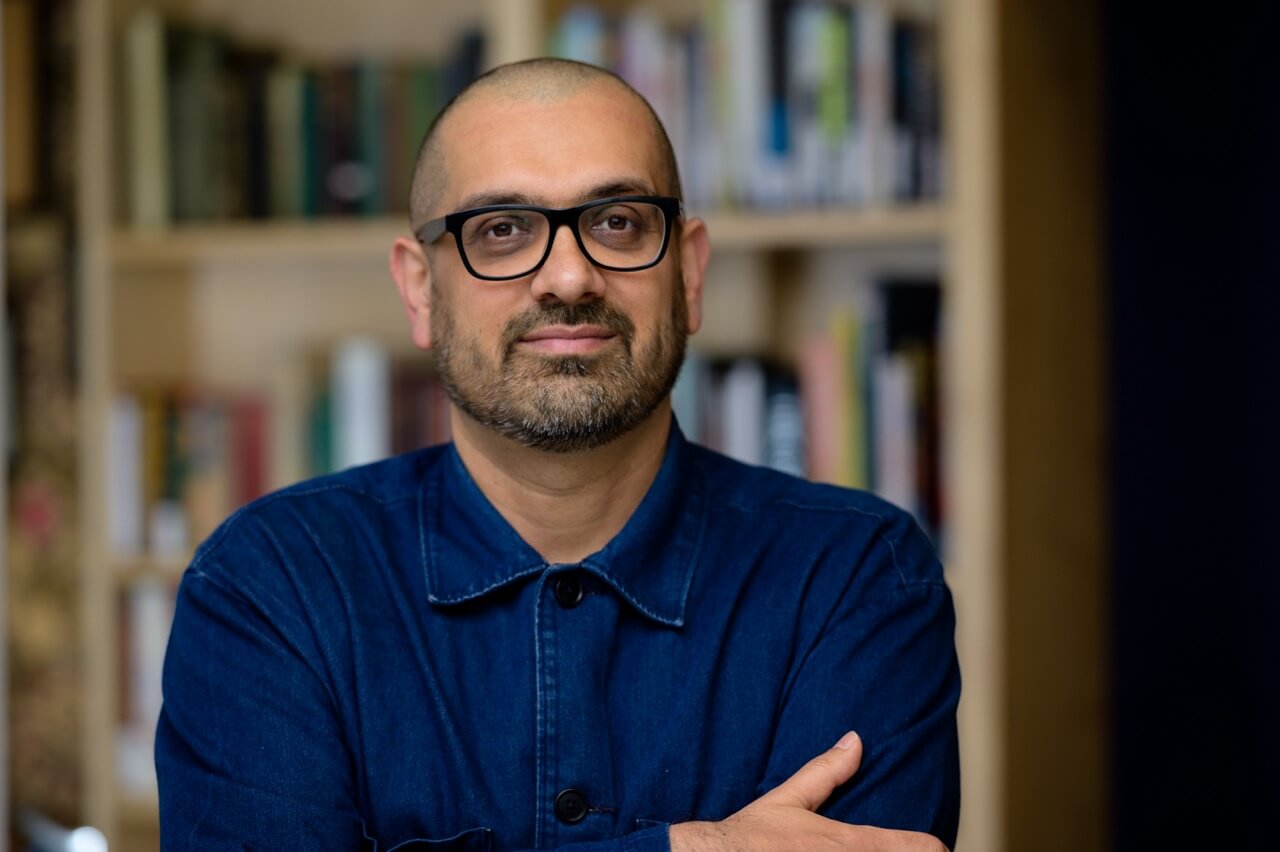
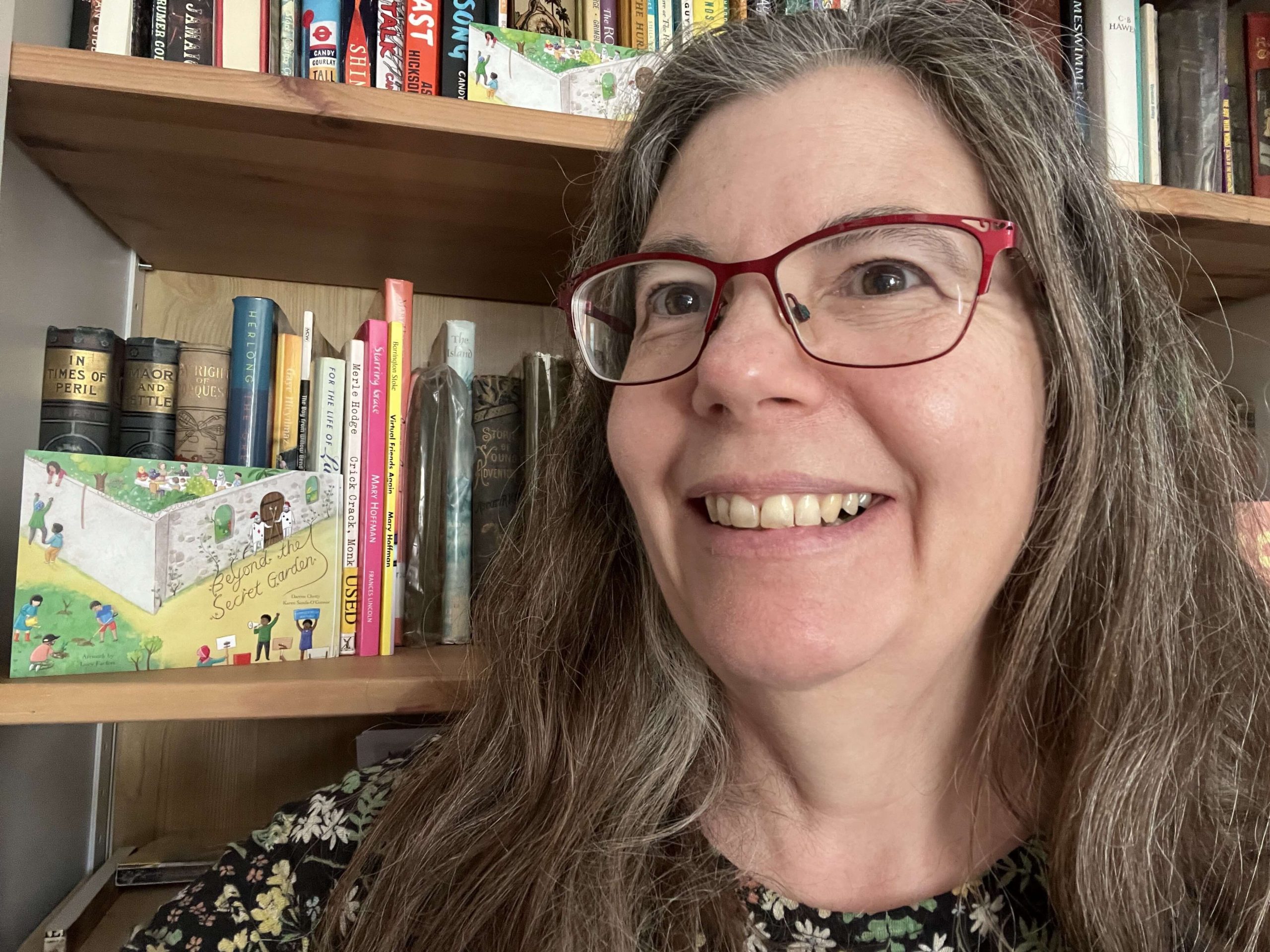
This is an edited version of the chapter ‘It Starts in Wales’ from Beyond the Secret Garden: Racially minoritised people in British children’s books by Dr Darren Chetty and Professor Karen Sands-O’Connor. The chapter was first published in the online children’s book magazine Books for Keeps in March 2022 with support from Dr Siwan Rosser, Jo Bowers, Marvin Thompson, Jessica Dunrod, Penny Thomas, Sian Chapman and LLeucu Siencyn. Many thanks to Dr Chetty, Professor Sands-O’Connor and the English & Media Centre for allowing us to publish this extract.
Copies of Beyond the Secret Garden can be ordered from The English & Media Centre. Dr Darren Chetty's new book Our Wales: A People’s History, written with historian Martin Johnes, will be published in November 2026 and is available for pre-order. For more information about him, visit his website. For more information about Professor Karen Sands-O’Connor, visit her profile on the University of Sheffield website.
Headshots, book artwork and text extracts not to be reproduced without permission.
Learn more
Read our In Conversation interview with artist and writer Isabel Adonis, who has written about her Welsh childhood in a mixed family
Read our blogpost ‘Onto the Page: How the WW2 ‘brown babies’ history of Holnicote House is inspiring children’s fiction’
Explore interviews with children’s authors E.L. Norry and Sufiya Ahmed in our In Conversation series
Sign up to our newsletter for latest posts!
Enjoyed this article?
Sign up to The Mixed Museum’s newsletter to stay updated when new blog posts like this go live. We send highlights from the museum's collection, links to new articles, and other interesting updates direct to your email inbox once a month.