A closer look at Tina Argyle: the history behind the mixed race character in Agatha Christie’s Ordeal by Innocence
Did you know that Agatha Christie included a British mixed race character in her 1958 novel Ordeal by Innocence? With the British Library celebrating the famous crime writer this autumn, The Mixed Museum takes a closer look at Tina Argyle, whose family background connects her to the often overlooked history of South Asian and Arab seamen and their mixed race families in Britain. We also explore how illustrators and filmmakers have imagined Tina in strikingly different ways, prompting reflections on how mixed race Britons have been represented on the page and screen.
Please note: This article contains minor plot spoilers for Ordeal by Innocence, but does not reveal the identity of the murderer.
Racial diversity in Agatha Christie's world
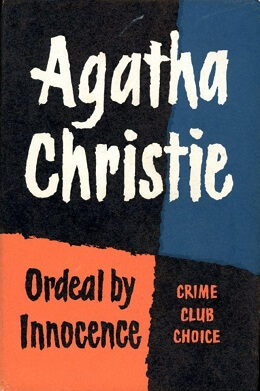
This autumn, the British Library opens Agatha Christie: A World of Mystery, a major exhibition exploring the life and work of one of Britain's most enduringly popular writers. It offers a timely opportunity at TMM to take a closer look at Christina 'Tina' Argyle, one of the five adopted children at the centre of Christie's 1958 novel Ordeal by Innocence.
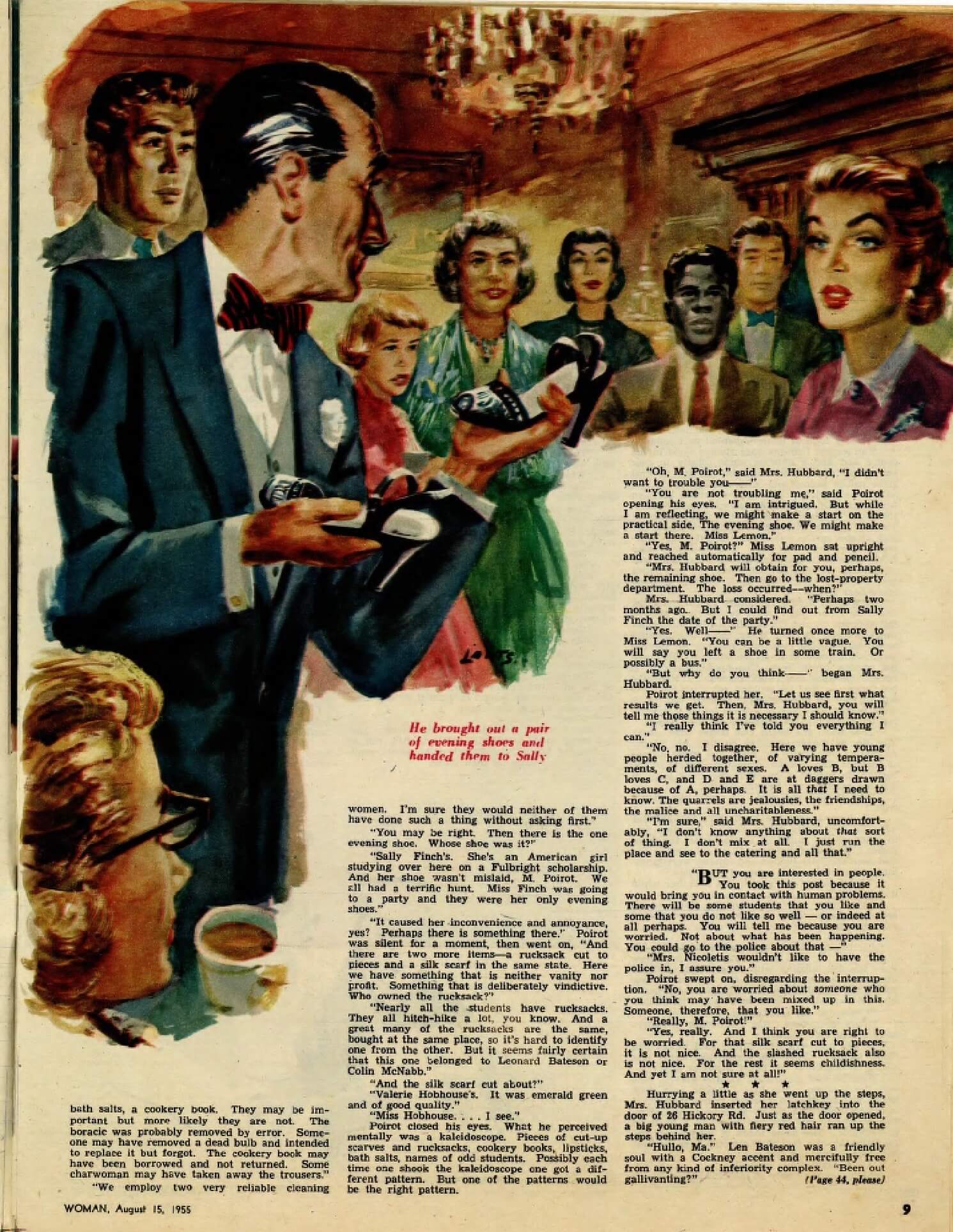
While Christie's fictional world is often associated with an overwhelmingly white, middle-class Britain, racially minoritised characters appear throughout her work. Her novels set overseas feature people from a variety of racial and ethnic backgrounds, while Hickory Dickory Dock (1955), set in a postwar London student hostel, features an international cast. Among the novel's characters are students Elizabeth Johnston from Jamaica; Akibombo, from West Africa; and Chandra Lal from India.
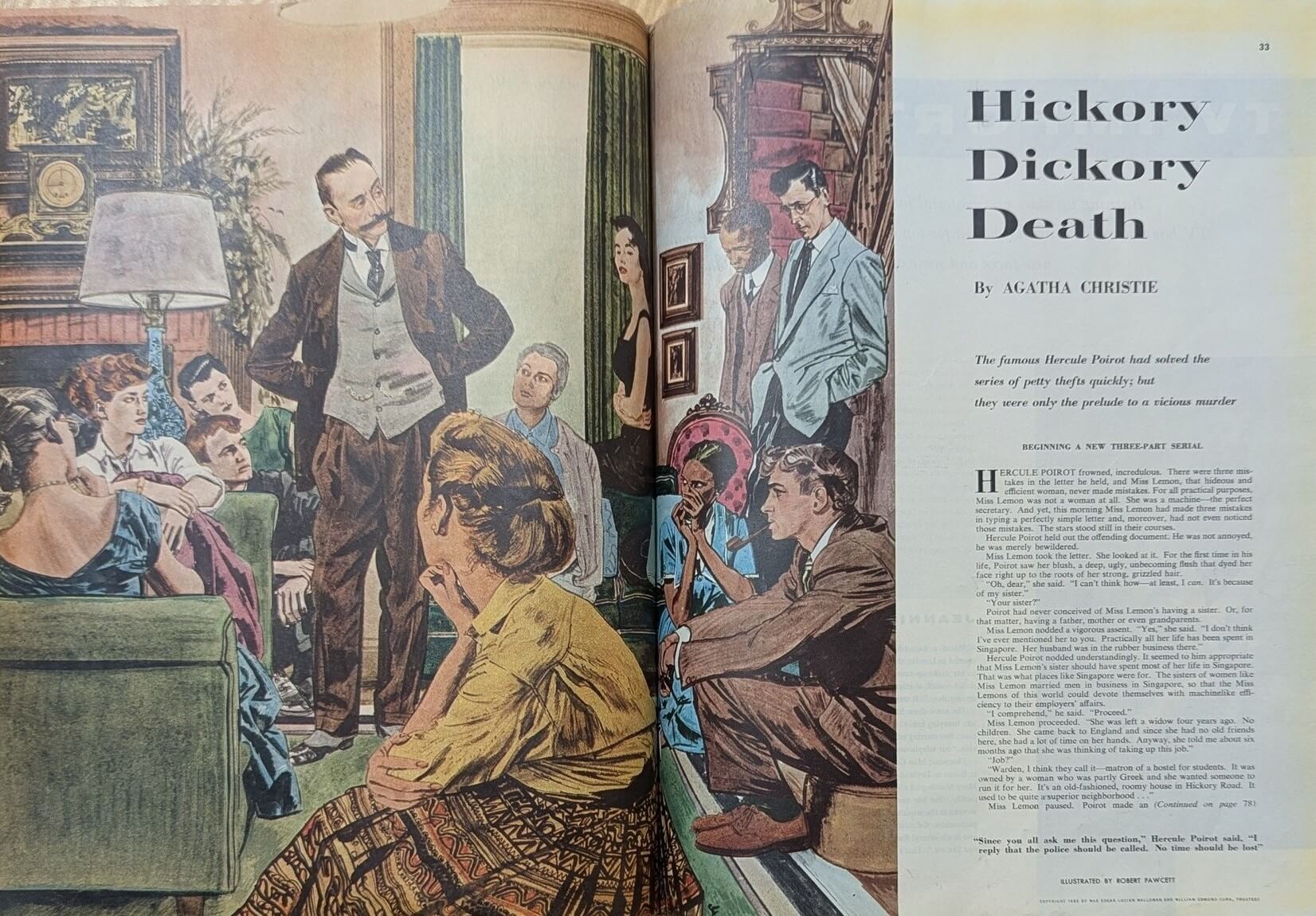
Illustration by Robert Fawcett featuring some of the Black students in Christie’s Hickory Dickory Dock (published as Hickory Dickory Death in the United States) in Colliers magazine, 14 October 1955. Image courtesy of Collecting Christie.
The ways Christie portrayed such characters have attracted differing interpretations. Critics and scholars have drawn attention to the racial stereotypes and language in her work, while also exploring the more sympathetic or complex portrayals that sometimes sit alongside them. These tensions are particularly interesting when we turn to Tina Argyle who occupies a rather different position than the students in Hickory Dickory Dock. She is neither a visitor to Britain nor someone encountered by British characters overseas, but a young mixed-race British woman living and working in England. An adopted daughter within a wealthy white English family, she also has a particular, if sketchily drawn, family history: born in London during the Second World War, her mother is white and her father is described as a 'Lascar seaman', connecting Tina to a much older history of racial mixing in Britain.
Ordeal By Innocence’s Tina Argyle
Ordeal by Innocence is an unusual Christie novel. Although the story centres on a murder, much of its attention is devoted to the complicated relationships within the Argyle family and questions about childhood, adoption, identity and belonging.
Two years before the novel begins, Rachel Argyle was murdered at Sunny Point, the Devon home she shared with her husband Leo and their adopted children. Their son Jacko was convicted of the crime and subsequently died in prison. When Dr Arthur Calgary unexpectedly arrives with evidence establishing Jacko's innocence, the family must confront the possibility that somebody else close to Rachel was responsible.
Tina, a librarian, is among the family members brought under suspicion, though of all Rachel's children, she appears to have felt the deepest emotional connection to her adoptive mother. She came to live with the Argyles during the war, aged three, having spent her earliest years in an unhappy home in London, with memories of being ‘terrified’ by a drunken mother and ‘all those noisy quarrels with seamen’. Her adoptive father describes her as ‘the graceful dark half-caste child whose mother was a prostitute and whose father had been a Lascar seaman.’
Tina is repeatedly referred to as a ‘half-caste’ by other characters, a now offensive term commonly used at the time for people of mixed racial parentage. Descriptions of her also draw attention to her racial difference. She is compared to a ‘black cat’ and described as a ‘dark horse’, while her brother-in-law Philip wonders whether her reserve might be connected to ‘the half of her that isn't white’. When Calgary first encounters her at the library, he sees a woman who is ‘neat, small, very quiet and efficient’, dressed in dark blue with her hair neatly coiled at her neck. He also observes that her skin is ‘darker than an English skin could ever be’ and that ‘her bones, too, were smaller’. Yet Tina is also one of the novel's more sympathetic characters. In contrast to some of her white siblings, she is capable, self-reliant and emotionally composed. As literary scholar Lidia Kyzlinková observed, Christie presents Tina in an ‘extremely positive light’, and she continues to be a favourite character in the novel among some Christie readers.
However, the apparent assumption in Christie's description of Tina is that Englishness and whiteness are inseparable. Yet by 1958, generations of Black, Brown and mixed race people had already been born and raised in Britain, including the children of British women and Asian seamen commonly referred to as ‘Lascars’.
'Lascar' seamen in Britain and their families
'Lascar' was a broad term used in British shipping from the seventeenth century into the twentieth to describe seafarers from Asia and other parts of the colonial world, particularly the Indian subcontinent. It referred neither to a single nationality nor to an ethnic group, but became associated with colonial employment arrangements under which Asian sailors often worked for lower wages and in poorer conditions than their European counterparts. However, as historian Asif Shakoor has pointed out, the word was a colonial adaptation of lashkar, a term of Persian origin. Reflecting on his own grandfather's seafaring history, Shakoor questions the use of a label that his family would not have recognised or used themselves.
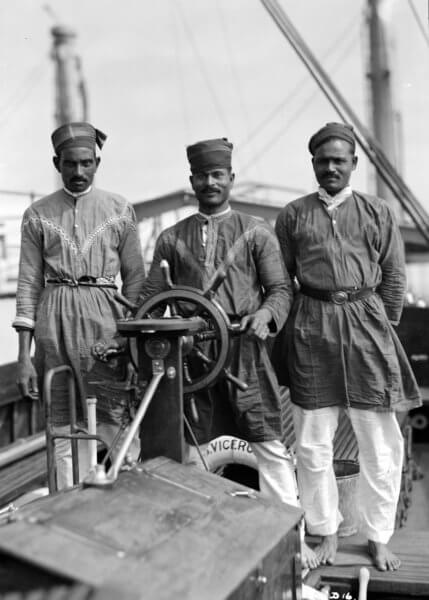
South Asian seamen had been working aboard British ships since the seventeenth century, with their numbers growing alongside imperial trade. Historians including Rozina Visram (Asians in Britain: 400 Years of History), Laura Tabili (Global Migrants, Local Culture), Humayun Ansari (The Infidel Within) and Ceri-Anne Fidler (Lascars, c.1850–1950) have explored their experiences of working, settling and establishing lives in Britain. This wider maritime history also includes Arab seafarers, notably those from Yemen, whose communities and family histories have been documented by historians including Richard Lawless (From Ta'izz to Tyneside) and Mohammad Siddique Seddon (The Last of the Lascars). Such communities were particularly visible in ports including London, Liverpool, Cardiff and South Shields, where some men formed relationships with local women and raised mixed race families.
Nor did this history end in the nineteenth century. In her recent book Imperial Footprints: A History of South Asian Child Migrants in Britain (2026), historian Sumita Mukherjee explores the experiences of the children of ‘lascars’ during the 1920s and 1930s. Her research draws attention to working-class mixed-race families whose lives have often been overlooked in accounts of Britain's South Asian past, including the decades of Tina's fictional birth family and childhood. We can however hear something of these histories in the recollections of the seafarers themselves. In Across Seven Seas and Thirteen Rivers: Life Stories of Pioneer Sylheti Settlers in Britain (1987), Caroline Adams brought together oral histories of men from Sylhet, in present-day Bangladesh, who had made their way to Britain. Several recall relationships and marriages with English women during the interwar and postwar years, including wives who accompanied their husbands to the Indian subcontinent. Their accounts offer a valuable counterpoint to the assumptions about prostitution, illegitimacy and shame that so often dominated official descriptions of interracial relationships. Instead, we encounter marriages, family ties and lives that sometimes spanned continents, told from the perspectives of the men themselves.
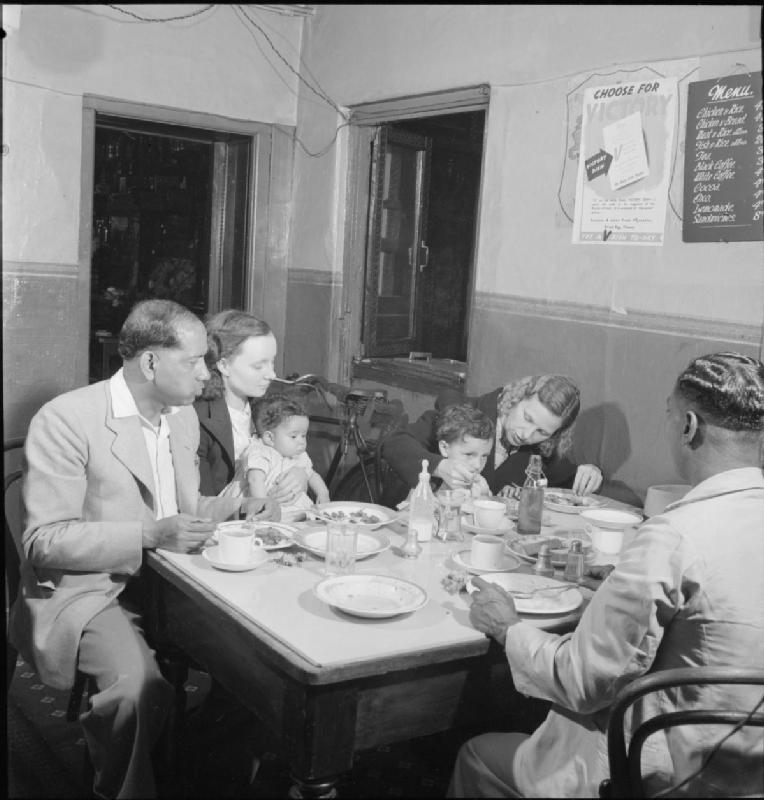
Other personal recollections offer glimpses of these families from the perspective of their British relatives. In her memoir Too Many Mothers (2005), actress Roberta Taylor recalls growing up in 1950s East London among relatives whose lives included relationships, marriages and children with Indian seamen. Her Aunt Vi's first husband was a man Taylor calls Korim Uddin. Taylor describes his frequent presence at gatherings in the large East End family, how Vi and Korim taught each other English and Urdu, and the family learning to return Korim’s greeting of salaam alaikum with ‘alaikaum salaam’. After Korim’s death, Taylor reports that Vi married his cousin and, after this husband’s death, again married an Indian man.
Historian David Holland's research into South Asian settlement in Sheffield offers a fascinating perspective on these families beyond the docklands. With maritime work being so arduous, some men chose to move inland to work in other industries. Among those he documents are Gisalic 'Ali' Amidulla, a former seafarer who found work in Sheffield's steel industry who married Maggie Windle, a working-class Englishwoman, in 1920. The couple raised children and moved into municipal housing before Ali's death in 1931, after which Maggie returned to her mother's home with their children. Drawing on marriage, birth and death records, Holland has uncovered networks of South Asian men, their British wives and children whose lives were closely woven into local working-class communities. Holland’s work, along with the above wider body of historical research, challenges the view of interracial families primarily through the hostility and social problems recorded by officials, revealing instead the everyday relationships and cooperation that also shaped their lives.
Yet such everyday relationships have often been overshadowed in the historical record by accounts of hostility and official scrutiny. During the interwar years, social investigators frequently portrayed relationships between white British women and Black and Asian seamen as evidence of moral and social decline. Muriel Fletcher's 1930 investigation of mixed-race families in Liverpool, for example, characterised white women involved with Asian and Black men in deeply derogatory terms and labelled their mixed race children as a social problem. Five years later, Captain F. A. Richardson's report on British port communities similarly associated interracial families with poverty, sexual immorality and supposedly inherited defects. As Lucy Bland and TMM’s Chamion Caballero have written, these perspectives often said more about the prejudices of the investigators than the actual lives of those being investigated.
Yet it is certainly the case that conviviality and acceptance ran hand in hand with hostility and prejudice, including within families. Taylor recalls, for example, that her Aunt Vi and Korim usually walked separately in public to avoid ‘attracting grief’. Her memoir also highlights the everyday racism that Korim faced from within the family, despite their apparent surface acceptance. Indeed, Taylor’s mixed race cousins publicly challenged aspects of her account in 2009, objecting among other things to the depiction of the family being truly inclusive of their fathers and themselves.
There are echoes of the assumptions found in official accounts in the background Christie gives Tina. While there is no evidence that Christie based Tina on a particular family, her portrayal connects her to a very specific stereotype of mixed race interwar family life. Interestingly, though Christie provides a specific, if limited, account of Tina's parentage, later interpretations have imagined her appearance and racial identity in strikingly different ways, sometimes losing that historical connection altogether.
Illustrating Tina: from John Bull to the Folio Society
Christie gives readers several descriptions of Tina's appearance, yet offers little detail about her parents beyond her mother's circumstances and her father's occupation as a ‘Lascar’ seaman. How, then, have artists, film and television makers imagined her history and identity?
Tina Argyle in artwork
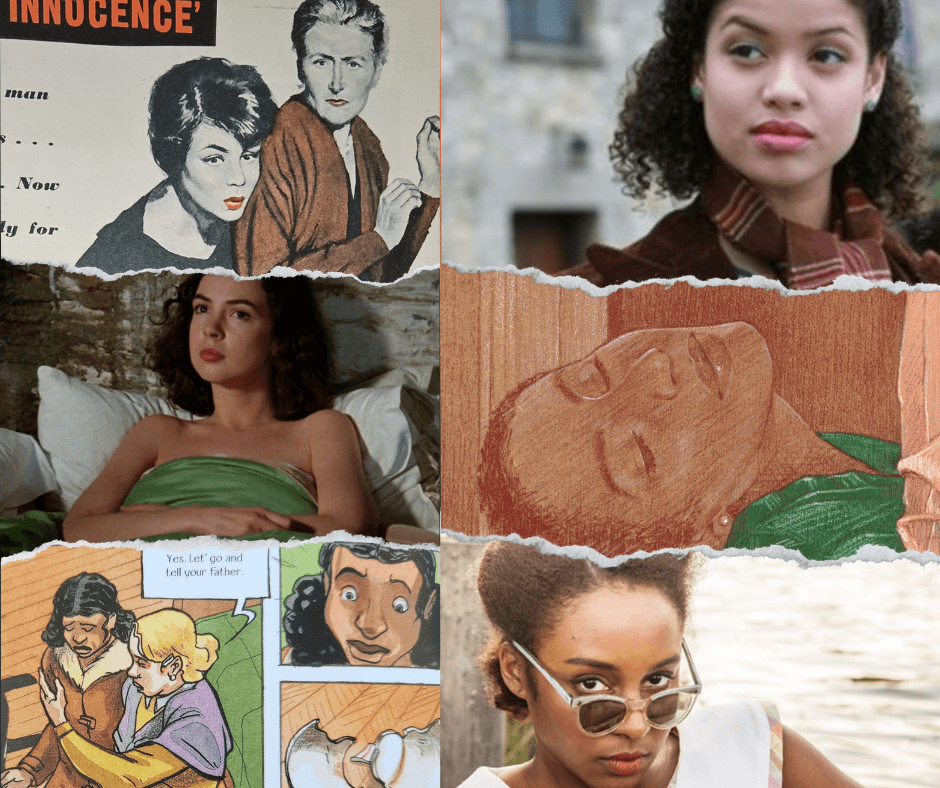
One of the most interesting discoveries we made while researching Tina was an illustration from the novel's original 1958 serialisation in the popular British magazine John Bull. Drawn by Gerry Fancett, it appeared in the issue dated 27 September 1958 and captures a key moment in the later part of the novel.
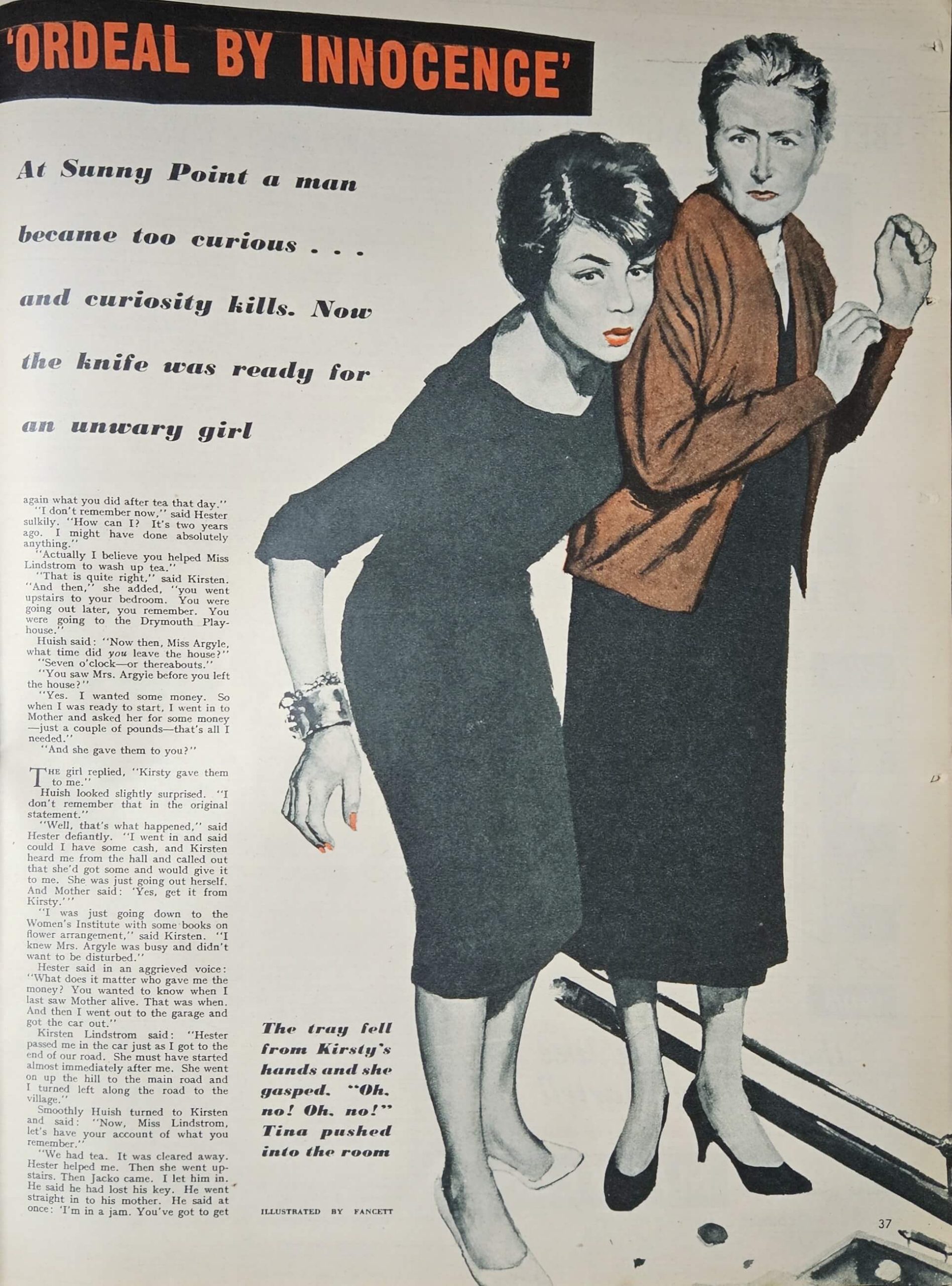
Fancett’s interpretation seems to draw particularly on Christie's descriptions of Tina's petite stature, dark colouring and cat-like qualities. Yet there is something rather unexpected about his portrayal. Although Tina works as a librarian and leads a relatively quiet, home-centred life, Fancett presents her as strikingly glamorous, recalling the images of mixed race performers such as Shirley Bassey and Eartha Kitt that might be familiar to British audiences of the period.
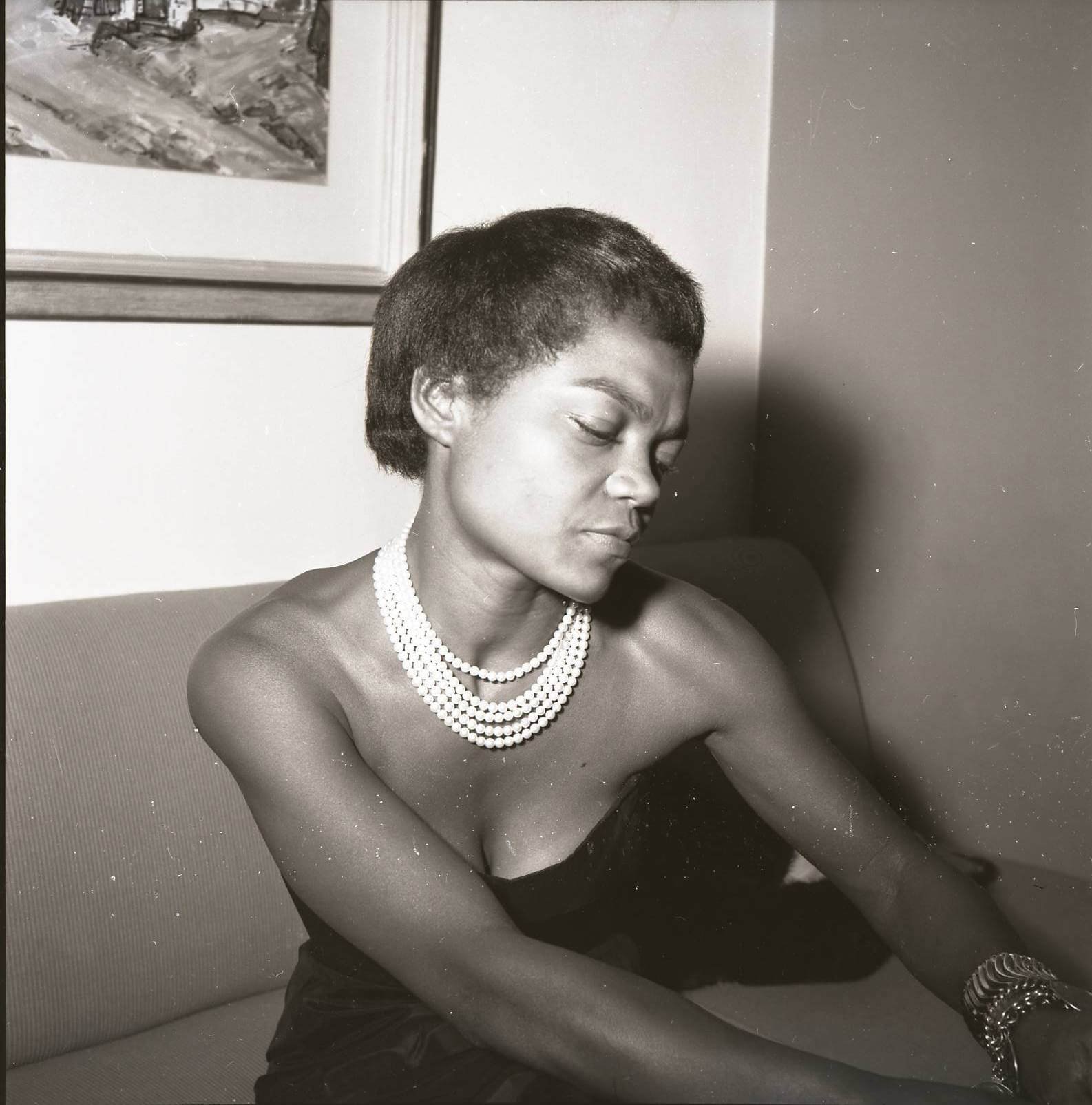
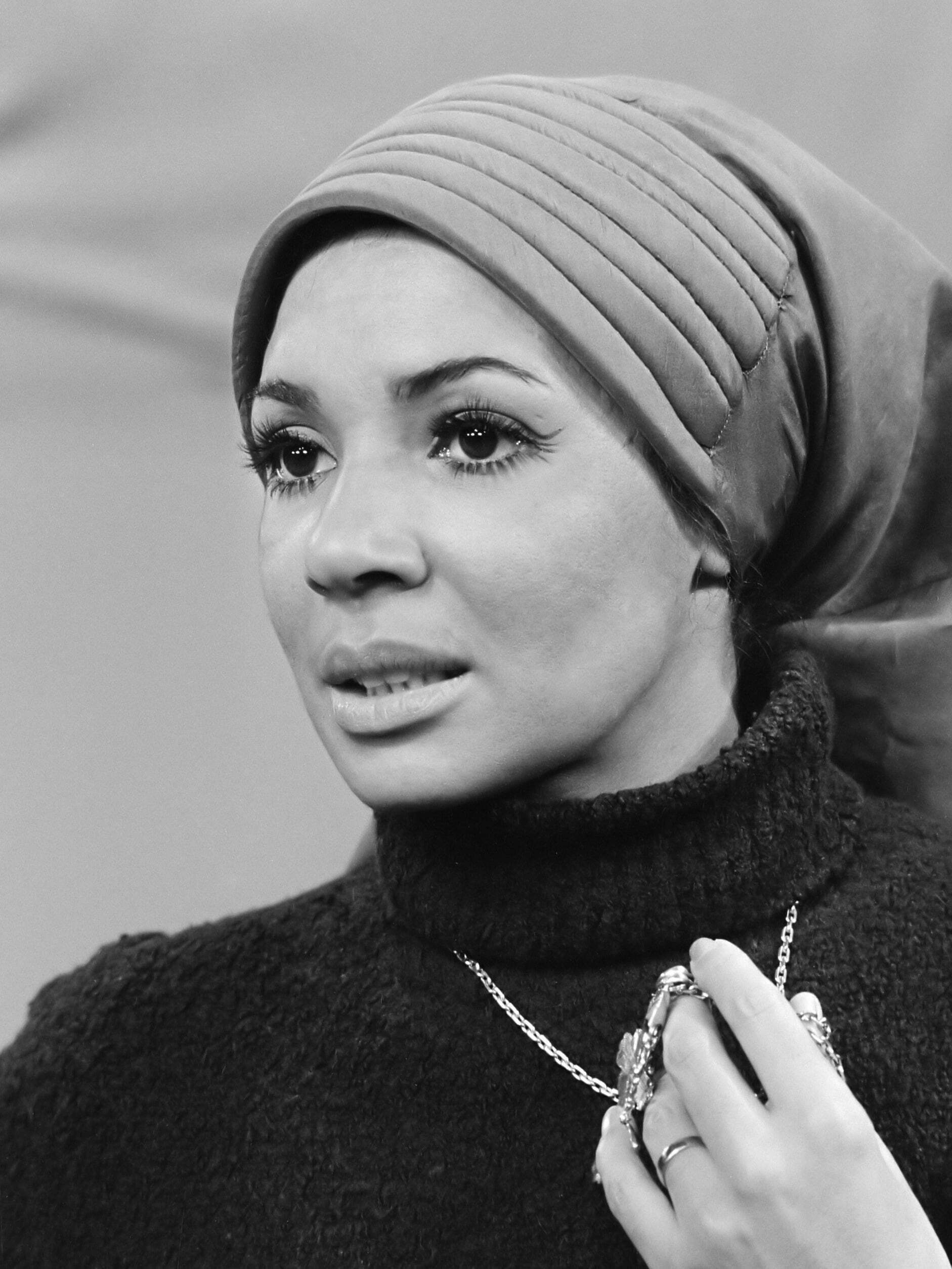
Fancett’s illustration is a fascinating contemporary representation of Tina, produced for British readers in the very year the novel appeared. While Fancett clearly distinguishes her appearance from the character of Kirsty, a middle-aged Swedish nurse, his illustration does not necessarily suggest the particular family history implied by Christie's reference to a Lascar father.
Almost fifty years later, Tina was imagined rather differently in a graphic-novel adaptation illustrated by Chandre, first published in French as Témoin indésirable in 2006, and subsequently in English in 2008. Chandre gives Tina dark skin, dark wavy hair and strongly emphasised facial features. Chandre’s broader style relies on distortion but, compared to his portrayal of other characters, at times the exaggeration of Tina’s features can seem uncomfortably close to older conventions of racial caricature of Black and Asian women.
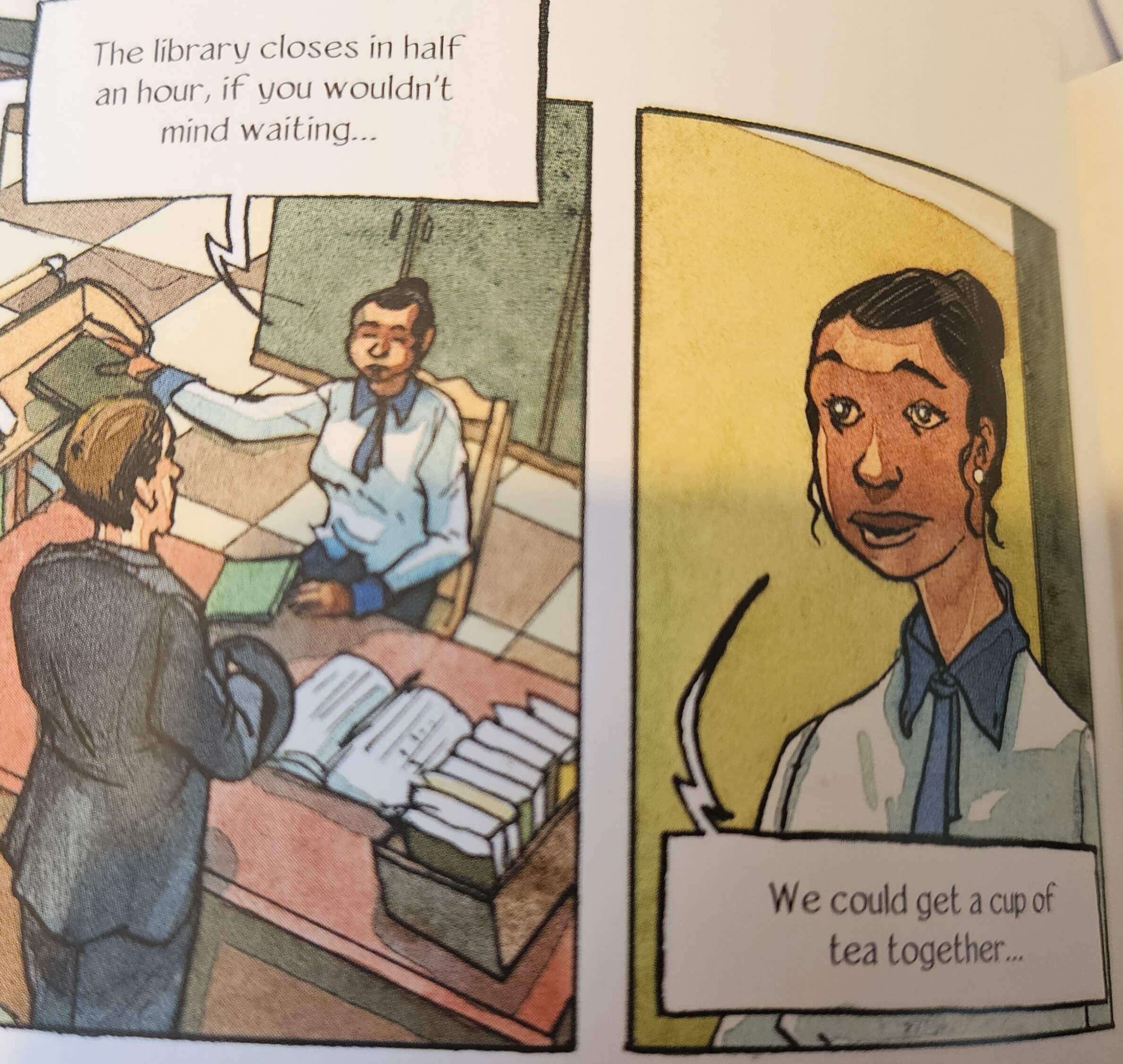
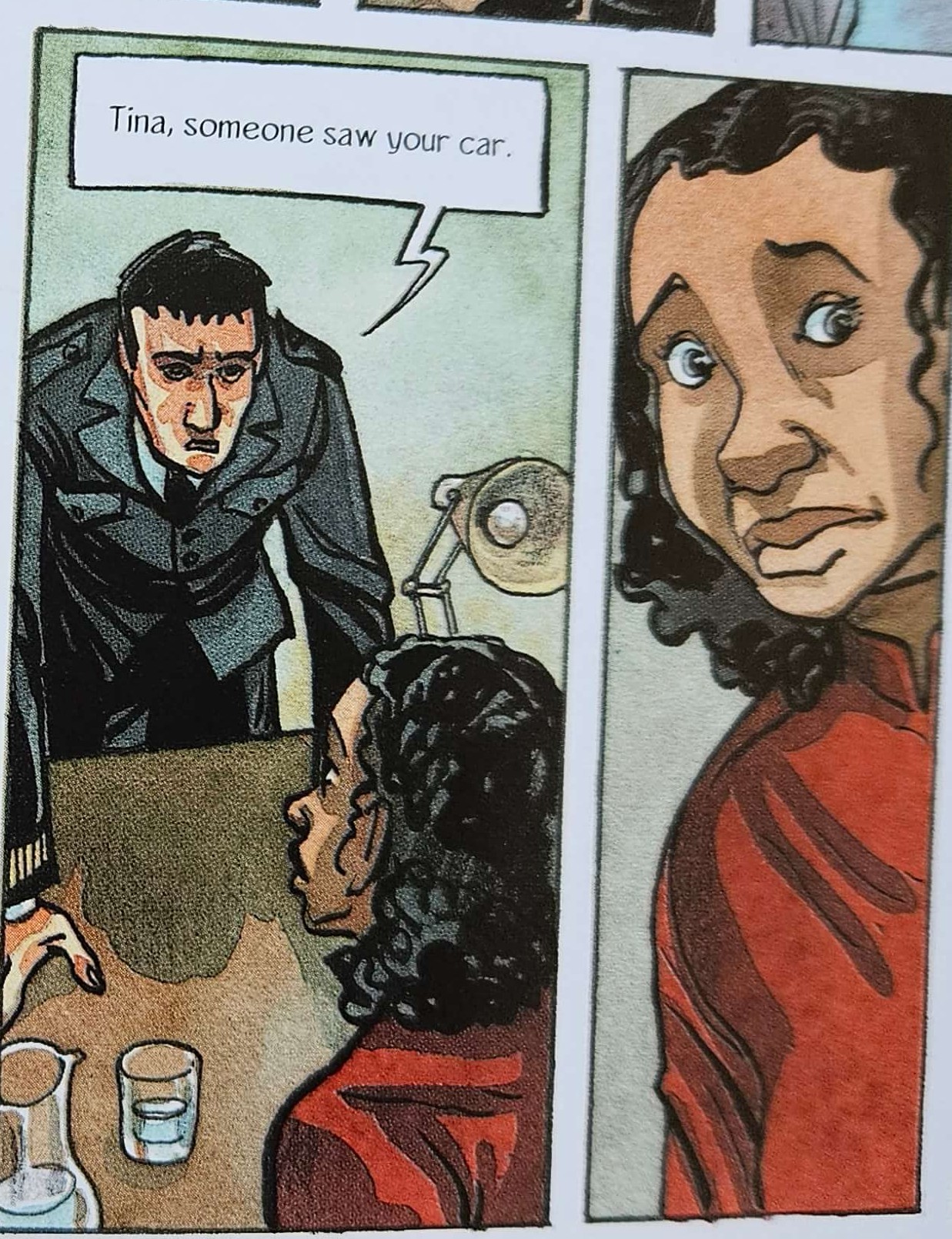
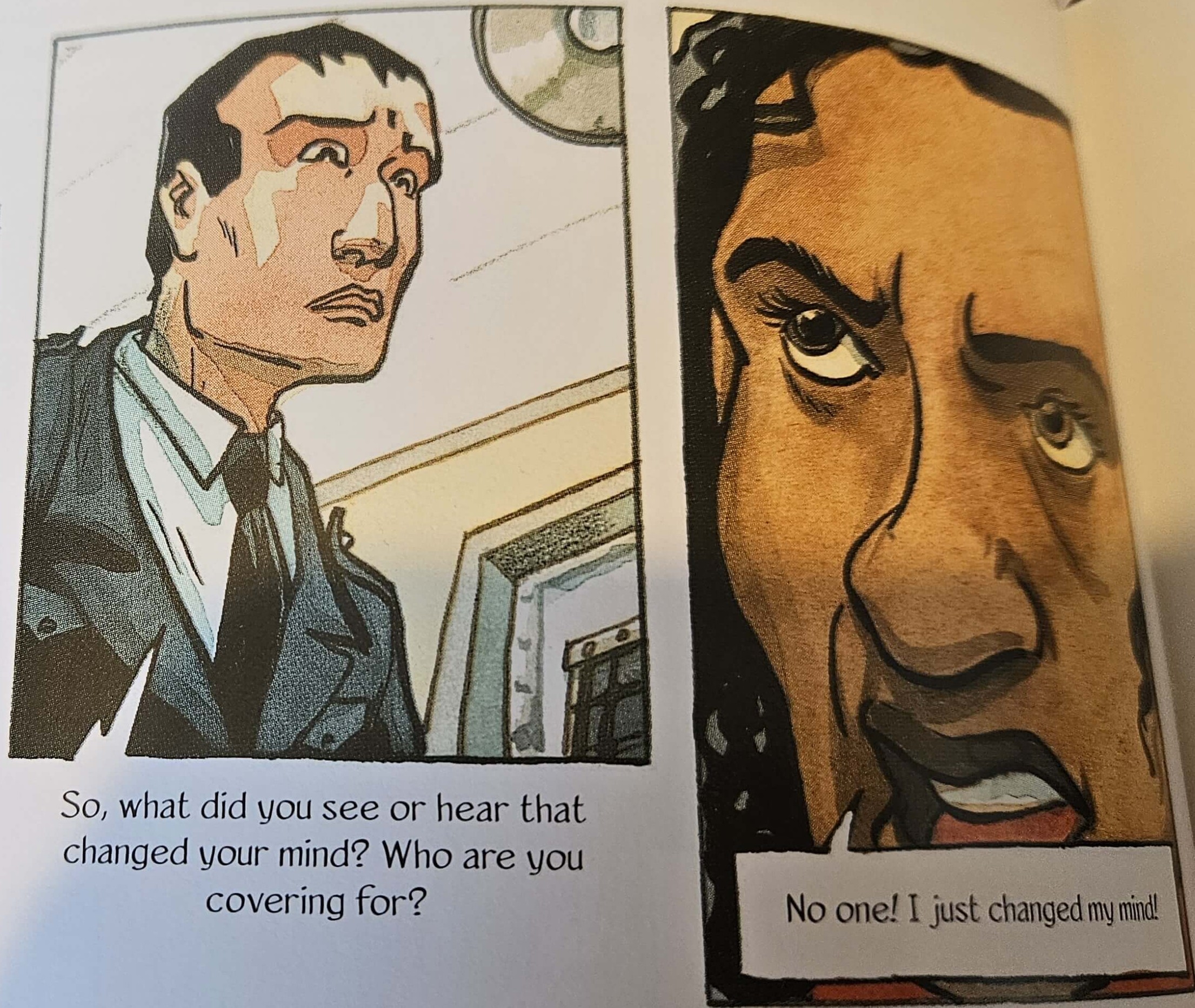
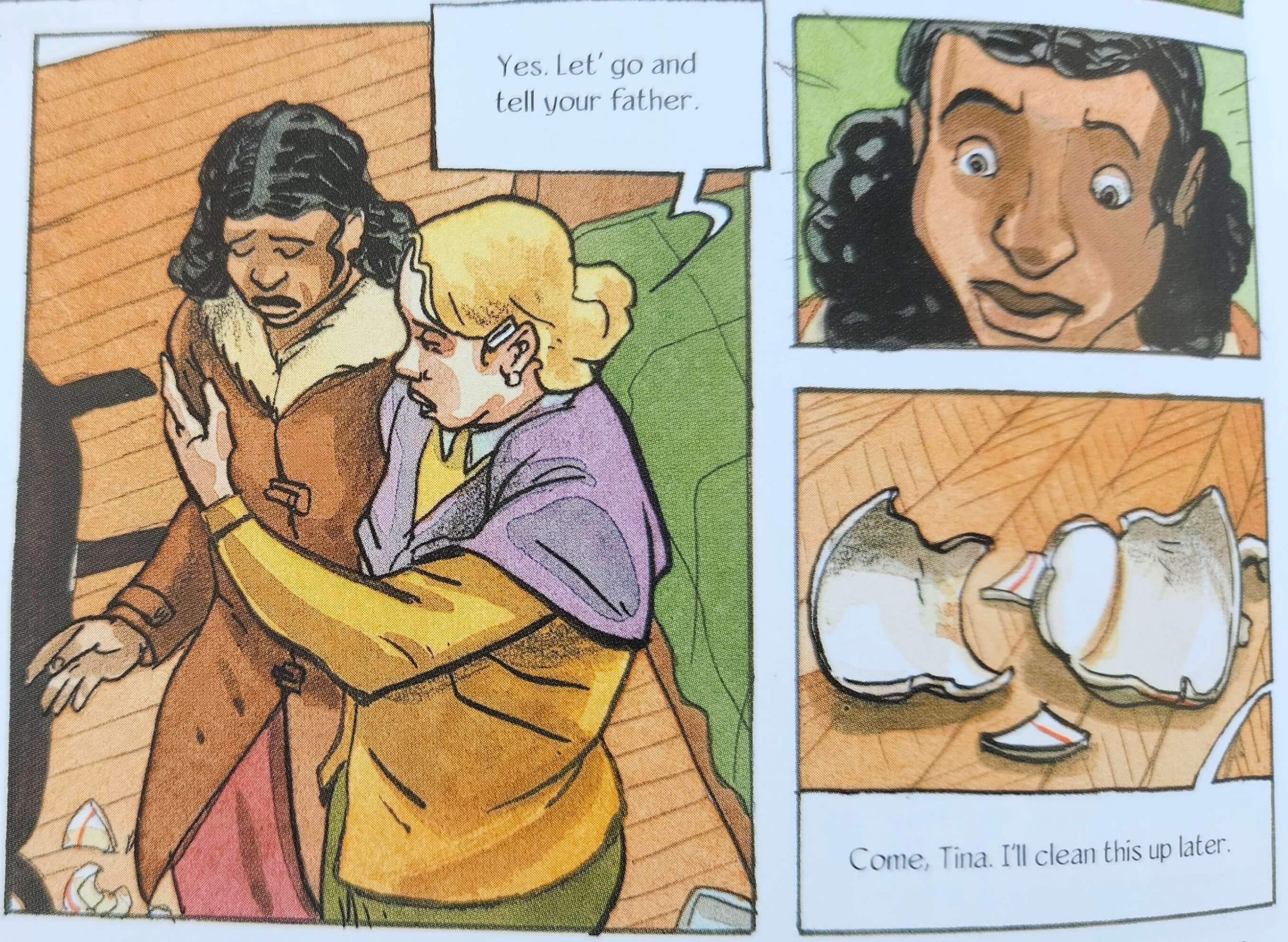
Selection of Chandre’s illustrations of Tina in Ordeal by Innocence, graphic novel published by Harper (2008). Published in France as Témoin indésirable (2006) by EP Editions. Extracts digitised by The Mixed Museum.
A further interpretation appears in the Folio Society's illustrated edition of Ordeal by Innocence, published in 2023. Artist Laura Hope depicts Tina in a dramatic moment with her adoptive brother Mickey. Her atmospheric illustration captures the tension and emotion of the scene, while offering another distinctive interpretation of Tina's appearance. Appearing on the cover also (her eyes third from top) Hope's Tina has features that might more readily suggest Black African or Caribbean and white ancestry to contemporary viewers.
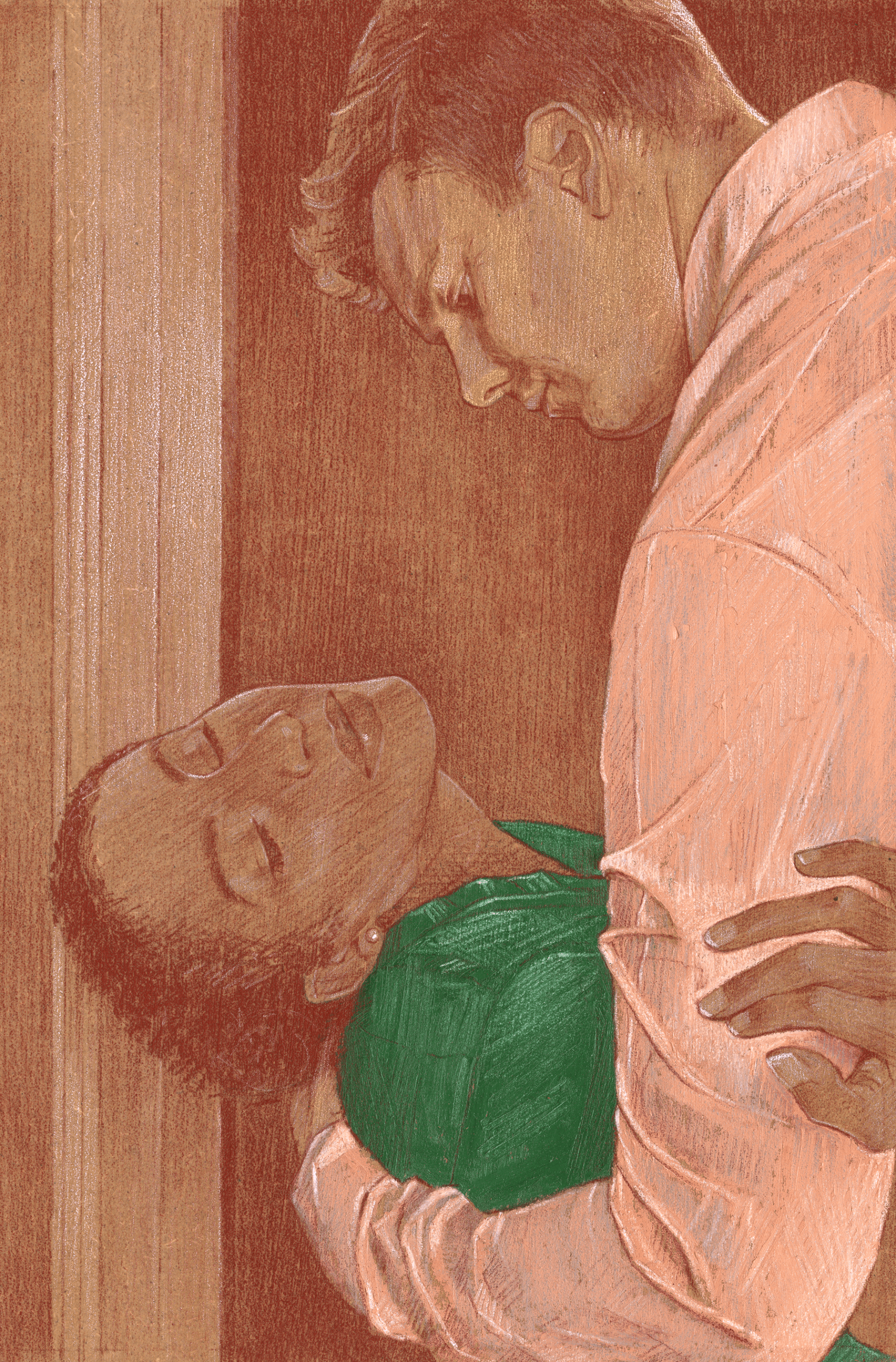
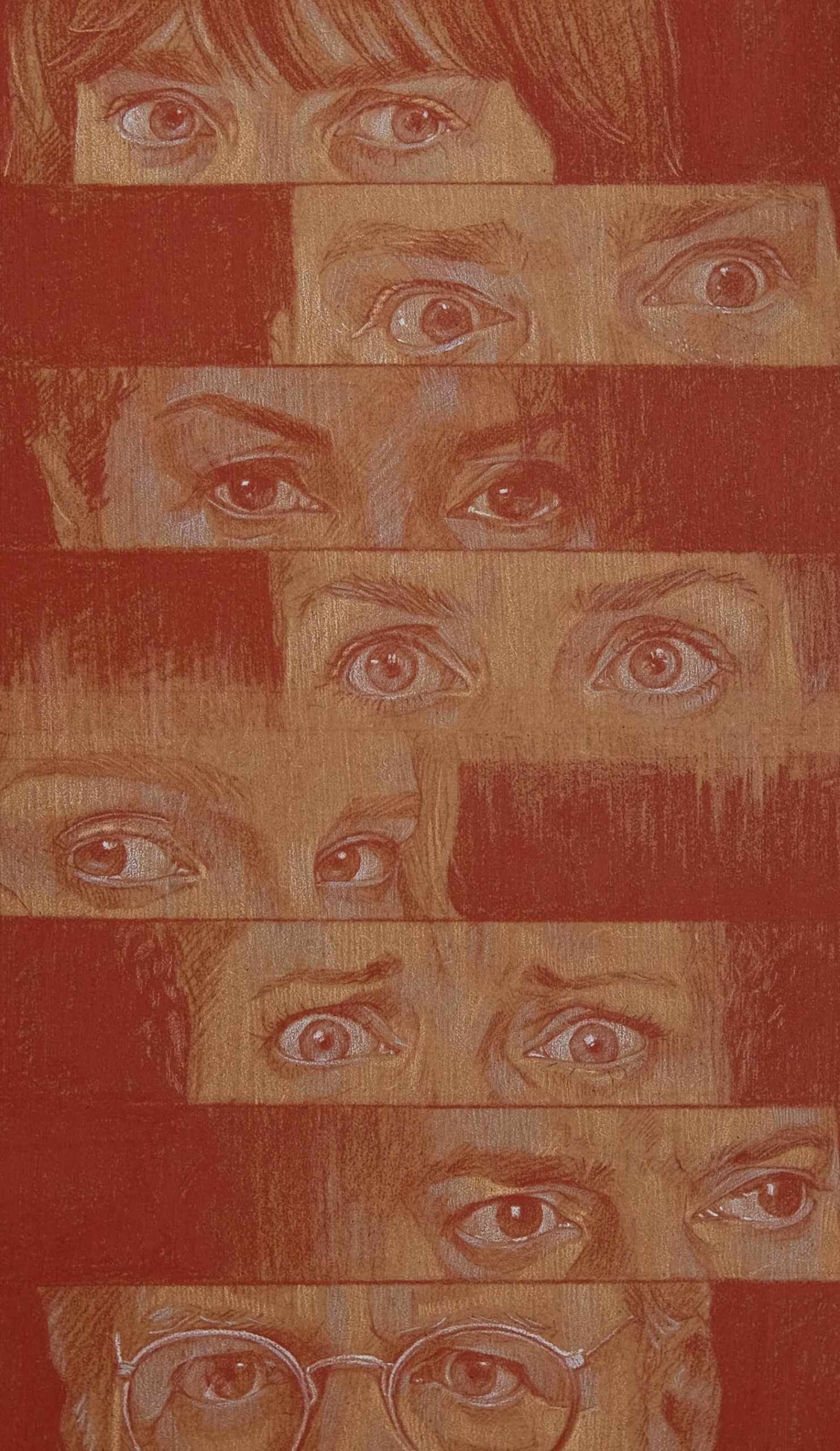
Laura Hope’s illustrations for The Folio Society’s 2023 edition of Ordeal by Innocence. Images reproduced with permission of Laura Hope and The Folio Society. Follow Laura Hope on Instagram (@_laurahope).
Of course we can’t know how close these illustrations are to Christie’s imagining of Tina, nor is there a single appearance that could be considered correct for the daughter of a man described as a ‘Lascar’. Instead, the differences between Fancett, Chandre and Hope’s illustrations raise interesting questions about how artists interpret literary descriptions, and how visual conventions and understandings of racial identity shape the representation of mixed race characters at different moments in time.
Tina Argyle on screen
Tina's journey onto the screen reveals further changes, not only in her appearance but in the place her racial identity occupies within the story.
The first major screen adaptation of Ordeal by Innocence, released in 1984, starred Donald Sutherland, Faye Dunaway and Christopher Plummer. In this version, Tina was played by white British actor Phoebe Nicholls, and although she remained a member of the Argyle family, her mixed-race identity disappeared from the story. Her occupation was also changed from librarian to artist, while her role was considerably reduced.
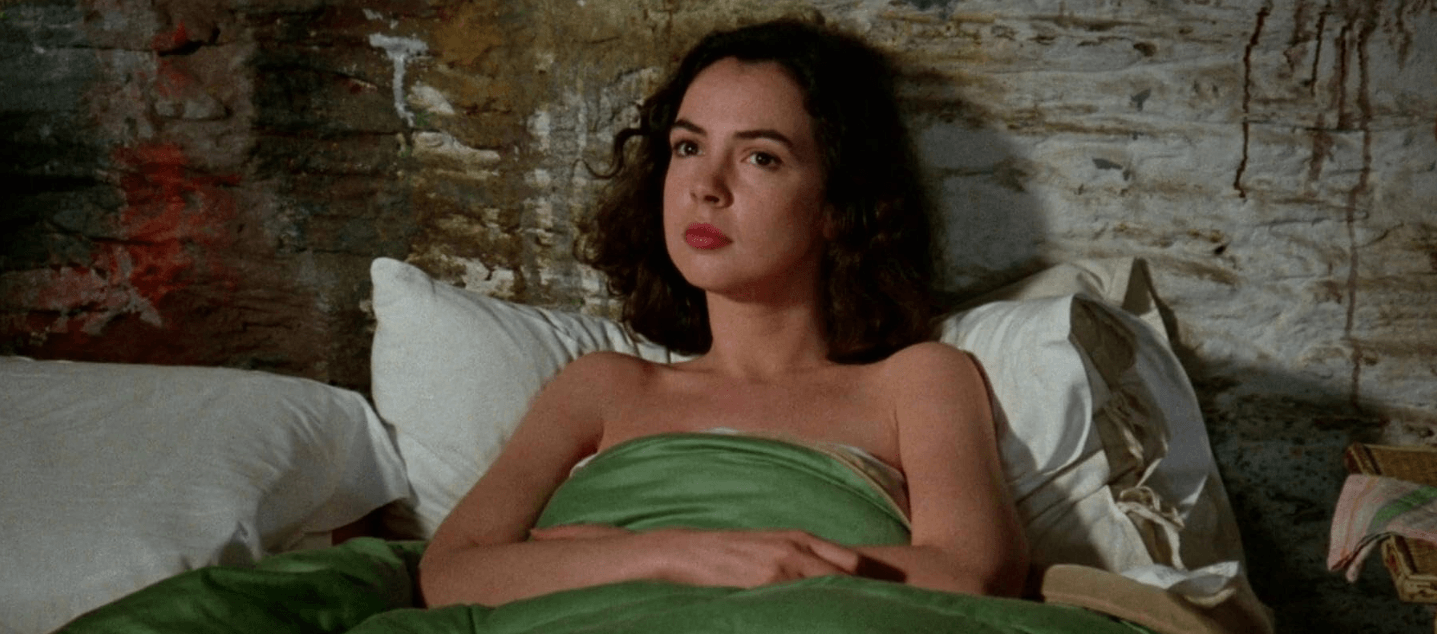
When ITV adapted the novel for Agatha Christie's Marple in 2007, Gugu Mbatha-Raw played Tina, restoring a visibly mixed race character to the family (Gugu Mbatha-Raw herself has a mixed racial background). The adaptation even acknowledges Tina’s difference from her white adoptive siblings through a joke about whether Miss Marple will be able to spot the family resemblance. In this version, Tina is also more outspoken, and much of Christie's language associating racial difference with mystery or unknowability has gone. Her father's background as a Lascar seaman, however, is not mentioned.

Sarah Phelps's 2018 BBC adaptation, with Crystal Clarke as Tina, makes a further change to the way race operates within the story. Rather than reproducing Christie's speculation about what Tina might have inherited from her non-white father, the adaptation places greater emphasis on the racism Tina encounters in 1950s’ Britain. In one scene, white boys harass her and throw stones at her bicycle.
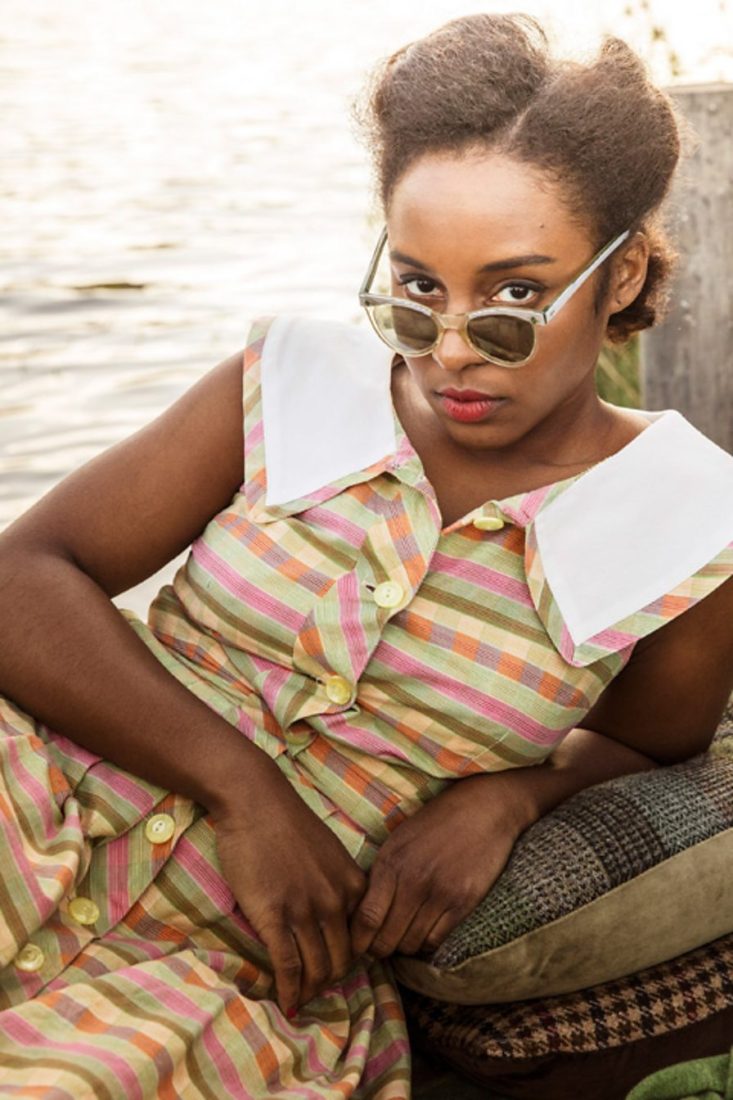
Watch the trailer of the 2018 BBC adaptation
However. Tina's specific family background as written by Christie is not explored. Of course, Christie's description of Tina's father as a Lascar does not demand a precise appearance; we cannot say whether the daughter of a man described in this way would or would not have looked like either Mbatha-Raw or Clarke. The question is not whether either actor looks 'right' for the part but how has the history through which audiences are invited to view Tina is understood. What is of interest given the histories TMM preserves and shares is how later adaptations retain Tina's racial difference while losing the connection Christie made, however briefly, to Britain's longstanding communities of Asian and other colonial seafarers.
Race and screen adaptations of Christie's work
Recent adaptations of Agatha Christie have attracted attention for introducing Black and Asian characters into stories often imagined as taking place in an exclusively white Britain. The BBC's 2023 adaptation of Murder Is Easy, for example, reimagined Luke Fitzwilliam, played by David Jonsson, as an educated Nigerian arriving in England in 1954. Screenwriter Siân Ejiwunmi-Le Berre made this a deliberate part of the story, exploring his experiences within the racial and imperial politics of postwar Britain.
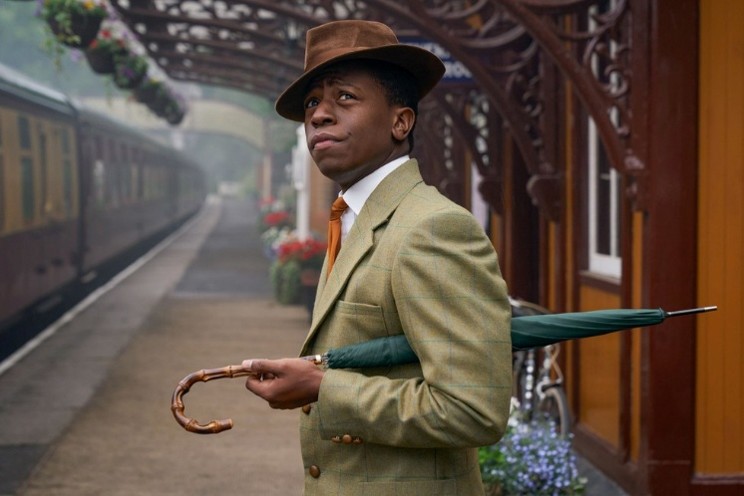
Tina Argyle is another reminder that mixed-race characters were not always introduced into Christie's fiction by later screenwriters. Christie gave Tina's family history only a fleeting and imperfect place in her novel. Yet behind that brief reference to a ‘Lascar’ father lies a much wider history of Asian seafarers, their British partners and their children, whose lives formed part of the rich and varied experiences of mixed-race Britain. Looking again at Tina gives us an opportunity to bring some of these histories to the fore, while also reminding us that greater visibility does not always mean a fuller understanding of the diversity and complexity of mixed-race lives.
Acknowledgements and permissions
With thanks to Professor Ros Edwards for first alerting us to the character of Tina Argyle.
Many thanks to David Morris at Collecting Christie for information and images relating to Hickory Dickory Dock, and to Laura Hope and The Folio Society for information and images related to The Folio Society's 2023 edition of Ordeal by Innocence.
All other images produced under public domain or fair usage. Digitised images created by The Mixed Museum not to be reproduced without permission. If you believe you are the copyright holder of any of the images featured in this article, please contact TMM directly.
Learn more
Find out about the mixed families who lived in port communities in the interwar period
Visit our entry on Sapphire (1959), a crime mystery film set in interracial postwar London
Learn more about the Agatha Christie: A World of Mystery exhibition at the British Library
Sign up to our newsletter for latest posts!
Enjoyed this article?
Sign up to The Mixed Museum’s newsletter to stay updated when new blog posts like this go live. We send highlights from the museum's collection, links to new articles, and other interesting updates direct to your email inbox once a month.